
Chef Lupita
Aguascalientes Beef Tongue Pozole (Pozole de Lengua)
Aguascalientes' Bajio pozole de lengua, built with cacahuazintle hominy, tender beef tongue, chile ancho and guajillo, with xoconostle brightness and table garnishes.
A cooking platform built around craft, culture, and the stories behind what we eat.
Created by
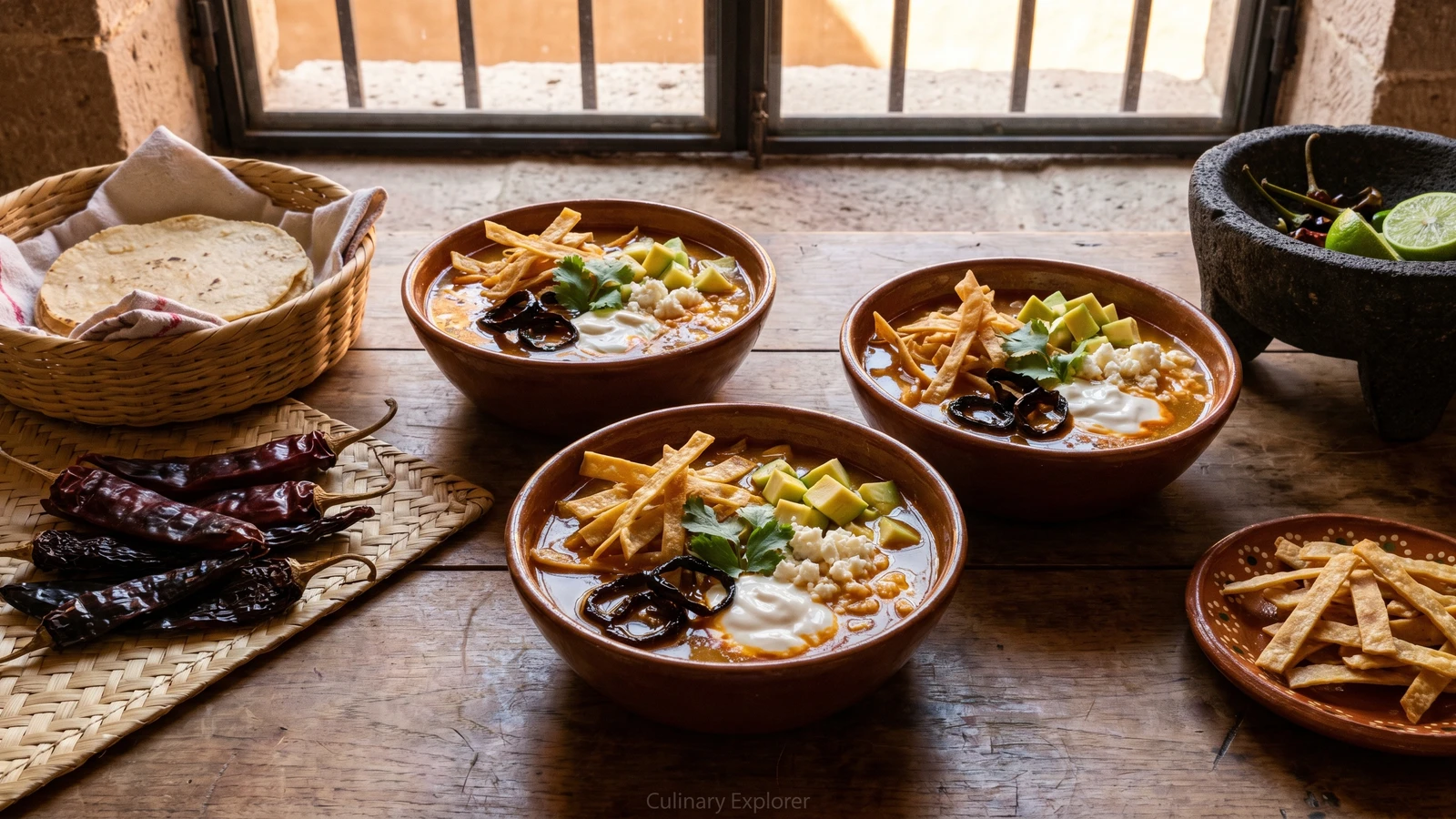
Querétaro's mild tortilla soup from the Bajío, built with chicken broth, chile guajillo, fried corn strips, criollo avocado, queso ranchero, and thick crema from the old dairy haciendas.
Querétaro, in the Bajío and on the old Camino Real de Tierra Adentro, is where this soup belongs. In Santiago de Querétaro, around Mercado de La Cruz and Mercado Escobedo, cocineras build it for a weeknight table: chicken broth, fried tortilla, chile guajillo, avocado, queso ranchero, and crema. Mild. Deep. Not every Mexican soup is trying to burn your mouth.
The chile guajillo gives red color and clean fruit, not aggression. The pasilla is fried in thin rings for perfume and a little bitterness. The tortillas must be corn, preferably yesterday's nixtamal tortillas from the tortillería. They fry in manteca de cerdo until crisp enough to hold their edge in the broth. La manteca es el sabor. Use flour tortillas and yellow cheese and you have left Querétaro entirely.
My mother was from Jalisco, so her tortilla soup leaned another way. In Querétaro I learned to taste the dairy country in the bowl: queso ranchero on top, crema from the hacienda lechera softening the broth, tortillas fried in lard from a pantry that wastes nothing. The same state whose cooks make Otomí mole de conejo around Tolimán and use chilcuague in Sierra Gorda salsas can also make a quiet soup like this. Cada estado, su propia cocina.
Sopa de tortilla is a central Mexican household soup that grew from Indigenous corn and chile cookery joined to colonial chicken broth, dairy, and pork lard. Querétaro's version reflects its position on the Camino Real de Tierra Adentro, where ranch dairy, dried chiles, and market broths moved through the Bajío into the capital's fondas by the late 19th century and Revolution-era years. Its use of queso ranchero and thick crema marks it differently from the darker, pasilla-heavy tortilla soups of Mexico City and Puebla.
Quantity
1 1/2 pounds
Quantity
8 cups
Quantity
1 medium
half for broth, one quarter for the roasted base, remaining piece reserved for another use
Quantity
4
2 for broth, 2 for the roasted base
Quantity
1
Quantity
2 teaspoons, plus more to taste
Quantity
10
cut into 1/4-inch strips
Quantity
1/2 cup, plus more as needed
Quantity
2
wiped clean, stemmed, and seeded
Quantity
2
wiped clean, stemmed, seeded, and cut into thin rings
Quantity
4 ripe
halved
Quantity
1 sprig
Quantity
2
diced at the last minute; use small Hass avocados only if criollo is unavailable
Quantity
1 cup
crumbled
Quantity
1/2 cup
Quantity
1/4 cup
Quantity
2
halved
| Ingredient | Quantity |
|---|---|
| bone-in chicken backs, wings, or thighs | 1 1/2 pounds |
| cold water | 8 cups |
| white onionhalf for broth, one quarter for the roasted base, remaining piece reserved for another use | 1 medium |
| garlic cloves2 for broth, 2 for the roasted base | 4 |
| bay leaf | 1 |
| kosher salt | 2 teaspoons, plus more to taste |
| day-old corn tortillascut into 1/4-inch strips | 10 |
| manteca de cerdo | 1/2 cup, plus more as needed |
| dried chile guajillowiped clean, stemmed, and seeded | 2 |
| dried chile pasillawiped clean, stemmed, seeded, and cut into thin rings | 2 |
| Roma tomatoes or jitomates guajehalved | 4 ripe |
| fresh epazote | 1 sprig |
| ripe aguacate criollodiced at the last minute; use small Hass avocados only if criollo is unavailable | 2 |
| queso ranchero frescocrumbled | 1 cup |
| thick Mexican crema | 1/2 cup |
| fresh cilantro leaves (optional) | 1/4 cup |
| limes (optional)halved | 2 |
Put the chicken pieces in a heavy pot with the cold water, half of the onion, 2 garlic cloves, bay leaf, and salt. Bring to a gentle simmer over medium heat and skim the gray foam during the first 10 minutes. Cook 35 to 40 minutes, until the broth tastes like chicken and the meat on the bones has given up its strength. Strain. You need 6 cups of broth; reduce it if you have more, add hot water and salt carefully if you have less.
Spread the tortilla strips on a tray while the broth simmers. If the tortillas are fresh and still flexible, put them in a 300F oven for 8 to 10 minutes to dry the surface. Day-old tortillas fry clean. Fresh tortillas drink fat and turn leathery. No me vengas con atajos.
Heat a dry comal over medium. Roast the tomatoes cut side down with the onion quarter and 2 garlic cloves until the tomatoes slump and the onion has dark spots. Toast the chile guajillo separately, 10 to 15 seconds per side, just until the skin becomes fragrant and flexible. Cover the toasted guajillos with hot water and soak 15 minutes. Do not toast the pasilla rings here; they fry later.
Drain the soaked guajillos. Blend them with the roasted tomatoes, roasted onion, roasted garlic, and 1 cup of the chicken broth until completely smooth. Strain through a fine-mesh sieve, pressing firmly on the solids. The skins of dried chiles do not belong in a clean broth. This is how you get a soup that tastes polished without turning it into restaurant nonsense.
Melt the manteca de cerdo in a wide skillet over medium heat. When one tortilla strip sizzles immediately, fry the strips in batches until golden and rigid, about 90 seconds per batch. Lift them out with a spider or slotted spoon and drain on paper towels or a rack. Fry the pasilla rings in the same lard for 5 to 8 seconds, just until glossy and aromatic, then remove them fast. Pasilla burns while you are congratulating yourself.
Leave 2 tablespoons of the tortilla-scented lard in the pot. Add the strained guajillo-tomato puree. It will sputter. Cook 6 to 8 minutes, stirring often, until the color deepens to brick red and the fat starts to gather at the edges. Add the remaining 5 cups chicken broth and the epazote sprig. Simmer 15 minutes. Taste for salt and remove the epazote.
Dice the avocado only when the soup is ready. Crumble the queso ranchero with your fingers. Stir the crema until smooth; if it is too thick to spoon, loosen it with a tablespoon of warm broth. Cut the limes and pick over the cilantro leaves. The toppings are not decoration. They are the second half of the dish.
Put a handful of fried tortilla strips in each deep barro bowl. Ladle the hot broth over them. Add diced avocado, queso ranchero, a spoonful of crema, fried pasilla rings, and cilantro. Serve lime on the side and keep extra tortilla strips at the table so each bowl has some strips that soften and some that stay crisp. That contrast is part of sopa queretana. Así se hace y punto.
1 serving (about 430g)
Culinary guides, cultural storytelling, and the editorial depth that makes cooking meaningful.
Discover Culinary ExplorerChef Lupita
Aguascalientes' Bajio pozole de lengua, built with cacahuazintle hominy, tender beef tongue, chile ancho and guajillo, with xoconostle brightness and table garnishes.

Chef Lupita
Veracruz's Gulf coast rice from Alvarado, built with seafood stock, tomato, chile chipotle, epazote, shrimp, fish, jaiba, and pulpo, served loose and brothy in a clay cazuela.

Chef Lupita
Costa Chica's wet salt-beef stew, built from chile costeño, guajillo, tomato, manteca, yuca, plantain, and masa dumplings, the ranching pot of Cuajinicuilapa and Pinotepa.

Chef Lupita
Michoacán's P'urhépecha atápakua is a masa-thickened sauce and stew at once, built with pork, chile guajillo, and hierbabuena added only at the end.