
Chef Lupita
Aguascalientes Beef Tongue Pozole (Pozole de Lengua)
Aguascalientes' Bajio pozole de lengua, built with cacahuazintle hominy, tender beef tongue, chile ancho and guajillo, with xoconostle brightness and table garnishes.
A cooking platform built around craft, culture, and the stories behind what we eat.
Created by
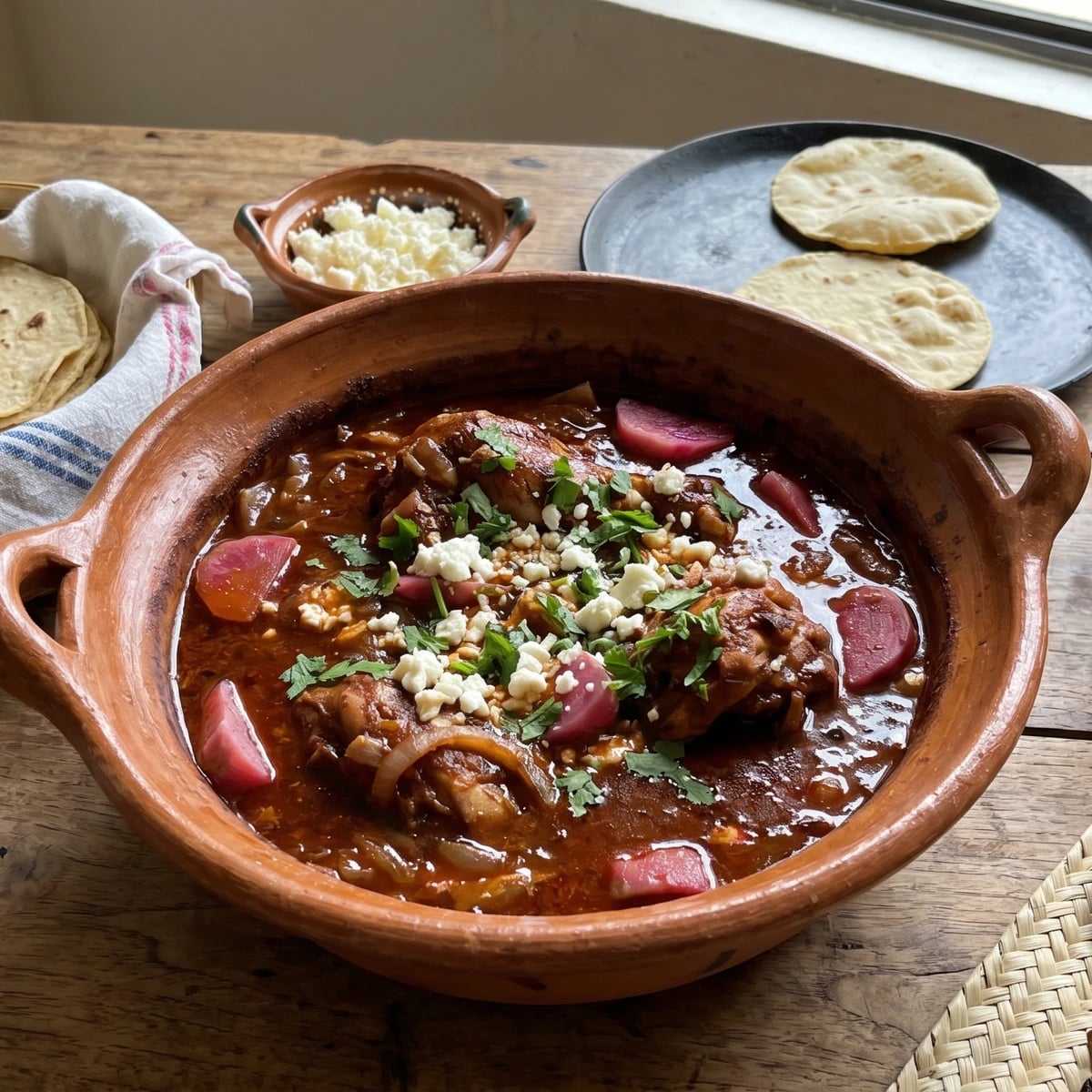
Querétaro's Otomí-mestizo rabbit guiso, browned in manteca and simmered with pulque, ancho, guajillo, xoconostle, and the dry-land bite of chilcuague.
Querétaro, especially the semi-desert belt that runs toward Tolimán, Cadereyta, and the Sierra Gorda, knows what to do with rabbit. This is maguey country. Pulque belongs here because the maguey belongs here, rooted in hard soil where a cook learns not to waste anything.
Conejo al pulque is not a restaurant trick. It is a guiso from home kitchens, ranch tables, and market memory, the kind of pot a señora in Querétaro recognizes by smell before she sees it. The rabbit is browned in manteca de cerdo, then simmered with chile ancho, chile guajillo, onion, garlic, and pulque until the sauce turns dark and glossy. Xoconostle gives acidity. A little chilcuague, if you can find it, gives the Sierra Gorda's sharp, tingling signature.
I learned a version near Tolimán from a woman who cooked the rabbit in a clay cazuela set low over the flame, tortillas warming on a black comal beside her. She did not rush it. Rabbit is lean and proud. Push it too hard and it dries out like punishment. Treat it correctly and it gives you a stew with backbone.
This is the Bajío register: pulque from the maguey, lard in the pot, ranch cheese on the table, corn tortillas wrapped in a woven servilleta. Not all moles are Oaxacan or Poblano. Not all serious Mexican stews shout with heat. The center of the country has its own language, and this dish speaks it plainly.
Rabbit stews in Querétaro belong to the Otomí-mestizo cooking of the central highlands, where small game, maguey products, xoconostle, and dried chiles were practical foods long before they became regional symbols. Pulque, fermented from maguey aguamiel, was a major drink and cooking ingredient across central Mexico before beer and industrial spirits displaced it in the 20th century. The Camino Real de Tierra Adentro helped shape the Bajío kitchen by carrying Spanish livestock, wheat, dairy, and lard into older corn, chile, maguey, and cactus traditions.
Quantity
1, about 3 pounds
cut into serving pieces
Quantity
1 1/2 teaspoons, plus more to taste
Quantity
1/2 teaspoon
Quantity
3 tablespoons
Quantity
1 large
thinly sliced
Quantity
5
3 whole and 2 minced
Quantity
4
stemmed and seeded
Quantity
3
stemmed and seeded
Quantity
1 small piece, about 1/2 inch
rinsed
Quantity
2 medium
roasted
Quantity
2
peeled, seeded, and diced
Quantity
2 cups
Quantity
1 cup
Quantity
1
Quantity
2 sprigs
Quantity
1 sprig fresh or 1 teaspoon dried
Quantity
1 small piece
Quantity
1 tablespoon
grated
Quantity
2 tablespoons
chopped
Quantity
1/2 cup
crumbled
Quantity
for serving
preferably from fresh masa or nixtamalized cacahuazintle
| Ingredient | Quantity |
|---|---|
| whole rabbitcut into serving pieces | 1, about 3 pounds |
| kosher salt | 1 1/2 teaspoons, plus more to taste |
| freshly ground black pepper | 1/2 teaspoon |
| manteca de cerdo | 3 tablespoons |
| white onionthinly sliced | 1 large |
| garlic cloves3 whole and 2 minced | 5 |
| dried chile anchostemmed and seeded | 4 |
| dried chile guajillostemmed and seeded | 3 |
| chilcuague root (optional)rinsed | 1 small piece, about 1/2 inch |
| tomatoesroasted | 2 medium |
| xoconostlespeeled, seeded, and diced | 2 |
| fresh pulque | 2 cups |
| light chicken stock or rabbit stock | 1 cup |
| bay leaf | 1 |
| fresh thyme | 2 sprigs |
| fresh oregano or dried Mexican oregano | 1 sprig fresh or 1 teaspoon dried |
| canela mexicana | 1 small piece |
| piloncillograted | 1 tablespoon |
| fresh cilantro (optional)chopped | 2 tablespoons |
| queso ranchero (optional)crumbled | 1/2 cup |
| warm corn tortillas (optional)preferably from fresh masa or nixtamalized cacahuazintle | for serving |
Pat the rabbit dry and season it with the salt and pepper. Let it sit at room temperature for 30 minutes while you work on the chiles. Rabbit is lean. If you put it into the cazuela wet and cold, it will tighten before it browns.
Heat a dry comal over medium. Toast the chile ancho and chile guajillo separately, about 20 to 30 seconds per side, just until the skins darken slightly and smell sweet. Do not blacken them. Ancho gives depth and fruit. Guajillo gives clean red color. Burn either one and the pulque will carry that bitterness through the whole guiso.
Put the toasted chiles in a bowl and cover with hot water for 20 minutes. Drain them and blend with the roasted tomatoes, 3 whole garlic cloves, the chilcuague if using, and 1 cup of the pulque. Blend until completely smooth. Strain through a fine sieve. Chilcuague gives a small electric bite from the Sierra Gorda, not heat like a chile. Use a little. This is seasoning, not a dare.
Melt the manteca de cerdo in a wide clay cazuela or heavy Dutch oven over medium heat. Brown the rabbit pieces in batches until golden on both sides, 3 to 4 minutes per side. Do not crowd the pot. La manteca es el sabor, and with rabbit it also protects the meat from drying out.
Lower the heat to medium-low. Add the sliced onion to the fat left in the cazuela and cook until soft and lightly golden, about 8 minutes. Add the 2 minced garlic cloves and cook for 1 minute. Scrape the browned bits from the bottom. That is rabbit flavor. Do not leave it stuck to the pot.
Pour the strained chile puree into the cazuela. It will sputter. Stir steadily for 6 to 8 minutes, until the sauce darkens, thickens, and the fat begins to shine at the edges. This frying step is what makes the sauce taste cooked instead of raw. No me vengas con atajos.
Return the rabbit to the cazuela. Add the remaining 1 cup pulque, the stock, bay leaf, thyme, oregano, canela, piloncillo, and diced xoconostle. Bring to a gentle simmer, cover mostly, and cook 55 to 70 minutes, turning the rabbit once, until the meat is tender but still attached to the bone. Pulque is pulque. Beer will make a different stew.
Uncover the cazuela and simmer 10 to 15 minutes more, until the sauce coats a spoon and the xoconostle has softened into sharp little pieces. Taste for salt. The sauce should be earthy from the pulque, rounded by ancho, red from guajillo, and lightly acidic from the xoconostle. Not all Mexican food is hot. This guiso is deep, sour, and savory.
Remove the bay leaf, thyme stems, oregano stem, and canela. Serve the rabbit in the cazuela with a little chopped cilantro and crumbled queso ranchero if you like the Bajío table that way. Put warm corn tortillas in a cloth-lined chiquihuite beside it. Cada estado, su propia cocina.
1 serving (about 350g)
Culinary guides, cultural storytelling, and the editorial depth that makes cooking meaningful.
Discover Culinary Explorer
Chef Lupita
Aguascalientes' Bajio pozole de lengua, built with cacahuazintle hominy, tender beef tongue, chile ancho and guajillo, with xoconostle brightness and table garnishes.

Chef Lupita
Guanajuato's Bajío beef mole de olla, sharpened with xoconostle and the numbing bite of chilcuague from the Sierra Gorda, a clay cazuela pot that knows the Camino Real.

Chef Lupita
Guanajuato's Bajio mole verde thickens toasted pepitas with tomate verde, serrano, cilantro, and pork shoulder, a green cazuela that proves the Bajio has its own mole register.

Chef Lupita
Guanajuato's Bajio carne con chile colorado, pork browned in lard and simmered in a red adobo of guajillo, pasilla, jitomate, garlic, comino, and oregano.