
Chef Lupita
Aguascalientes Beef Tongue Pozole (Pozole de Lengua)
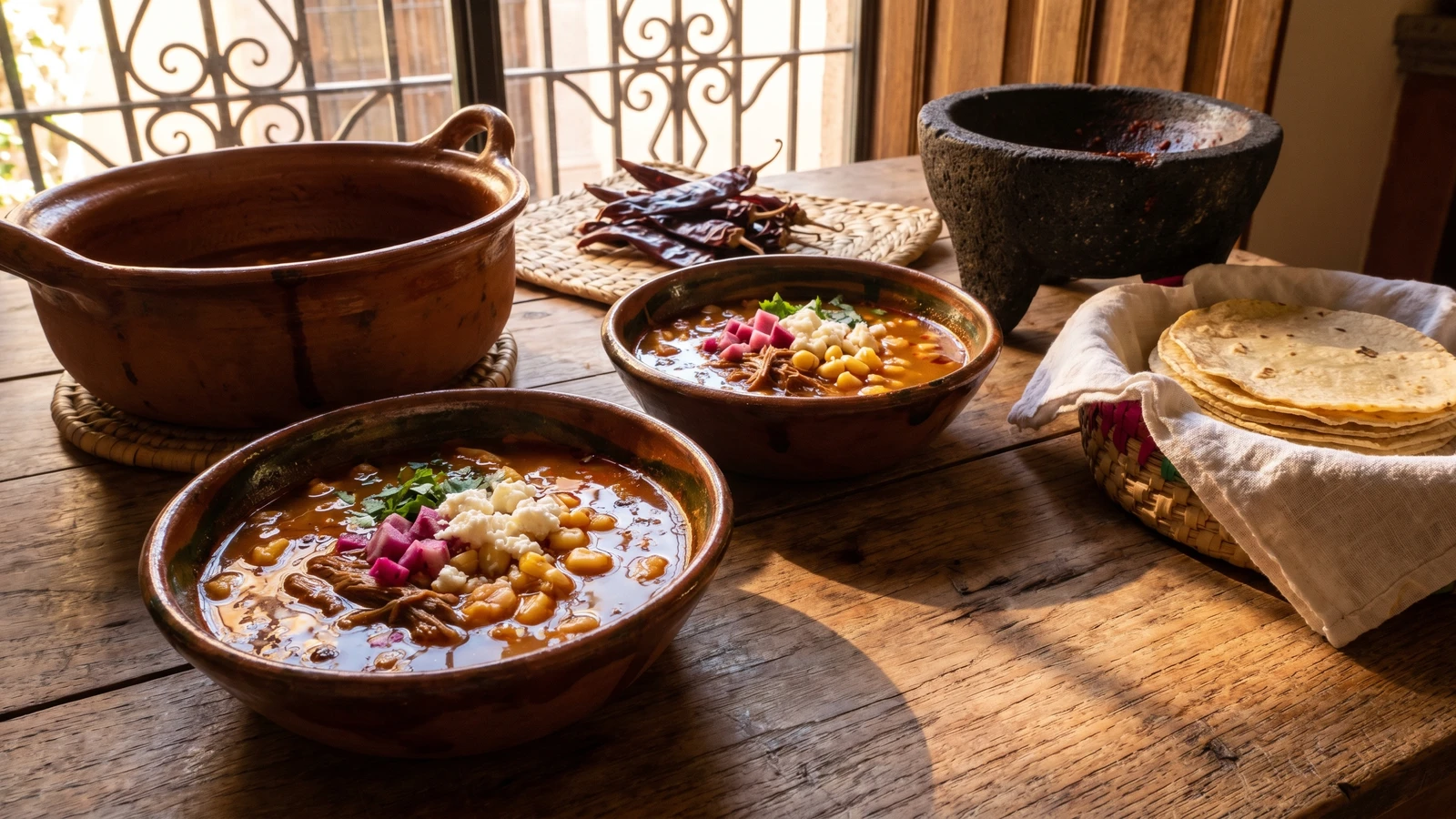
Aguascalientes' Bajio pozole de lengua, built with cacahuazintle hominy, tender beef tongue, chile ancho and guajillo, with xoconostle brightness and table garnishes.
A cooking platform built around craft, culture, and the stories behind what we eat.
Created by
Queretaro's Bajio soup of beef broth and cooked camote, colored with chile guajillo, sharpened with xoconostle, and finished with the quiet bite of chilcuague.
Queretaro sits in the Bajio, between the old Camino Real de Tierra Adentro and the dry hills that climb toward the Sierra Gorda. This sopa de camote belongs to that road kitchen: beef broth, cooked sweet potato, chile guajillo, xoconostle, and the sharp little secret of chilcuague. Not a soup from one Mexico. This is a 32-state cuisine.
At Mercado de La Cruz in Santiago de Queretaro, the camotes are not decoration. The women pick them by weight and skin, then turn them into food that stretches a pot without thinning it. That is the intelligence here. The cooked camote thickens the beef broth until it has body, while guajillo gives a red-gold color and mild fruit. Chilcuague does not behave like chile de arbol. It prickles. It reminds you that the Bajio has its own language.
The novohispana part matters. Around Santa Rosa de Viterbo, the old convent register taught cooks to use sweet spices, beef, local roots, and thrift with discipline. My mother did not cook this one often, she was Jalisciense, but she wrote in her notebook beside a camote soup: 'do not let it become sweet candy.' She was right. Xoconostle keeps the pot honest.
This is comfort food, yes, but comfort does not mean careless. Toast the chile. Fry the base in manteca. Let the broth do its work. No me vengas con atajos.
After the Zacatecas silver strike of 1546, Queretaro became a supply point on the Camino Real de Tierra Adentro, where cattle, wheat, dairy, and imported spices moved through Bajio kitchens. Camote is pre-Columbian, while beef broth, canela, clove, and convent sweet-savory technique belong to the colonial kitchen of New Spain. Xoconostle and chilcuague tie the soup back to the semi-arid corridor of Queretaro, Guanajuato, and San Luis Potosi, where acidity and tongue-prickle matter more than brute heat.
Quantity
2 pounds
Quantity
1 pound
Quantity
10 cups
Quantity
1 medium
halved
Quantity
5
3 whole for broth, 2 peeled for blending
Quantity
2
Quantity
1 teaspoon
Quantity
1 1/2 teaspoons, plus more to taste
Quantity
2 large, about 1 1/2 pounds total
Quantity
4
stemmed and seeded
Quantity
1 small piece, about 1 inch
Quantity
2
Quantity
4
Quantity
2 tablespoons
Quantity
1/2 small
finely chopped
Quantity
1/8 teaspoon
or one pea-sized piece fresh chilcuague root, finely grated
Quantity
1 cup
drained
Quantity
2
peeled, seeded, and diced small
Quantity
1/2 cup
crumbled
Quantity
2 tablespoons
chopped
Quantity
for serving
warmed
| Ingredient | Quantity |
|---|---|
| beef shank or chamberete, bone-in | 2 pounds |
| beef marrow or soup bones | 1 pound |
| cold water | 10 cups |
| white onionhalved | 1 medium |
| garlic cloves3 whole for broth, 2 peeled for blending | 5 |
| bay leaves | 2 |
| dried Mexican oregano | 1 teaspoon |
| kosher salt | 1 1/2 teaspoons, plus more to taste |
| orange-fleshed sweet potatoes | 2 large, about 1 1/2 pounds total |
| dried chile guajillostemmed and seeded | 4 |
| canela | 1 small piece, about 1 inch |
| whole cloves | 2 |
| black peppercorns | 4 |
| manteca de cerdo | 2 tablespoons |
| white onionfinely chopped | 1/2 small |
| ground chilcuagueor one pea-sized piece fresh chilcuague root, finely grated | 1/8 teaspoon |
| cooked cacahuazintle kernels or Mexican hominydrained | 1 cup |
| xoconostlespeeled, seeded, and diced small | 2 |
| queso ranchero (optional)crumbled | 1/2 cup |
| cilantro (optional)chopped | 2 tablespoons |
| hand-pressed corn tortillas (optional)warmed | for serving |
Put the beef shank, soup bones, cold water, halved onion, 3 whole garlic cloves, bay leaves, oregano, and salt in a heavy pot. Bring it slowly to a simmer over medium heat. Skim the gray foam in the first 20 minutes. A clear broth starts with patience, not violence. Keep it at a gentle simmer for 2 hours, until the meat pulls from the bone.
While the broth cooks, heat the oven to 400F. Prick the sweet potatoes with a knife and bake them on a tray until the skins wrinkle and the flesh collapses under pressure, 45 to 60 minutes. Baking concentrates the sweetness. Boiled camote works in hunger. Baked camote works in this soup.
Heat a dry comal over medium. Toast the chile guajillo a few seconds per side until the skins turn shiny and flexible. Do not blacken them. Toast the canela, cloves, and peppercorns on the same comal just until fragrant. Guajillo gives color and fruit, not a dare. Not all Mexican food is built to burn your mouth.
Cover the toasted chiles with hot water and soak for 15 minutes. Drain them. Scoop the baked sweet potato flesh into a blender with the soaked guajillos, toasted spices, 2 peeled garlic cloves, 2 cups of strained beef broth, and the chilcuague. Blend until completely smooth. Chilcuague is powerful. Use the small amount listed. It should wake the tongue, not numb the table.
Melt the manteca de cerdo in a clay cazuela or heavy pot over medium heat. Add the finely chopped onion and cook until translucent, not browned. Pour in the camote and chile puree. It will thicken fast. Stir for 6 to 8 minutes, scraping the bottom, until the color deepens and the fat leaves small orange-red freckles on the surface. La manteca es el sabor. This step is where the soup stops tasting raw.
Strain the remaining beef broth and whisk it into the fried base a cup at a time. Add the cooked cacahuazintle and simmer 15 minutes. The soup should be thick enough to coat a spoon but still pour like broth. If it stands like puree, add more broth. Sopa is sopa. Do not turn it into baby food.
Shred the cooked beef from the shank and return a generous handful to the pot. Add the diced xoconostle and simmer 5 minutes more. Taste for salt. The xoconostle should cut the sweetness of the camote with clean acidity, the way the semi-arid Bajio teaches you to use fruit. Sweet without acid is dull. The market women know this.
Ladle the soup into deep clay bowls. Crown each bowl with crumbled queso ranchero and a little cilantro. Serve warm corn tortillas on the side, wrapped in a cloth-lined chiquihuite. No sour cream. No cheddar. No flour tortillas here. Cada estado, su propia cocina.
1 serving (about 620g)
Culinary guides, cultural storytelling, and the editorial depth that makes cooking meaningful.
Discover Culinary ExplorerChef Lupita
Aguascalientes' Bajio pozole de lengua, built with cacahuazintle hominy, tender beef tongue, chile ancho and guajillo, with xoconostle brightness and table garnishes.

Chef Lupita
Veracruz's Gulf coast rice from Alvarado, built with seafood stock, tomato, chile chipotle, epazote, shrimp, fish, jaiba, and pulpo, served loose and brothy in a clay cazuela.

Chef Lupita
Costa Chica's wet salt-beef stew, built from chile costeño, guajillo, tomato, manteca, yuca, plantain, and masa dumplings, the ranching pot of Cuajinicuilapa and Pinotepa.

Chef Lupita
Michoacán's P'urhépecha atápakua is a masa-thickened sauce and stew at once, built with pork, chile guajillo, and hierbabuena added only at the end.