
Chef Lupita
Aguascalientes Beef Tongue Pozole (Pozole de Lengua)
Aguascalientes' Bajio pozole de lengua, built with cacahuazintle hominy, tender beef tongue, chile ancho and guajillo, with xoconostle brightness and table garnishes.
A cooking platform built around craft, culture, and the stories behind what we eat.
Created by
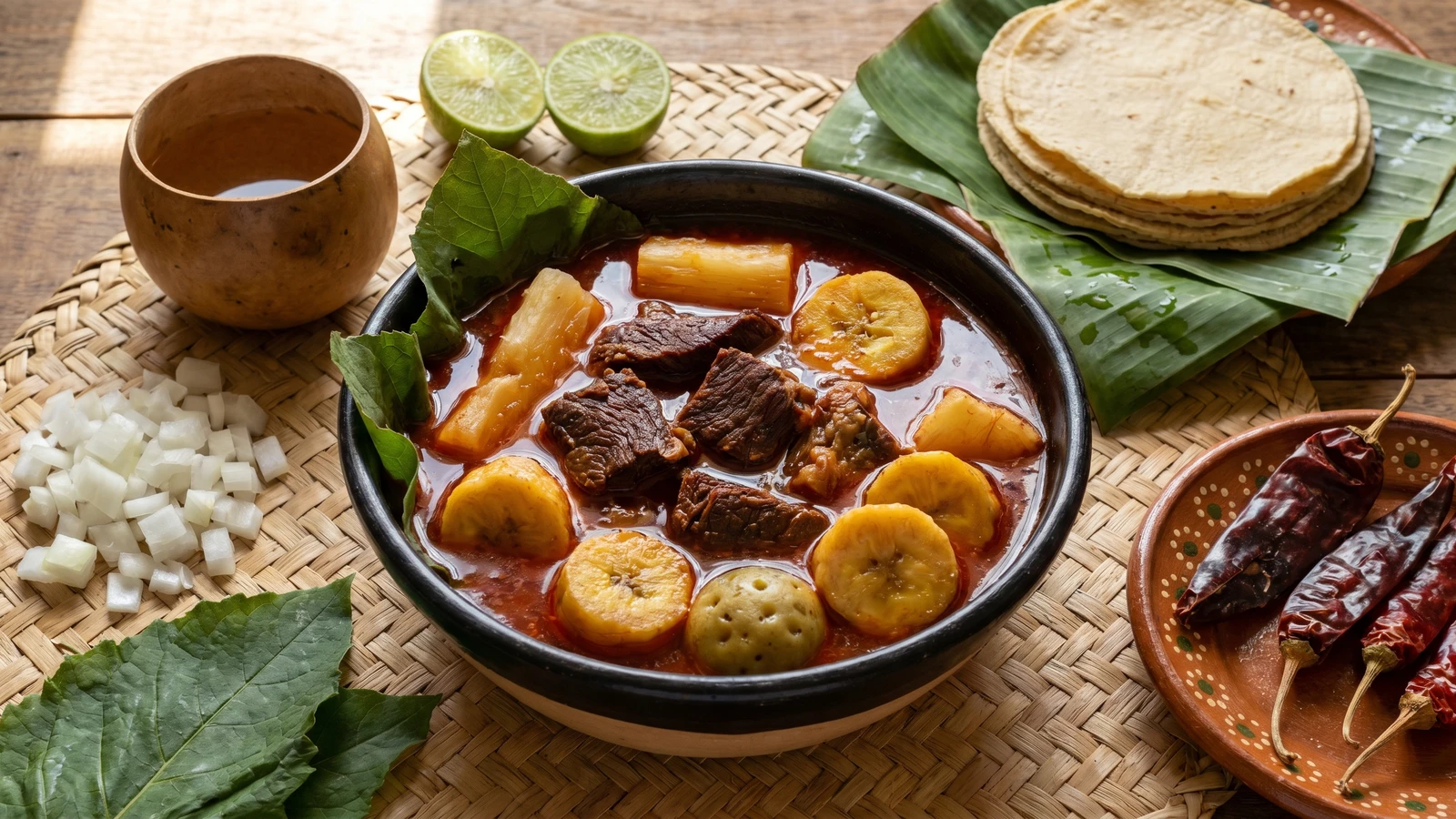
Costa Chica's wet salt-beef stew, built from chile costeño, guajillo, tomato, manteca, yuca, plantain, and masa dumplings, the ranching pot of Cuajinicuilapa and Pinotepa.
Guerrero and Oaxaca share the Costa Chica, and this stew lives in that Afro-Mexican corridor between Cuajinicuilapa and Pinotepa Nacional. This is ranching food plated wet, not taquería barbacoa, not dry shredded meat for tacos. Salt-dried beef goes back into the pot with tomato, chile costeño, chile guajillo, yuca, plátano macho, hoja santa, epazote, and chochoyotes made from masa. Cada estado, su propia cocina, and every coast has its own hunger.
The Afro-Mexican communities of the Costa Chica of Guerrero and Oaxaca were recognized constitutionally as part of Mexico's third root only in 2020, though their cooking has shaped the Pacific coast for centuries. Salt-dried beef reflects ranching and preservation practices along the coast, while yuca, plantain, hoja santa, and chile costeño show the ingredient ecology shared by Afro-Mexican, Indigenous, and mestizo kitchens. This stew should not be confused with chilate, the Guerrero chicken stew, or chilate, the cacao-rice-cinnamon beverage, both Guerrero traditions with different uses and histories.
Quantity
2 pounds
cut into 2-inch pieces
Quantity
10 cups, plus more for soaking
Quantity
1 medium
halved
Quantity
5
3 whole and 2 peeled for the sauce
Quantity
2
Quantity
6
stemmed and seeded
Quantity
4
stemmed and seeded
Quantity
3
Quantity
2 tablespoons
Quantity
1/2 teaspoon
Quantity
4
Quantity
1 pound
peeled, woody core removed, cut into 2-inch chunks
Quantity
1 large
ripe but firm, peeled and cut into thick rounds
Quantity
2
torn into large pieces
Quantity
2 sprigs
Quantity
1 1/2 cups
Quantity
2 tablespoons
Quantity
1/2 teaspoon, plus more only if needed
Quantity
for serving
Quantity
for serving
Quantity
for serving
| Ingredient | Quantity |
|---|---|
| salt-dried beef or carne de res saladacut into 2-inch pieces | 2 pounds |
| cold water | 10 cups, plus more for soaking |
| white onionhalved | 1 medium |
| garlic cloves3 whole and 2 peeled for the sauce | 5 |
| bay leaves | 2 |
| dried chile guajillostemmed and seeded | 6 |
| dried chile costeñostemmed and seeded | 4 |
| ripe Roma tomatoes | 3 |
| manteca de cerdo | 2 tablespoons |
| cumin seed | 1/2 teaspoon |
| black peppercorns | 4 |
| yucapeeled, woody core removed, cut into 2-inch chunks | 1 pound |
| plátano machoripe but firm, peeled and cut into thick rounds | 1 large |
| hoja santa leavestorn into large pieces | 2 |
| fresh epazote | 2 sprigs |
| fresh masa or masa harina dough | 1 1/2 cups |
| lard for the chochoyotes | 2 tablespoons |
| kosher salt | 1/2 teaspoon, plus more only if needed |
| warm corn tortillas (optional) | for serving |
| lime halves (optional) | for serving |
| diced raw white onion (optional) | for serving |
Rinse the salt-dried beef under cool water, then cover it with fresh cold water in a bowl. Soak 8 to 12 hours in the refrigerator, changing the water once if the beef is very salty. This is not a shortcut dish. The salt preserved the meat, but now you have to bring it back gently or the broth will taste like seawater.
Drain the beef and put it in a heavy pot with 10 cups cold water, the halved onion, 3 whole garlic cloves, and bay leaves. Bring to a gentle simmer and skim the first foam that rises. Cook 1 1/2 to 2 hours, until the beef is tender but still holds together. Taste the broth before adding salt. Salt-dried beef speaks for itself.
Heat a dry comal over medium. Toast the guajillo and chile costeño separately, about 20 to 30 seconds per side, just until the skins darken slightly and smell deep. Do not blacken them. Chile costeño is small and direct, and it burns fast. Burned chile turns bitter. Throw it out and start again if you have to.
Soak the toasted chiles in hot water for 15 minutes. Roast the tomatoes on the comal until the skins blister and the flesh softens. Blend the drained chiles with the roasted tomatoes, 2 peeled garlic cloves, cumin seed, peppercorns, and 1 cup of the beef broth until completely smooth. Strain it. You want a red sauce, not chile skins floating in the pot.
Melt the manteca in a wide cazuela or heavy pot over medium heat. Add the strained chile-tomato sauce carefully. It will sputter. Cook 8 to 10 minutes, stirring often, until the color deepens and the fat begins to show at the edges. La manteca es el sabor. If you pour raw salsa into broth, it tastes raw in the bowl.
Lift the tender beef from its broth and add it to the fried sauce. Strain in 5 cups of the beef broth, saving the rest in case the stew needs loosening. Add the yuca. Simmer 25 minutes, until the yuca starts to turn creamy at the edges but does not fall apart.
Mix the masa with 2 tablespoons lard and 1/2 teaspoon salt until soft and smooth. Roll into small balls, then press a dimple into each one with your thumb. That dimple catches the broth. Drop the chochoyotes into the simmering stew one by one. Masa thickens this kind of coastal pot properly. Flour belongs somewhere else.
Add the plátano macho rounds, hoja santa, and epazote. Simmer 15 to 20 minutes more, until the chochoyotes float and feel firm, the plantain is tender, and the sauce has a red sheen on top. Taste now. Add salt only if the beef did not give enough. Most pots will need none.
Ladle the stew into deep bowls with beef, yuca, plantain, chochoyotes, and plenty of red broth in every serving. Set warm corn tortillas, lime halves, and diced white onion on the table. This is plated wet, the way the Costa Chica eats it. No me vengas con atajos.
1 serving (about 680g)
Culinary guides, cultural storytelling, and the editorial depth that makes cooking meaningful.
Discover Culinary ExplorerChef Lupita
Aguascalientes' Bajio pozole de lengua, built with cacahuazintle hominy, tender beef tongue, chile ancho and guajillo, with xoconostle brightness and table garnishes.

Chef Lupita
Veracruz's Gulf coast rice from Alvarado, built with seafood stock, tomato, chile chipotle, epazote, shrimp, fish, jaiba, and pulpo, served loose and brothy in a clay cazuela.

Chef Lupita
Michoacán's P'urhépecha atápakua is a masa-thickened sauce and stew at once, built with pork, chile guajillo, and hierbabuena added only at the end.

Chef Lupita
Michoacán's Purépecha atápakua is a chile-red, masa-thickened stew from the Lake Pátzcuaro region, built with guajillo, pasilla, toasted pepita, and quelites until the broth turns sturdy and alive.