
Chef Lupita
Aguascalientes Beef Tongue Pozole (Pozole de Lengua)
Aguascalientes' Bajio pozole de lengua, built with cacahuazintle hominy, tender beef tongue, chile ancho and guajillo, with xoconostle brightness and table garnishes.
A cooking platform built around craft, culture, and the stories behind what we eat.
Created by
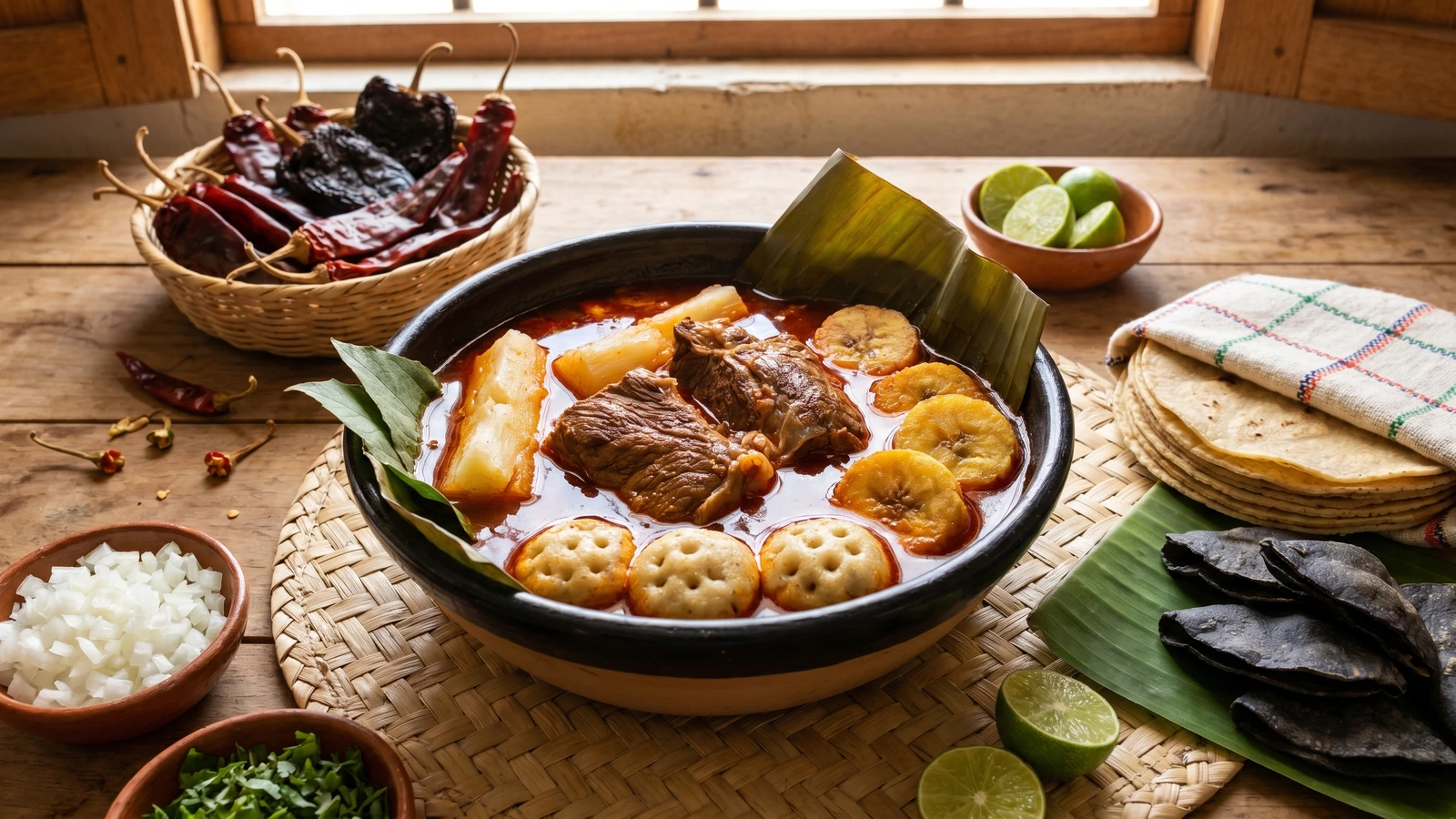
Guerrero's Costa Chica barbacoa is a wet celebratory stew from Cuajinicuilapa: beef wrapped in banana leaf, cooked in guajillo-ancho adobo with chile costeño, yuca, plantain, hoja santa, and chochoyotes.
Guerrero's Costa Chica, especially Cuajinicuilapa, is where this barbacoa lives. Not folded into a taqueria taco and drowned under anonymous salsa. This is wet barbacoa, served in a deep bowl as stew, with red broth, beef, yuca, plátano macho, and chochoyotes sitting in the same chile-stained pot. Cada estado, su propia cocina.
The Afro-Mexican corridor does not stop at one town. It runs through Costa Chica Guerrero in Cuajinicuilapa, through Costa Chica Oaxaca in Pinotepa and Chacahua, and across the Gulf in Veracruz Sotavento, Tlacotalpan and Los Tuxtlas. Name the places. The food has been carrying that history longer than the country was willing to write it down.
The adobo is guajillo and ancho for body, chile costeño for the coastal edge, garlic and tomato from the comal, then manteca de cerdo to fry it until the color darkens and the fat separates. La manteca es el sabor. The banana leaf is not decoration. It perfumes the beef and holds the cooking close, the way I watched women in Cuajinicuilapa line their pots before a family celebration.
Do not flatten this dish into generic barbacoa. The yuca, plátano macho, hoja santa, epazote, and masa dumplings are part of the geography. You cook what the region gives you. Saber cocinar es saber vivir.
Afro-Mexican communities along Guerrero's Costa Chica descend in part from Africans brought through New Spain's colonial trade routes and from free Black and mixed communities tied to cattle ranching, coastal agriculture, and market cooking. After Mexico's 2019 constitutional reform and the 2020 national census that counted Afro-Mexicans as such, the country's third root gained federal visibility, although Cuajinicuilapa, Pinotepa, Chacahua, Tlacotalpan, and Los Tuxtlas had carried that identity in food, music, and family practice for centuries. Costa Chica wet barbacoa belongs to this celebratory stew tradition and should not be confused with the drier taqueria barbacoa of central Mexico.
Quantity
3 pounds
cut into 3-inch chunks
Quantity
2 pounds
cut into thick rounds
Quantity
2 tablespoons, divided, plus more to taste
Quantity
4 large
rinsed and wiped dry
Quantity
10
stemmed and seeded
Quantity
4
stemmed and seeded
Quantity
3
stemmed
Quantity
6
unpeeled
Quantity
1 large
quartered
Quantity
2
Quantity
1 teaspoon
Quantity
1 teaspoon
Quantity
4
Quantity
1 inch
Quantity
1 tablespoon
Quantity
1/4 cup
Quantity
3 tablespoons
Quantity
4 cups, plus more as needed
Quantity
4
Quantity
5
Quantity
1 pound
peeled, woody core removed, cut into 2-inch chunks
Quantity
1 large
peeled and cut into thick rounds
Quantity
2 cups
Quantity
2 tablespoons
Quantity
1/2 teaspoon
Quantity
2 tablespoons
Quantity
1/4 cup, as needed
Quantity
for serving
Quantity
for serving
Quantity
for serving
Quantity
for serving
| Ingredient | Quantity |
|---|---|
| beef chuck roastcut into 3-inch chunks | 3 pounds |
| bone-in beef shankcut into thick rounds | 2 pounds |
| kosher salt | 2 tablespoons, divided, plus more to taste |
| banana leavesrinsed and wiped dry | 4 large |
| dried chile guajillostemmed and seeded | 10 |
| dried chile anchostemmed and seeded | 4 |
| dried chile costeñostemmed | 3 |
| garlic clovesunpeeled | 6 |
| white onionquartered | 1 large |
| Roma tomatoes | 2 |
| cumin seeds | 1 teaspoon |
| black peppercorns | 1 teaspoon |
| whole cloves | 4 |
| Mexican cinnamon stick | 1 inch |
| dried Mexican oregano | 1 tablespoon |
| pineapple vinegar or apple cider vinegar | 1/4 cup |
| pork lard | 3 tablespoons |
| water | 4 cups, plus more as needed |
| fresh hoja santa leaves | 4 |
| fresh epazote sprigs | 5 |
| yucapeeled, woody core removed, cut into 2-inch chunks | 1 pound |
| semi-ripe plátano machopeeled and cut into thick rounds | 1 large |
| fresh masa for tortillas | 2 cups |
| pork lard for chochoyotes | 2 tablespoons |
| kosher salt for chochoyotes | 1/2 teaspoon |
| finely chopped epazote | 2 tablespoons |
| warm water for masa | 1/4 cup, as needed |
| warm corn tortillas (optional) | for serving |
| finely diced raw white onion (optional) | for serving |
| chopped cilantro (optional) | for serving |
| lime halves (optional) | for serving |
Season the chuck and beef shank with 1 tablespoon of the salt. Let the meat sit at room temperature for 30 minutes while you prepare the adobo. Do not trim away every bit of fat. The fat carries the chile and gives the broth body. A lean pot is a poor pot.
Pass each banana leaf over a gas flame or hot comal for a few seconds per side until it turns glossy and flexible. If the leaves are frozen, thaw them first, rinse them, and dry them well. This keeps them from cracking when you fold the beef inside. The leaf gives the barbacoa its green, coastal perfume.
Heat a dry comal over medium. Toast the guajillo, ancho, and chile costeño separately, 20 to 30 seconds per side, pressing them flat with tongs. They should puff, darken slightly, and smell deep, not burned. The costeño is small and quick. Watch it. Burned chile turns bitter and no amount of beef will fix it.
Put the toasted chiles in a bowl and cover them with hot water, not boiling water. Let them soften for 20 minutes. Boiling water toughens the skins and pulls out bitterness. Hot water softens the flesh so the adobo blends clean.
On the same comal, char the garlic, onion, and tomatoes until the skins blacken in spots and the onion edges soften. Peel the garlic. Toast the cumin, black peppercorns, cloves, and cinnamon for 30 seconds, just until fragrant. This is where the adobo starts to smell like a market stall, not a jar.
Drain the chiles and put them in a blender with the peeled garlic, onion, tomatoes, toasted spices, oregano, vinegar, the remaining 1 tablespoon salt, and 1 cup fresh water. Blend until completely smooth. Strain through a fine-mesh sieve, pressing hard on the solids. If you leave skins and seeds in the adobo, the stew will feel rough on the tongue.
Melt 3 tablespoons lard in a heavy cazuela or Dutch oven over medium heat. Add the strained adobo carefully because it will sputter. Cook 8 to 10 minutes, stirring often, until it thickens, darkens to brick red, and the fat begins to separate at the edges. La manteca es el sabor. This step cooks the chile paste so the broth tastes finished.
Transfer half the fried adobo to a bowl. Line the pot with the softened banana leaves, leaving enough overhang to fold over the top. Coat the beef with the reserved adobo, then set it inside the leaf-lined pot with the hoja santa and whole epazote sprigs. Pour 4 cups water around the meat, not directly over the top. Fold the leaves closed and cover the pot tightly.
Bring the liquid to a gentle simmer over medium-low heat. Cook covered for 3 1/2 hours, checking once after 2 hours to make sure there is still liquid in the pot. Add hot water if the level drops below 1 inch. The beef is ready when the shank loosens from the bone and the chuck pulls apart with a spoon. No me vengas con atajos. Tough beef means it needs more time.
While the beef cooks, mix the fresh masa, 2 tablespoons lard, 1/2 teaspoon salt, and chopped epazote in a bowl. Knead until soft and smooth, adding warm water a tablespoon at a time if the masa cracks. Roll into small balls about the size of a walnut and press a dimple in the center of each one. That dimple catches broth. A round ball is just lazy masa.
Open the banana leaves and lift the beef to a tray. Remove the spent epazote stems and hoja santa. Strain the broth if you want it cleaner, then return it to the pot and leave the red fat on top unless there is too much. Add the yuca and simmer 20 to 25 minutes, until almost tender. Add the plátano macho and chochoyotes, then simmer 15 to 18 minutes more, until the dumplings are cooked through and the plantain is soft but not falling apart. Return the beef in large pieces and taste for salt.
Serve in deep bowls with beef, red broth, yuca, plátano macho, and chochoyotes in every portion. Set warm corn tortillas, raw white onion, cilantro, and lime at the table. This is wet Costa Chica barbacoa, not taqueria barbacoa. The tortilla is there to help you eat the stew, not to hide it. Así se hace y punto.
1 serving (about 540g)
Culinary guides, cultural storytelling, and the editorial depth that makes cooking meaningful.
Discover Culinary ExplorerChef Lupita
Aguascalientes' Bajio pozole de lengua, built with cacahuazintle hominy, tender beef tongue, chile ancho and guajillo, with xoconostle brightness and table garnishes.

Chef Lupita
Veracruz's Gulf coast rice from Alvarado, built with seafood stock, tomato, chile chipotle, epazote, shrimp, fish, jaiba, and pulpo, served loose and brothy in a clay cazuela.

Chef Lupita
Costa Chica's wet salt-beef stew, built from chile costeño, guajillo, tomato, manteca, yuca, plantain, and masa dumplings, the ranching pot of Cuajinicuilapa and Pinotepa.

Chef Lupita
Michoacán's P'urhépecha atápakua is a masa-thickened sauce and stew at once, built with pork, chile guajillo, and hierbabuena added only at the end.