Chef Klaus
Salzgurken
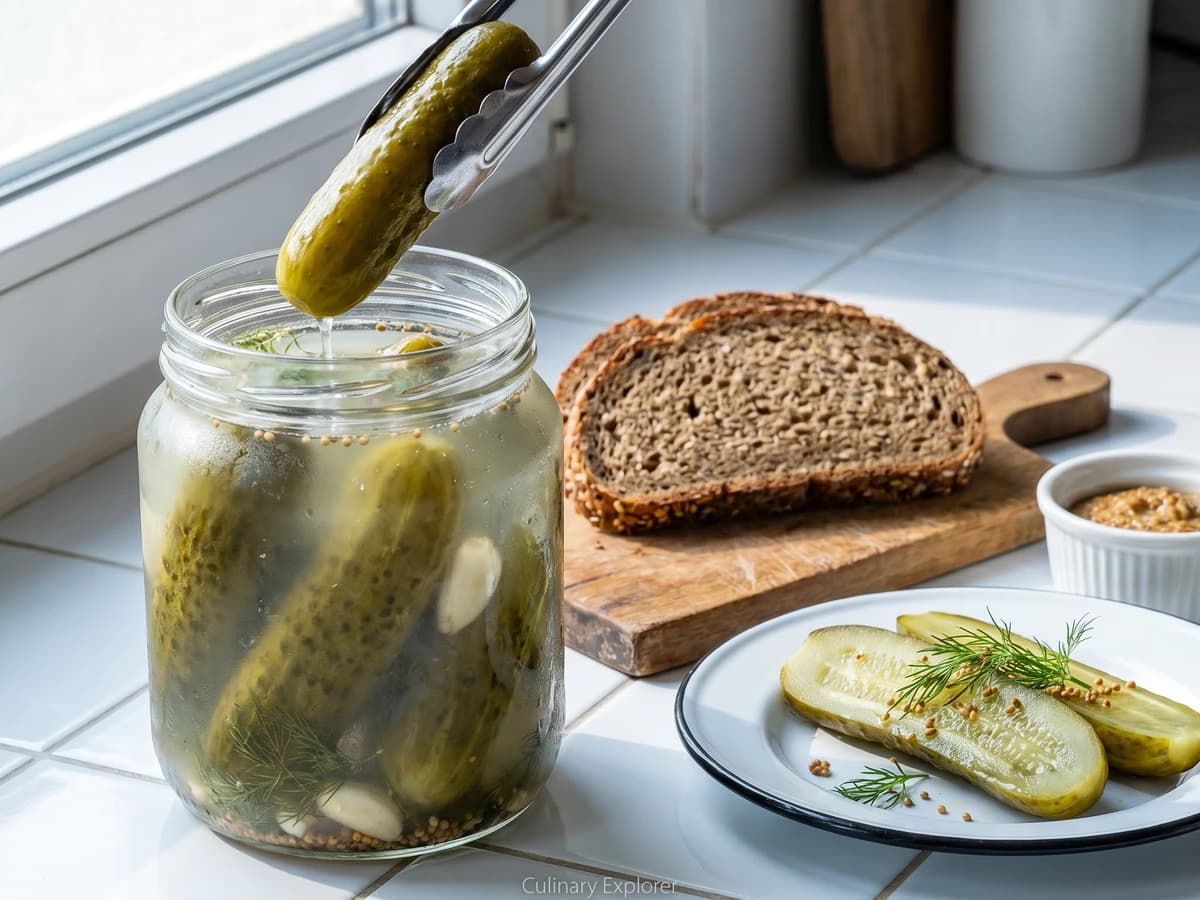
The eastern salt cucumber that sours itself in the jar: small summer cucumbers under a measured brine, dill and garlic beside them, time doing the work.

Updated June 19, 2026
How a cold-climate cuisine eats through winter: the kraut, the pickled cucumber, the soused herring, the slow-cooked fruit, the rendered fat, and the sharp mustard and horseradish that wake it all up.
A cooking platform built around craft, culture, and the stories behind what we eat.
Chef Klaus
The eastern salt cucumber that sours itself in the jar: small summer cucumbers under a measured brine, dill and garlic beside them, time doing the work.

Chef Klaus
Brandenburg's cucumber jar for the winter shelf: small gherkins salted first, packed with dill and horseradish leaf, then sealed in vinegar brine so the snap stays where it belongs.

Chef Klaus
The thrift spread of the Schlachtfest table: pork fat rendered slowly until the cracklings turn crisp, then folded with onion and apple for dark bread.

Chef Klaus
The apple-harvest preserve of the German kitchen, cooked low until the fruit collapses, then kept smooth, tart, and ready for potato pancakes or warm Mehlspeisen.

Chef Klaus
The Rhenish larder spread made from sugar beets and tart apples, cooked slowly until the juice turns dark, glossy, and sharp-sweet enough for rye bread.

Chef Klaus
The German larder jar for cold meats, rye bread, and Sunday leftovers, built on one rule: blanch each vegetable to its own bite before the mustard brine goes in.

Chef Klaus
The Franconian autumn pickle that belongs beside cold roast, rye bread, and sausage: pumpkin cubes kept firm in sharp-sweet vinegar syrup, not boiled into mush.

Chef Klaus
The northern sour herring roll for the New Year table, built on salt fish, sharp onion, gherkin, and a cold vinegar cure that does the work slowly.

Chef Klaus
The foundation ferment of the German winter larder: cabbage, salt, weight, and time, with the brine doing the preserving and not a spoon of vinegar in sight.

Chef Klaus
The Munich mustard for Weißwurst: coarse brown seed, vinegar, sugar, and apple, left overnight so the bite settles into a round, mild spoonful.

Chef Klaus
The northern marinated herring that belongs to the cold larder: salt fish, vinegar, onion, and time doing the work before bread or potatoes ever reach the table.

Chef Klaus
Fresh Sahnemeerrettich belongs beside smoked fish, cold roast, and the Christmas table: grated root folded quickly into soft cream before its sharp heat escapes into the room.

Chef Klaus
The Rhenish winter bean before freezers: green beans cut fine, salted until their own sour brine does the keeping, then cooked into the pot instead of eaten raw from the crock.

Chef Klaus
The German summer larder in one crock: berries, cherries, plums, and pears buried under sugar and strong rum, left in the dark until Christmas gives them back.

Chef Klaus
The Spreewald pickle for overgrown cucumbers: peeled, seeded, salted, then set in a sweet-sour mustard-seed brine until the flesh turns glassy and still keeps its bite.

Chef Klaus
The ruby pickle of the German winter larder: boiled beetroot sliced into spiced vinegar, sharp enough for herring, mild enough for a Sunday Brotzeit.

Chef Klaus
The Rhenish autumn preserve that asks for ripe Zwetschgen, a low oven, and patience: no pectin, no packet, just fruit cooked until it holds itself.
Culinary guides, cultural storytelling, and the editorial depth that makes cooking meaningful.
Discover Culinary ExplorerChef Klaus is a fictional culinary guide to German Regional Cuisine (Hausmannskost), written with the assistance of AI.