
Chef Klaus
Apfelmus
The apple-harvest preserve of the German kitchen, cooked low until the fruit collapses, then kept smooth, tart, and ready for potato pancakes or warm Mehlspeisen.
A cooking platform built around craft, culture, and the stories behind what we eat.
Created by
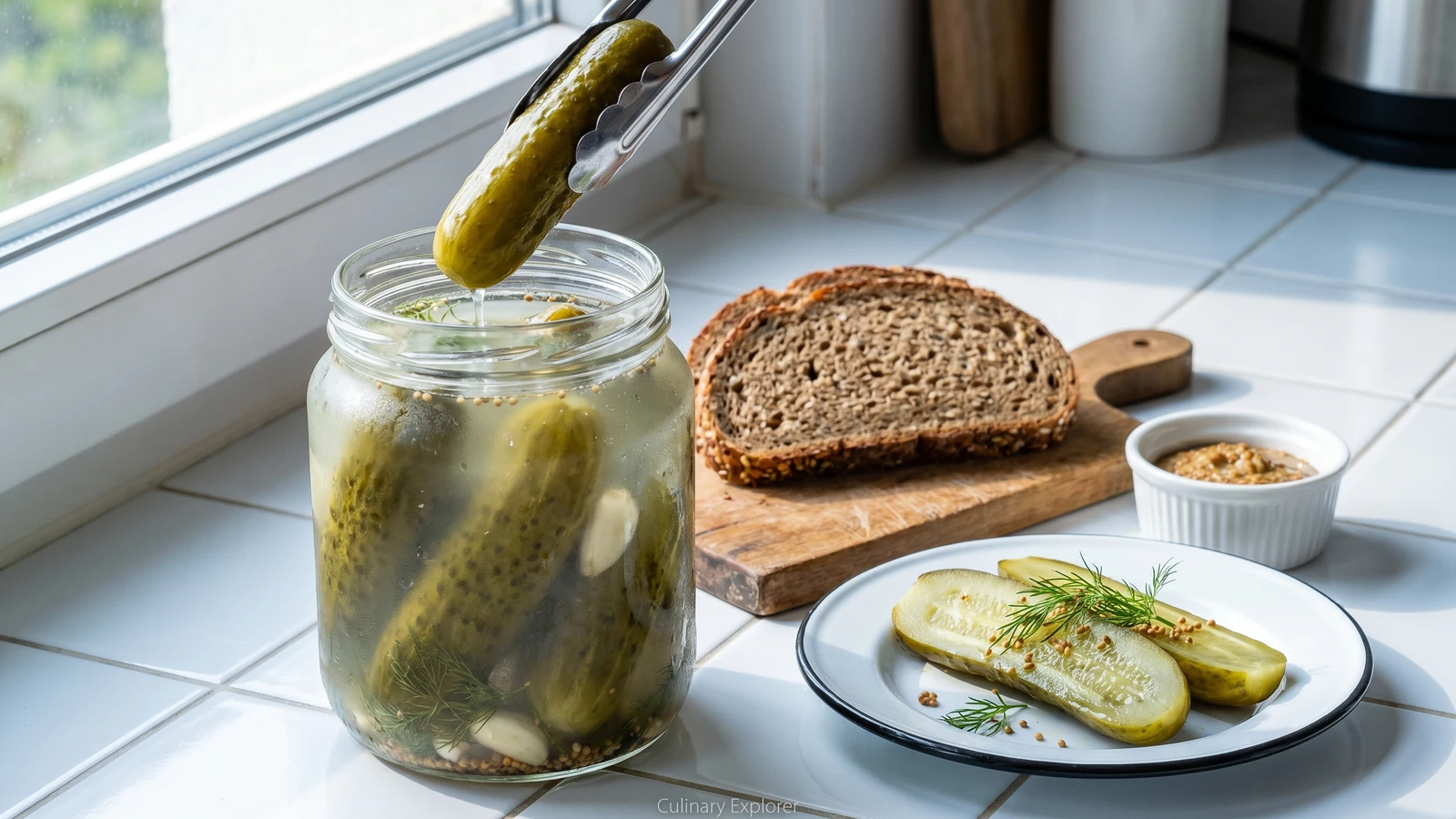
The eastern salt cucumber that sours itself in the jar: small summer cucumbers under a measured brine, dill and garlic beside them, time doing the work.
Salzgurken belong to summer first and the larder second. In Brandenburg, Saxony, and the Spreewald, the small pickling cucumbers go into salt brine when the gardens are throwing more than the table can eat. Later they come back beside fried potatoes, cold meats, rye bread, lentils, or a Sunday roast that wants something sharp. That is the point of a preserve: July helping November.
Im Norden anders, im Süden anders. The east keeps these cucumbers in salt and lets lactic acid do the souring; many western and southern jars lean vinegar-sweet and call them Gewürzgurken, spiced cucumbers. Both have their place. This one is not vinegar pickling. Nicht aus dem Glas, if the glass means a bought jar with sugar water and no life in it.
The single technique is the brine strength and the submersion. Use 30g salt per litre of water, and keep every cucumber under that brine, because lactic bacteria can work cleanly there while mould and soft rot get their chance in the air. A grape leaf brings tannin, which helps the cucumbers stay firm instead of going slack. Das braucht seine Zeit, but not mystery.
Watch the jar, not the clock alone. The brine clouds, bubbles rise, the green dulls to olive, and the smell turns clean-sour, dill and garlic behind it. Then you move them cold. Erst verstehen, dann kochen.
Salt-brined cucumbers are strongest in eastern Germany, especially Brandenburg's Spreewald, where Sorbian and German market gardeners built a cucumber trade around the wet soils and canals. The Spreewald cucumber was protected in the European Union as a geographical indication in 1999, but the older division remains in the jar: Salzgurken sour through lactic fermentation, while many Gewürzgurken rely on vinegar, sugar, and spices. The difference is not small, because one is a live brine preserve and the other is a vinegar pickle.
Quantity
1kg
8 to 12cm long, scrubbed clean
Quantity
1 litre
filtered or boiled and cooled if heavily chlorinated
Quantity
30g
without iodine or anti-caking agents
Quantity
2 heads or 1 large bunch
Quantity
4
lightly crushed
Quantity
2 teaspoons
Quantity
1 teaspoon
Quantity
4
Quantity
1
rinsed
Quantity
1 small piece
peeled and sliced
| Ingredient | Quantity |
|---|---|
| small firm pickling cucumbers8 to 12cm long, scrubbed clean | 1kg |
| waterfiltered or boiled and cooled if heavily chlorinated | 1 litre |
| fine sea salt or pickling saltwithout iodine or anti-caking agents | 30g |
| flowering dill heads or dill stems | 2 heads or 1 large bunch |
| garlic cloveslightly crushed | 4 |
| yellow mustard seeds | 2 teaspoons |
| black peppercorns | 1 teaspoon |
| bay leaves | 4 |
| fresh grape leaf, cherry leaf, or oak leafrinsed | 1 |
| fresh horseradish root (optional)peeled and sliced | 1 small piece |
Scrub the cucumbers under cold water and trim 2mm from the blossom end of each one. That little end carries enzymes that soften the flesh in the jar, and leaving it on is how a crisp cucumber turns tired before it turns sour.
Dissolve the salt fully in the water to make a 3 percent brine, 30g salt to 1 litre water. Measure it. Too little salt lets spoilage run ahead of the lactic bacteria; too much salt slows the souring until the cucumbers taste dead and only salty.
Put dill, garlic, mustard seed, peppercorns, bay, the grape leaf, and horseradish if using into two clean 1-litre jars, then pack the cucumbers in tightly but without bruising them. Tight packing keeps them from floating, and floating is the enemy because anything above the brine meets air.
Pour the brine over the cucumbers until they are completely covered, then weigh them down with a clean fermentation weight or a small clean glass weight. Leave 2cm headspace because the brine will bubble and rise as fermentation starts. The cucumbers must stay under the liquid the whole time.
Cover the jars loosely or use fermentation lids, set them on a tray, and leave them at 18 to 22C for 4 to 7 days. Warmth speeds the souring but can soften the cucumbers; cooler rooms take longer and keep a cleaner crunch. Open or burp sealed jars daily so pressure doesn't build.
Taste one cucumber after day 4. When the brine is cloudy, the smell is clean-sour, and the cucumber has turned olive and tastes sharp enough for you, tighten the lids and move the jars to the refrigerator. Cold slows the fermentation, so the crunch you earned stays with you.
Serve the Salzgurken cold, sliced beside rye bread, fried potatoes, cold roast pork, lentils, or a plate of sausages and mustard. Use clean tongs every time, because the brine is the keeper now and dirty fingers are not part of the method. Weggeworfen wird nichts: the sour brine can sharpen potato salad or a pot of lentils.
1 serving (about 100g)
Culinary guides, cultural storytelling, and the editorial depth that makes cooking meaningful.
Discover Culinary ExplorerChef Klaus
The apple-harvest preserve of the German kitchen, cooked low until the fruit collapses, then kept smooth, tart, and ready for potato pancakes or warm Mehlspeisen.

Chef Klaus
The northern marinated herring that belongs to the cold larder: salt fish, vinegar, onion, and time doing the work before bread or potatoes ever reach the table.

Chef Klaus
A proper Bratensoße begins with the brown bits in the pan, not a packet: bones roasted dark, wine scraped clean, stock reduced until it coats the spoon.

Chef Klaus
Plain mushrooms browned hard, then loosened with stock and cream. The sauce is mild, pale, quick, and honest, made for Schnitzel, Spätzle, or a weeknight pork cutlet.