Culinary Explorer
A cooking platform built around craft, culture, and the stories behind what we eat.
Sahnemeerrettich
Created by Chef Klaus
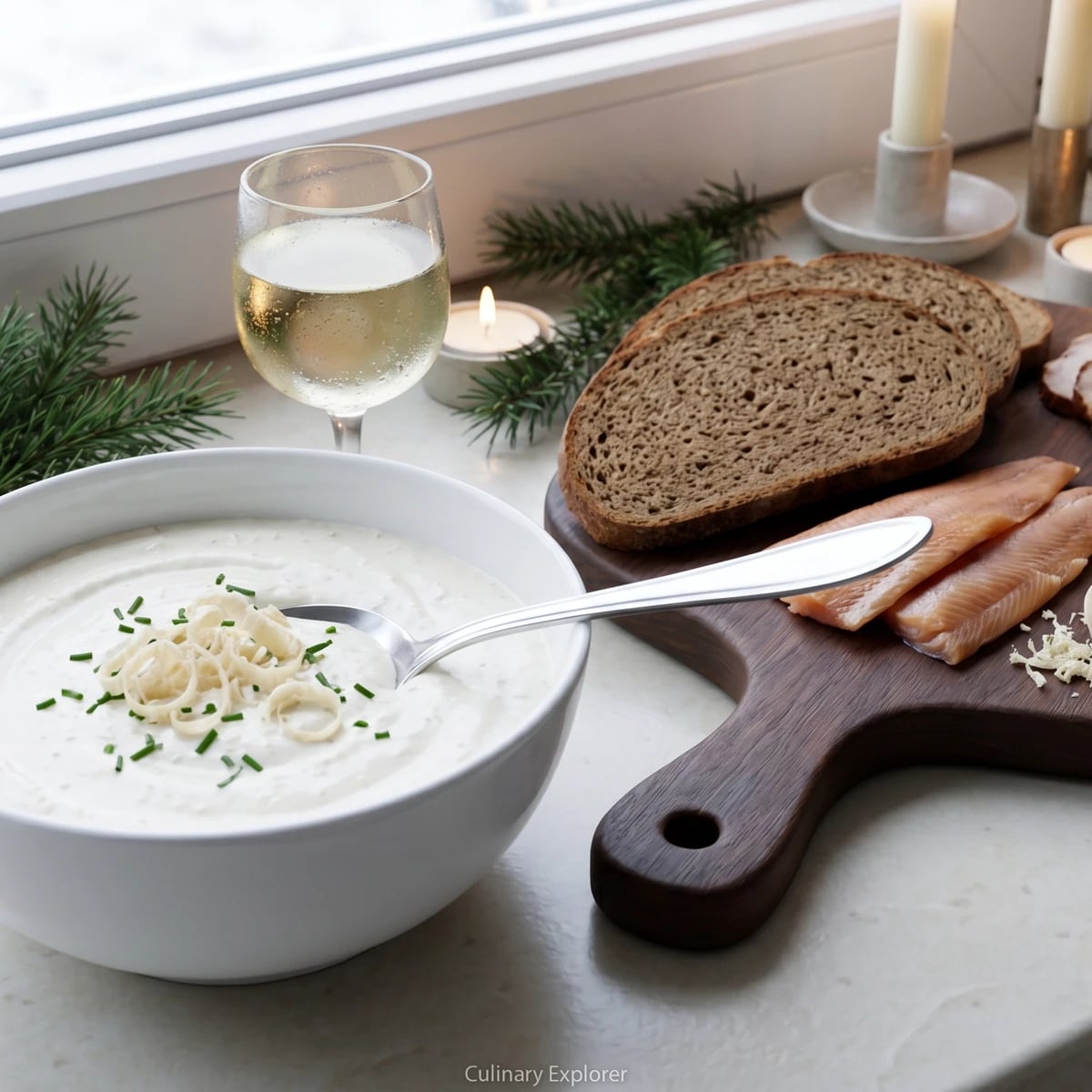
Fresh Sahnemeerrettich belongs beside smoked fish, cold roast, and the Christmas table: grated root folded quickly into soft cream before its sharp heat escapes into the room.
Sahnemeerrettich is the white bite on the cold German table: beside smoked trout and salmon in the north, beside cold roast, ham, and boiled beef farther south, and on the Christmas platter when the larder is doing the work. Horseradish is a winter root, not a summer herb; it wakes up cured and smoked things without needing a pan. Weggeworfen wird nichts, a slice of yesterday's roast gets a new plate when this is next to it.
Im Norden anders, im Süden anders. The north often makes it softer, more cream and lemon for fish; Franconia and Bavaria, where the root is Kren, want it sharper, sometimes with grated apple, sometimes turned into Semmelkren with bread and stock for boiled beef. Here I make the cream version, cold and spoonable, because it belongs on a quick bread-and-fish supper as well as a Christmas board.
The one technique is this: grate the root last and fold it straight into cold, lightly acidulated cream. Cut horseradish makes its bite when the cells break, then those mustard oils run off into the air; wait too long and the bowl smells fierce while the sauce tastes tired. Acid and fat catch the sharpness, and soft whipped cream carries it. Nicht aus dem Glas. The tube has already lost the argument.
Ingredients
cold heavy cream
Quantity
200ml
30 to 35 percent fat
crème fraîche or sour cream
Quantity
80g
cold
fresh horseradish root
Quantity
40 to 50g
peeled and finely grated
| Ingredient | Quantity |
|---|---|
| cold heavy cream30 to 35 percent fat | 200ml |
| crème fraîche or sour creamcold | 80g |
| fresh horseradish rootpeeled and finely grated | 40 to 50g |
Where cooking meets culture.
Culinary guides, cultural storytelling, and the editorial depth that makes cooking meaningful.
Discover Culinary Explorer