
Chef Klaus
Apfelmus
The apple-harvest preserve of the German kitchen, cooked low until the fruit collapses, then kept smooth, tart, and ready for potato pancakes or warm Mehlspeisen.
A cooking platform built around craft, culture, and the stories behind what we eat.
Created by
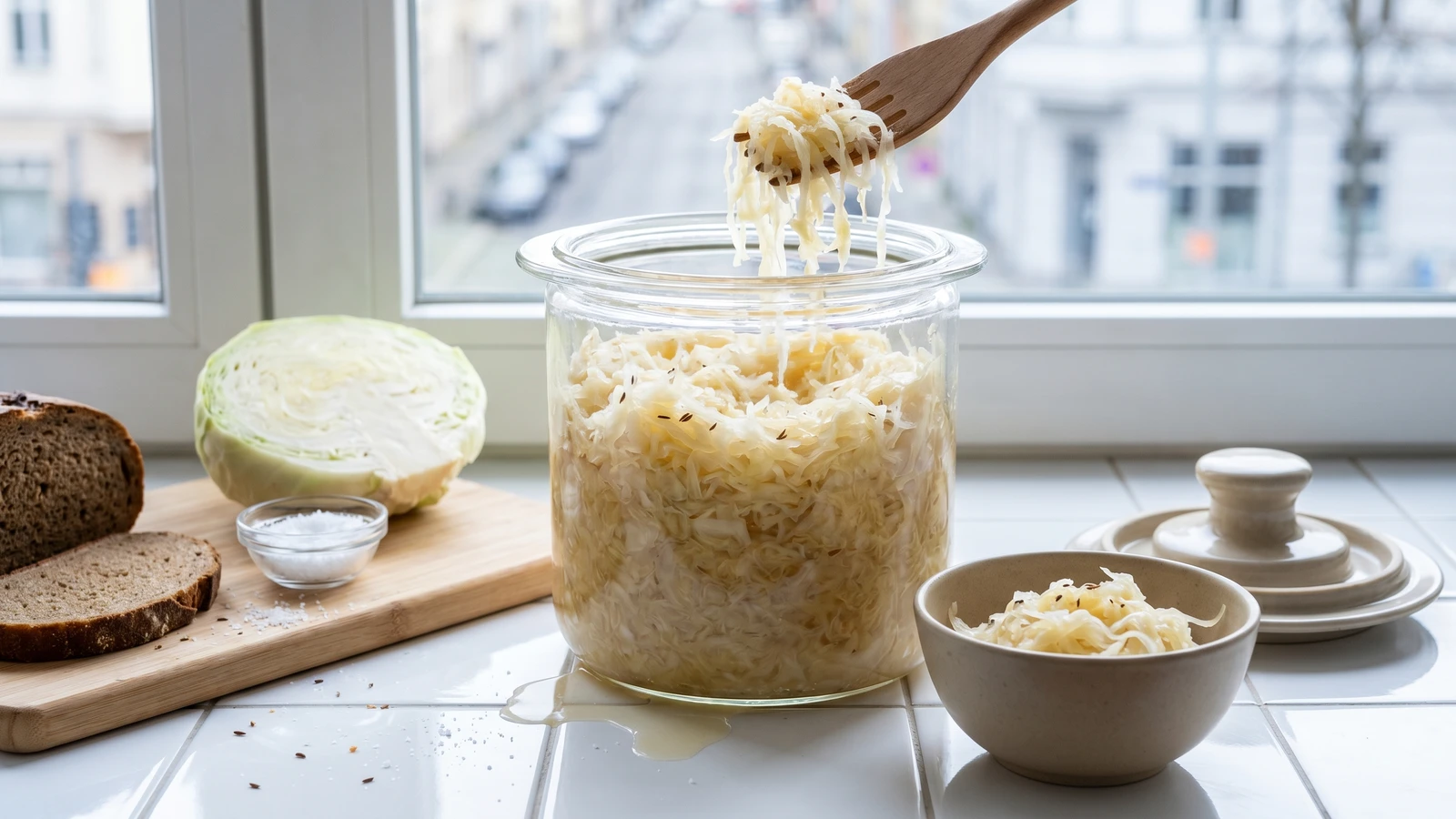
The foundation ferment of the German winter larder: cabbage, salt, weight, and time, with the brine doing the preserving and not a spoon of vinegar in sight.
Sauerkraut is the winter larder in its plainest form. White cabbage is cut fine, salted, pressed under its own juice, and left until lactic acid does the work. No vinegar. Nicht aus dem Glas. The sourness is made by time and salt, not poured in from a bottle.
It belongs everywhere on the German table, but not in one way. In the north it sits beside smoked pork, sausages, and dark bread; in Swabia it meets Schupfnudeln, little rolled potato noodles; in the Palatinate and Alsace border country it goes into great cabbage-and-pork pots; in Bavaria it is often softened with onion, caraway, and a little apple. Im Norden anders, im Süden anders. Same cabbage, different stove.
The technique that decides it is submersion. Salt draws water out of the cabbage, and that brine must cover every shred because lactic acid bacteria work safely without air while mold wants the surface. Press it down, weight it, and check it. If the cabbage floats dry, you've made a compost bucket, not Sauerkraut.
Use a tight, heavy head of cabbage, cut it evenly, and weigh the salt at two percent of the cabbage weight. Then leave it alone at cool room temperature until it smells cleanly sour and tastes alive. Das braucht seine Zeit. Erst verstehen, dann kochen.
Fermented cabbage was established across German-speaking central Europe by the medieval period, long before refrigeration, because salt and lactic fermentation turned a cheap autumn crop into vitamin-rich winter food. Captain James Cook famously carried sauerkraut on his 18th-century voyages to fight scurvy, which shows the same preservation logic that kept German households fed through the cold months. Regional use still splits clearly: Swabia puts it with Schupfnudeln, the Palatinate with heavy pork dishes, and the north with smoked meats and rye.
Quantity
2kg
outer leaves reserved, core removed, finely shredded
Quantity
40g
2 percent of cabbage weight
Quantity
1 teaspoon
Quantity
1
grated
| Ingredient | Quantity |
|---|---|
| white cabbageouter leaves reserved, core removed, finely shredded | 2kg |
| fine sea salt or pickling salt2 percent of cabbage weight | 40g |
| caraway seeds (optional) | 1 teaspoon |
| tart apple (optional)grated | 1 |
Pull off two clean outer leaves and set them aside, then quarter the cabbage, cut out the hard core, and shred the leaves finely. Thin, even shreds give the salt more surface to work on, so the cabbage gives up its juice quickly instead of sitting dry in the crock.
Mix the shredded cabbage with 40g salt, or exactly 20g salt for every 1kg cabbage. This two percent salt level pulls water from the cabbage, firms the texture, and gives the right bacteria the advantage while the wrong ones lose interest. Add caraway or grated apple now if you're using them.
Massage and squeeze the cabbage for 5 to 10 minutes, then let it stand 20 minutes and squeeze again. The bowl should collect a salty green-white brine. Don't add vinegar. The cabbage must make its own liquid, because that liquid is the beginning of the ferment.
Pack the cabbage into a clean crock or wide-mouth jar in handfuls, pressing hard after each addition so the brine rises above the surface. Air pockets are the enemy here; packed cabbage ferments evenly, while loose cabbage traps oxygen and turns soft.
Lay the reserved cabbage leaves over the shreds, then set a fermentation weight or a clean small jar filled with water on top. The brine must cover the cabbage by at least 2cm. Submersion is the whole safety rule: under brine, lactic acid bacteria work; above brine, mold gets invited.
Cover the vessel loosely or use an airlock lid, set it on a plate, and leave it at 18C to 21C for 2 to 4 weeks. A sealed active ferment builds gas, so don't clamp it shut unless the lid can vent. Taste after 10 days, then every few days. When it smells cleanly sour and tastes bright enough for your table, it is ready.
Move the finished Sauerkraut to clean jars, press it under its brine, and refrigerate it. Cold slows the ferment so the cabbage stays crisp and sour instead of racing toward softness. Keep every spoonful under brine, and use clean utensils. Weggeworfen wird nichts, but fuzzy mold, pink slime, or a rotten smell means the batch goes out.
1 serving (about 100g)
Culinary guides, cultural storytelling, and the editorial depth that makes cooking meaningful.
Discover Culinary ExplorerChef Klaus
The apple-harvest preserve of the German kitchen, cooked low until the fruit collapses, then kept smooth, tart, and ready for potato pancakes or warm Mehlspeisen.

Chef Klaus
The northern marinated herring that belongs to the cold larder: salt fish, vinegar, onion, and time doing the work before bread or potatoes ever reach the table.

Chef Klaus
A proper Bratensoße begins with the brown bits in the pan, not a packet: bones roasted dark, wine scraped clean, stock reduced until it coats the spoon.

Chef Klaus
Plain mushrooms browned hard, then loosened with stock and cream. The sauce is mild, pale, quick, and honest, made for Schnitzel, Spätzle, or a weeknight pork cutlet.