
Chef Klaus
Apfelmus
The apple-harvest preserve of the German kitchen, cooked low until the fruit collapses, then kept smooth, tart, and ready for potato pancakes or warm Mehlspeisen.
A cooking platform built around craft, culture, and the stories behind what we eat.
Created by
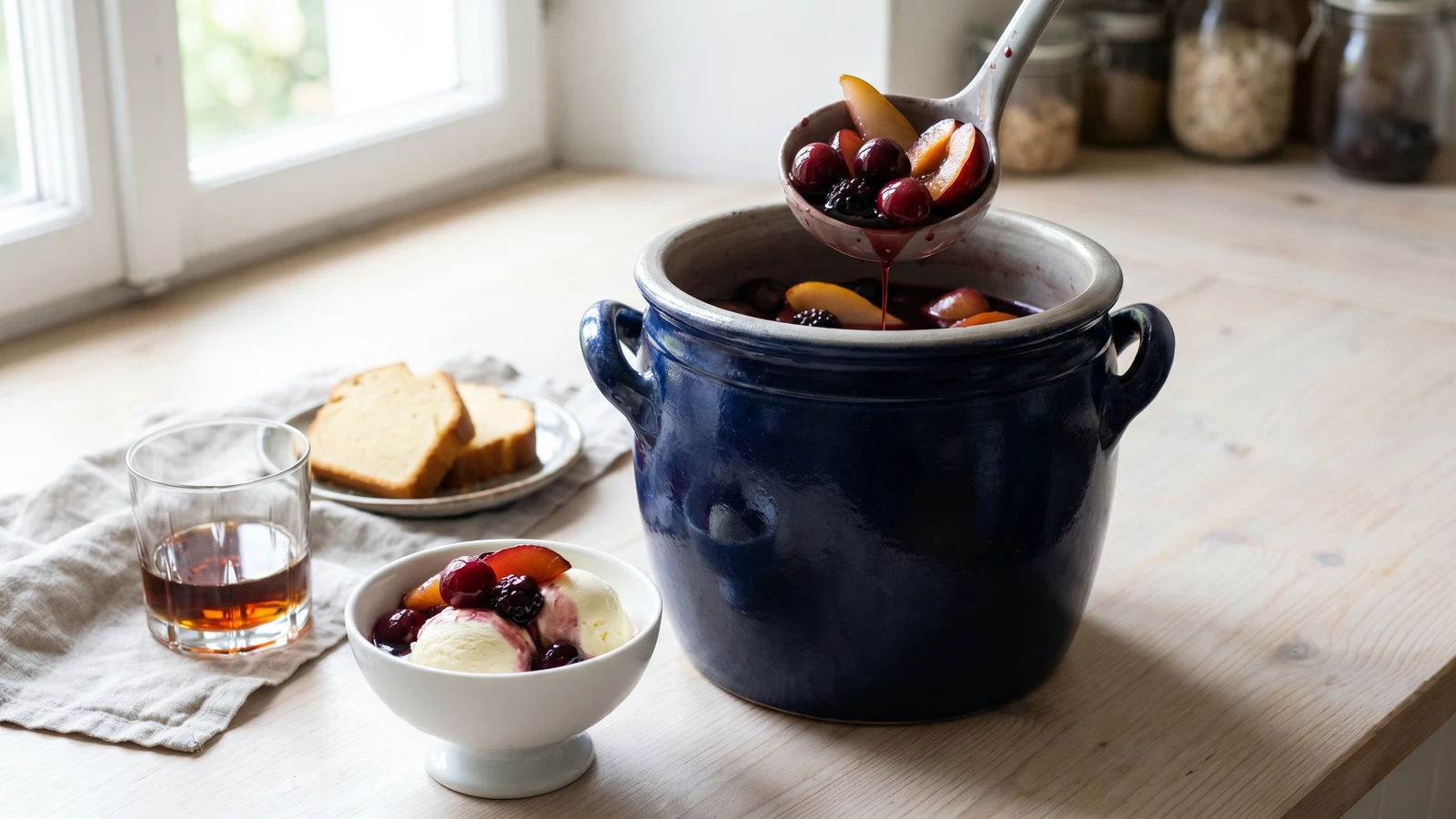
The German summer larder in one crock: berries, cherries, plums, and pears buried under sugar and strong rum, left in the dark until Christmas gives them back.
Rumtopf is not cooked. It is kept. From the first strawberries in June to the last plums and pears in autumn, you build it in layers, fruit by fruit, sugar by sugar, rum over everything. Then it sits in the dark until Advent and Christmas, when the summer comes back over ice cream, rice pudding, waffles, or a plain slice of cake.
This is strongest in the old household larder, across Germany and into Austria, not one neat regional dish with a border around it. Im Norden anders, im Süden anders. Some houses start with strawberries, some refuse them because they soften too much. The south likes apricots and Zwetschgen, the north may lean harder on cherries, currants, and late pears. The right way is the one that respects the fruit and keeps it safe under strong rum.
The rule that decides the whole crock is this: every piece of fruit must stay fully submerged under rum of at least 54 percent alcohol. Anything above the surface can spoil because sugar draws juice out of the fruit and lowers the strength around it; the liquor must stay strong, deep, and covering. Use ripe, sound fruit, never bruised fruit. Weggeworfen wird nichts, but a mouldy berry does not go into the larder. It goes out.
Das braucht seine Zeit. You add fruit when the season gives it to you, not when the calendar orders it. Keep the crock cool and dark, lift the lid only to add the next layer, and don't start tasting like a thief in August. Christmas is when Rumtopf earns itself.
Rumtopf belongs to the 19th-century German household preserve, when imported Caribbean rum became accessible enough for middle-class and farm kitchens to put summer fruit away in alcohol rather than only in jam, vinegar, or drying. The method spread through German-speaking households with regional fruit harvests: strawberries and cherries in early summer, currants and raspberries after them, then plums, apricots, pears, and late grapes in autumn. Its Christmas opening ties the summer fruit season to the winter feast table, one of the clearest larder dishes where preservation is the celebration.
Quantity
500g
hulled and halved if large
Quantity
500g
stemmed and pitted
Quantity
500g
picked over
Quantity
500g
stoned and cut into wedges
Quantity
500g
stoned and halved
Quantity
500g
peeled, cored, and cut into wedges
Quantity
1.5kg
divided, about half the weight of each fruit addition
Quantity
2.5 to 3 liters
enough to cover the fruit by 2cm
| Ingredient | Quantity |
|---|---|
| strawberrieshulled and halved if large | 500g |
| sweet or sour cherriesstemmed and pitted | 500g |
| raspberries, currants, or blackberriespicked over | 500g |
| apricots or peachesstoned and cut into wedges | 500g |
| Zwetschgen or firm plumsstoned and halved | 500g |
| firm pearspeeled, cored, and cut into wedges | 500g |
| sugardivided, about half the weight of each fruit addition | 1.5kg |
| dark rum, at least 54 percent alcohol by volumeenough to cover the fruit by 2cm | 2.5 to 3 liters |
Wash a 5-liter glazed stoneware crock or large glass jar with hot water and dry it completely. Water left inside weakens the rum before the fruit even starts giving off juice, and the strength of the liquor is what protects the preserve.
Put the strawberries in the crock and cover them with 250g sugar, about half their weight. Leave them covered for 30 minutes so the sugar draws a little juice out; that syrup helps the rum move around the fruit instead of leaving dry sugar pockets at the bottom.
Pour in enough 54 percent rum to cover the fruit by at least 2cm, then set a clean saucer or preserving weight on top to keep everything under the surface. Fruit that floats above the rum is no longer preserved; sugar pulls out juice, the alcohol around the fruit gets weaker, and the exposed pieces are where trouble starts.
Cover the crock and keep it in a cool, dark place. Light dulls the fruit colour and warmth pushes the fruit toward softness, so the cupboard is better than the window and the cellar is better still.
As each fruit comes into season, add it in clean layers with sugar equal to half its weight, then top up with more rum so the surface is always covered by 2cm. Cherries, berries, apricots, Zwetschgen, and pears do not ripen for your convenience. You add them when they are good, and you leave the crock alone between additions.
Each time you open the crock, check that the fruit is submerged, the smell is clean and boozy, and there is no mould. If the fruit has risen, press it back under with the clean weight and add more rum. Nicht aus dem Glas, and not from guesswork either: the surface tells you whether the preserve is safe.
After the last fruit goes in, leave the Rumtopf at least six weeks, and better until Advent or Christmas. The time lets the sugar, juice, and rum settle into one liquor, with the fruit soft but still holding its shape. Serve small spoonfuls over vanilla ice cream, rice pudding, waffles, Kaiserschmarrn, or a plain pound cake. Schön ist, was schmeckt.
1 serving (about 125g)
Culinary guides, cultural storytelling, and the editorial depth that makes cooking meaningful.
Discover Culinary ExplorerChef Klaus
The apple-harvest preserve of the German kitchen, cooked low until the fruit collapses, then kept smooth, tart, and ready for potato pancakes or warm Mehlspeisen.

Chef Klaus
The northern marinated herring that belongs to the cold larder: salt fish, vinegar, onion, and time doing the work before bread or potatoes ever reach the table.

Chef Klaus
A proper Bratensoße begins with the brown bits in the pan, not a packet: bones roasted dark, wine scraped clean, stock reduced until it coats the spoon.

Chef Klaus
Plain mushrooms browned hard, then loosened with stock and cream. The sauce is mild, pale, quick, and honest, made for Schnitzel, Spätzle, or a weeknight pork cutlet.