
Chef Klaus
Ahle Wurst
North Hesse's old sausage is cured, not cooked: coarse pork, pepper, garlic, and cold weeks in a chamber until the slice turns firm enough for rye and cider.
A cooking platform built around craft, culture, and the stories behind what we eat.

Created by
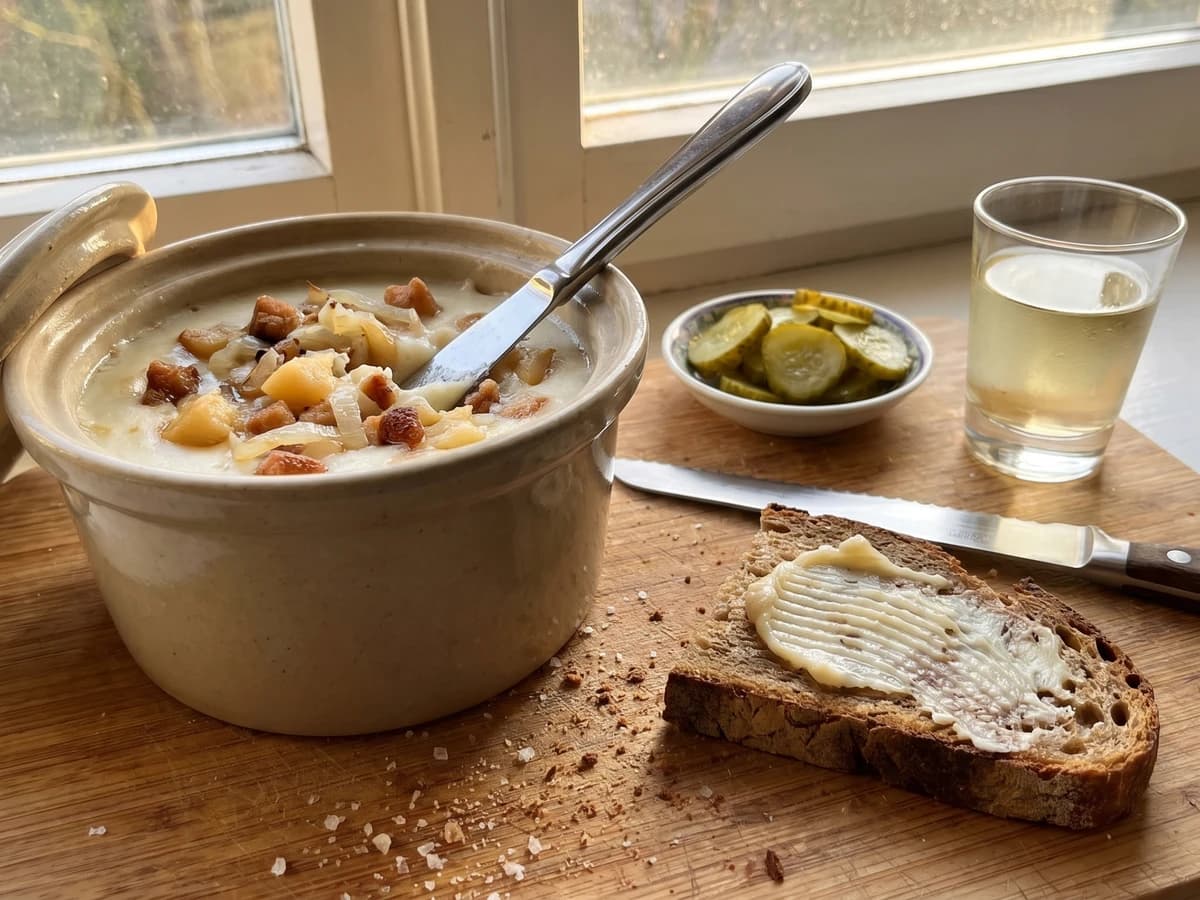
The thrift spread of the Schlachtfest table: pork fat rendered slowly until the cracklings turn crisp, then folded with onion and apple for dark bread.
Griebenschmalz belongs to the cold months and the Schlachtfest, the old pig-killing day when every useful part had to find its place. The chops were not the clever part. The clever part was the fat, rendered clean, seasoned well, and set in a crock so a slice of rye bread could become supper. Weggeworfen wird nichts.
The regions argue in the usual way. In the south and in Austria you hear Grammelschmalz, often with marjoram and a little apple. In the north, it sits closer to Schwarzbrot, pickled cucumber, and sometimes goose fat folded through for softness. I make the pork version with onion and apple because the sweet-sharp bite keeps the fat from eating flat. Im Norden anders, im Süden anders.
The whole dish is decided by the heat. Start the diced fat in a heavy pot with a spoon of water and keep it low; the water protects the first minutes while the fat begins to melt, then cooks away. Rush it and the outside browns before the inside gives up its fat, leaving tough little bits and a dirty taste. Low heat gives you clear lard and crisp Grieben, cracklings, that still have a bite under the teeth.
The onion and apple go in late because they carry water. Add them early and they stew the cracklings soft. Add them after the fat is rendered and the Grieben are golden, and they fry just enough to sweeten, then settle into the crock. Das braucht seine Zeit, but not drama.
Griebenschmalz comes from the household pig slaughter, the Hausschlachtung, which remained a normal autumn and winter practice in many German rural regions into the 20th century, especially before reliable refrigeration. Rendering fat into Schmalz was preservation as much as cooking: clean lard kept for weeks or months in a cool cellar and supplied both frying fat and bread spread. The regional names mark the borders clearly, Grieben in much of Germany, Grammeln in Bavaria and Austria, with northern tables often serving Schmalzbrot beside dark rye and pickles.
Quantity
800g
skin removed, diced small, preferably with a little meat attached
Quantity
100ml
Quantity
1 medium
finely diced
Quantity
1 small
peeled, cored, and finely diced
Quantity
1 teaspoon
Quantity
1 teaspoon, plus more to taste
Quantity
1/2 teaspoon
Quantity
1 small pinch
Quantity
to serve
Quantity
to serve
| Ingredient | Quantity |
|---|---|
| fresh pork back fatskin removed, diced small, preferably with a little meat attached | 800g |
| water | 100ml |
| onionfinely diced | 1 medium |
| tart applepeeled, cored, and finely diced | 1 small |
| dried marjoram | 1 teaspoon |
| fine salt | 1 teaspoon, plus more to taste |
| freshly ground black pepper | 1/2 teaspoon |
| ground caraway (optional) | 1 small pinch |
| dark rye bread | to serve |
| pickled cucumbers | to serve |
Cut the pork fat into small, even dice, about 1cm. Even pieces render at the same pace, so the smallest bits don't burn while the larger ones are still holding their fat. Keep any lean streaks attached; they brown into the best Grieben, the cracklings.
Put the diced fat and water into a heavy pot and set it over low heat. The water is not for flavour; it protects the fat at the start, keeps the first pieces from scorching, and then disappears once enough lard has melted. Stir often until the pot looks wet and the fat begins to swim.
Keep the heat low and let the fat render for 45 to 60 minutes, stirring from the bottom. The liquid lard should stay pale and clear while the solids shrink and turn golden. If the pot spits hard or the Grieben darken too fast, runter mit der Temperatur, down with the temperature. Burnt lard can't be talked back into good manners.
When the cracklings are golden and crisp at the edges, stir in the onion and apple. Add them now, not earlier, because both carry water and would stew the cracklings soft if they went in at the start. Cook 8 to 12 minutes, until the onion is sweet and pale gold and the apple has softened into small pieces.
Take the pot off the heat and stir in the marjoram, salt, pepper, and caraway if using. Würzen, Fett, Salz zum Schluss: season late because hot liquid fat hides salt, and you need to taste again as it cools. It should be savoury enough for bread, not salty enough to bully it.
Spoon the hot Schmalz into a clean stoneware crock or jar, making sure the cracklings are spread through the fat instead of all sitting at the bottom. Let it cool 20 minutes, stir once more as it thickens, then refrigerate until firm. Serve spread thick on dark rye with pickled cucumber. Nicht aus dem Glas. This is the jar.
1 serving (about 145g)
Culinary guides, cultural storytelling, and the editorial depth that makes cooking meaningful.
Discover Culinary ExplorerChef Klaus
North Hesse's old sausage is cured, not cooked: coarse pork, pepper, garlic, and cold weeks in a chamber until the slice turns firm enough for rye and cider.

Chef Klaus
Baden's Vesper spread is nothing more than quark, cream, onion, and chives, but the whole dish depends on controlling the whey so the bowl stays spoonable beside hot potatoes.
Chef Klaus
Baden's lard spread is thrift in a crock: pork fat rendered slowly, onion and apple added when the water is gone, and the crisp Grieben stirred back before it sets.

Chef Klaus
The Bavarian beer-garden salad that lives by the cut: thin sausage strips, raw onion, vinegar and oil, no cheese, rested long enough to taste like supper.