
Chef Takumi
Yamagata Shokupan (山型食パン, mountain-shape loaf)
Bake shokupan without the lid and the same tender dough rises into its mountain cap: soft inside, matte gold outside, and made for thick morning toast.

Updated June 3, 2026
The Japanese loaf tradition: shokupan in its mountain-top and Pullman shapes, the yudane method that gives the crumb its signature moisture, Hokkaido milk bread, the luxury nama-shokupan and hotel bread, raisin shokupan, butter rolls, koppe-pan, and chigiri-pan. The panya counter Japan grew up on, made reachable for the home oven.
A cooking platform built around craft, culture, and the stories behind what we eat.
Chef Takumi
Bake shokupan without the lid and the same tender dough rises into its mountain cap: soft inside, matte gold outside, and made for thick morning toast.

Chef Takumi
Koppe-pan is the plain roll that carries half a lunch tray: soft, lightly sweet, and strong enough to split cleanly without turning heavy.

Chef Takumi
Hotel bread is shokupan dressed for the counter: cream in the dough, butter down the crown, and an unlidded bake that gives the loaf its proud color.

Chef Takumi
Soak the raisins first, then let yudane do its quiet work. The loaf bakes tall, tender, and gold, with sweet fruit ribboned through the crumb.

Chef Takumi
At the panya counter these are the quiet rolls in the corner: buttery, lightly sweet, raisin-studded, and soft because the fruit is soaked before it can steal water from the crumb.
Chef Takumi
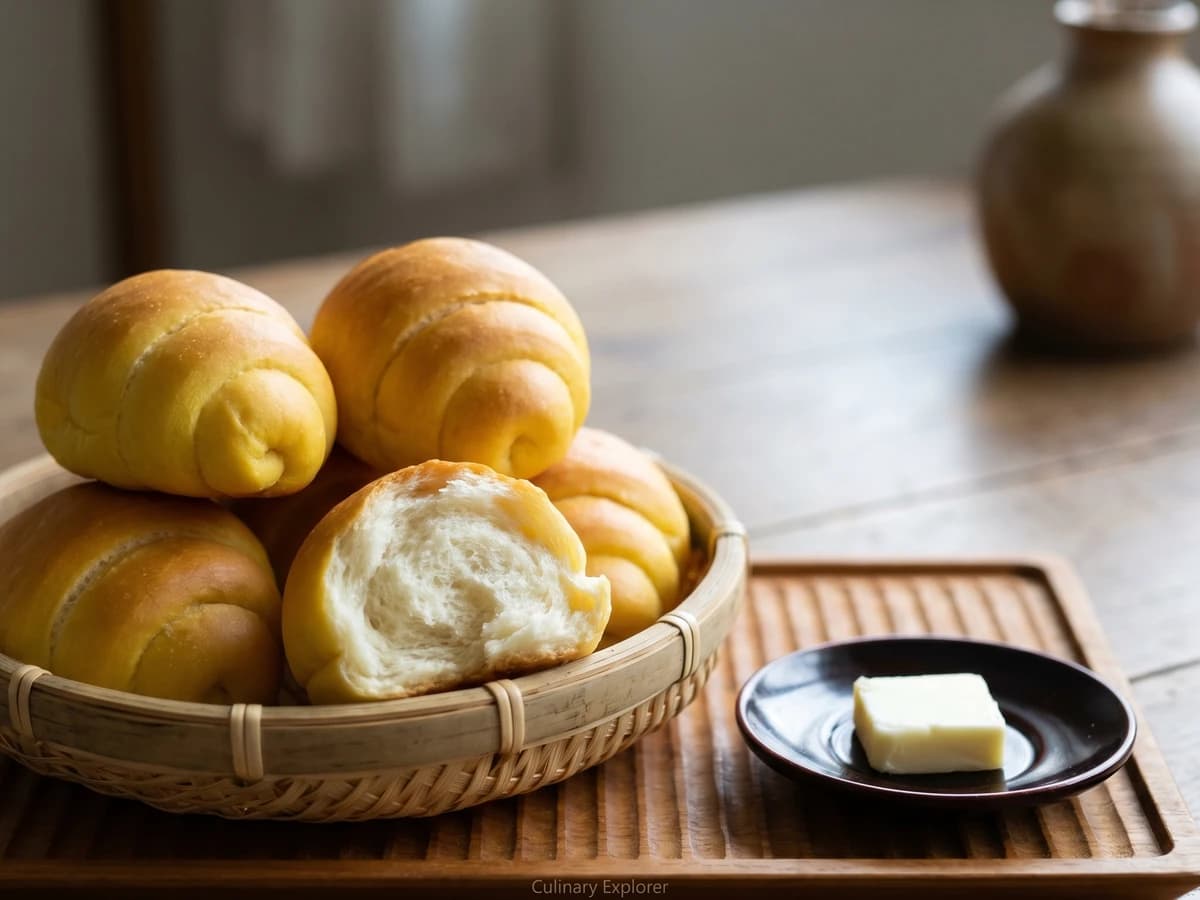
A panya staple made reachable: soft milk dough rolled wide-to-narrow into its little horn shape, proofed until light, then brushed with egg for that quiet gold crust.

Chef Takumi
Scald a portion of the flour tonight, and tomorrow's loaf will tell you why the panya keeps this method close: soft crumb, gentle chew, and moisture that lasts.

Chef Takumi
Rice flour makes a loaf that refuses to pretend it is wheat: soft, square, faintly sweet, with yudane keeping the crumb moist and that quiet mochi bounce under the fingers.

Chef Takumi
This is the panya counter loaf people carry home carefully: pale-gold crust, cotton-soft crumb, and enough milk, cream, and honey that toasting it feels like missing the point.

Chef Takumi
Clamp the lid on the same soft shokupan dough and it becomes kaku: square-shouldered, fine-crumbed, built for sandwiches, with yudane keeping the slice moist long after cooling.

Chef Takumi
Chigiri-pan is bread made small on purpose: soft enriched dough portioned into neat balls, crowded in a square tin, and baked until every tender roll tears away with its own golden edge.

Chef Takumi
The panya counter loaf looks like a small miracle, but the secret is plain: scald part of the flour, knead until satin, and let rich Hokkaido dairy make the crumb tender.
Culinary guides, cultural storytelling, and the editorial depth that makes cooking meaningful.
Discover Culinary ExplorerChef Takumi is a fictional culinary guide to Japanese Washoku Cuisine, written with the assistance of AI.