
Chef Takumi
Anpan (あんぱん)
Anpan is not a pastry trick. It is soft bread, sweet azuki, and a careful seal, so the bean paste stays centered while the bun rises round and tender.
A cooking platform built around craft, culture, and the stories behind what we eat.
Created by
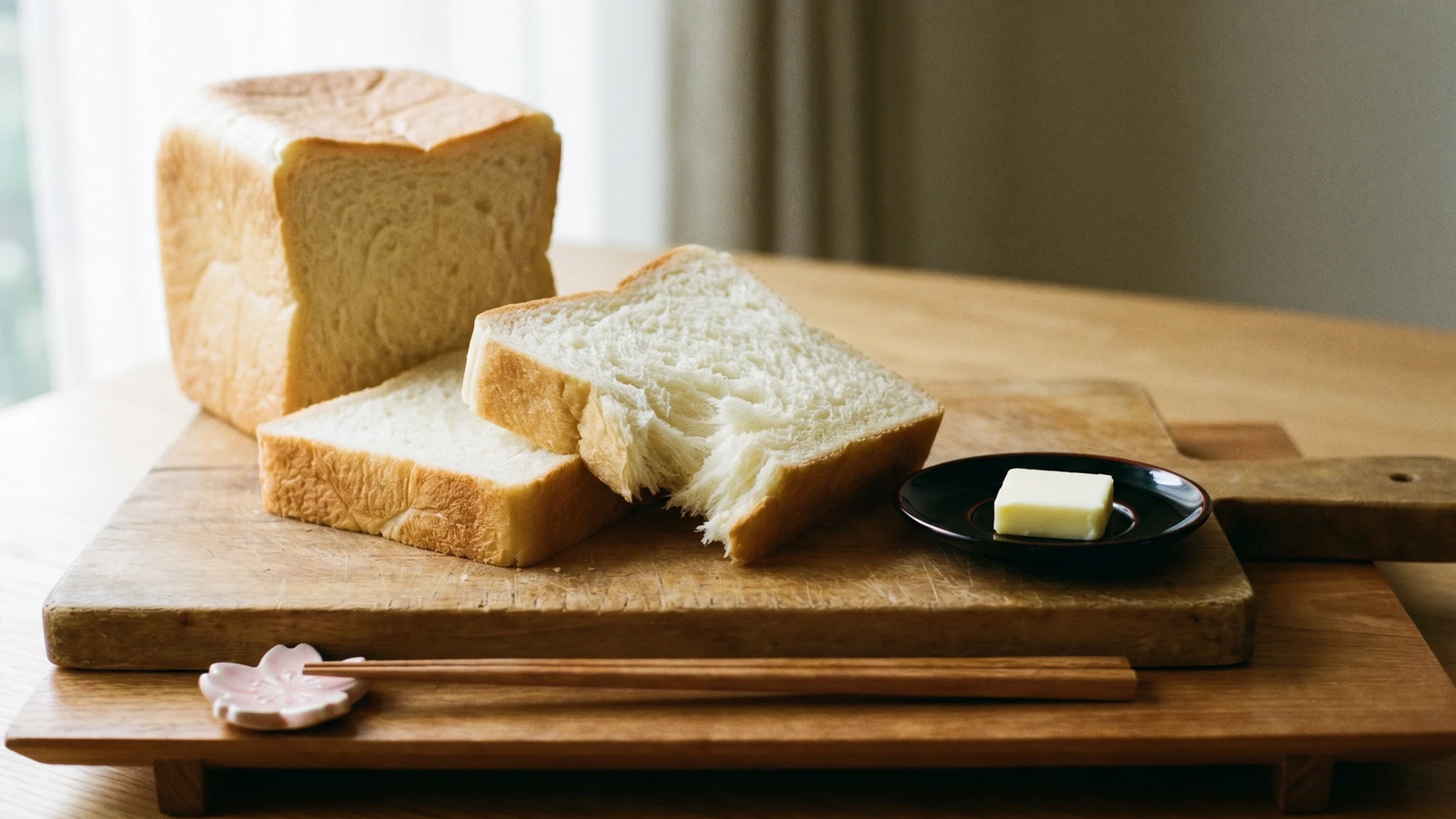
This is the panya counter loaf people carry home carefully: pale-gold crust, cotton-soft crumb, and enough milk, cream, and honey that toasting it feels like missing the point.
Nama shokupan asks one quiet thing of you: don't toast it. That sounds like a rule from a shop window, and yes, the specialty panya counters made whole reputations from it. But the meaning is plain. The loaf is built so the crumb itself is the pleasure, moist and tender enough to eat fresh, with nothing hidden under butter or fire.
The detail that decides it is yudane (湯種), a scalded-flour starter. You pour boiling water over part of the flour, then leave it to cool and rest. The starch swells before it ever meets the dough, so it holds water like a sensible cook holds onto a good knife. That is why the bread stays soft for days, not because of magic, and not because the baker whispered at it politely.
There are two honest roads in Japanese bread baking. Sutoreto (ストレート), the straight method, mixes everything at once and gives a clean, light loaf. Yudane takes one extra bowl and gives this nama shokupan its deep softness. Bake it as kaku shokupan, the lidded square Pullman loaf, for a fine, even crumb; or as yamagata shokupan, the unlidded mountain loaf, for a rounded top and a little more aroma from the crust. Same dough, two finished breads. The method, not the menu, decides the character.
Shokupan developed as Japan absorbed Western-style bread in the late nineteenth and early twentieth centuries, then made it domestic through school lunches, bakeries, and the neighborhood panya. Nama shokupan became a luxury bakery category in the 2010s, with shops selling soft, sweet, dairy-rich loaves meant to be eaten fresh rather than toasted. Yudane has been studied by Japan's National Agriculture and Food Research Organization as a practical baking method: scalding flour pre-gelatinizes starch, improving moisture retention and softness in the crumb.
Quantity
360g
divided: 90g for yudane, 270g for dough
Quantity
90g
for yudane
Quantity
160g
lukewarm
Quantity
60g
Quantity
45g
Quantity
25g
Quantity
7g
Quantity
5g
Quantity
35g
softened
Quantity
as needed
for the pan
| Ingredient | Quantity |
|---|---|
| bread flourdivided: 90g for yudane, 270g for dough | 360g |
| boiling waterfor yudane | 90g |
| whole milklukewarm | 160g |
| heavy cream | 60g |
| honey | 45g |
| sugar | 25g |
| fine sea salt | 7g |
| instant yeast | 5g |
| unsalted buttersoftened | 35g |
| neutral oil or butterfor the pan | as needed |
Put 90g of the bread flour in a heatproof bowl. Pour in 90g boiling water all at once and stir until no dry flour remains. It will look rough and stiff, almost like a small dumpling. Cover it and let it cool completely, then rest it at least 2 hours, or overnight in the refrigerator. This scald is the first secret: the flour starch swells now, so the finished crumb holds moisture instead of drying out by the next morning.
Tear the cooled yudane into pieces and put it in the mixer bowl with the remaining 270g bread flour, milk, cream, honey, sugar, salt, and yeast. Mix on low until the dough comes together, then knead 5 to 7 minutes. The dough should feel soft and tacky, not dry. Nama shokupan needs water held inside it, so don't fix stickiness with handfuls of extra flour.
Add the softened butter in small pieces and knead until the dough becomes smooth, elastic, and slightly glossy, 6 to 8 minutes more. Butter goes in after the gluten has begun to form because fat coats flour and can slow structure if it enters too early. Pull a small piece thin between your fingers; it should stretch into a cloudy window before tearing.
Shape the dough into a ball, set it in a lightly oiled bowl, cover, and let it rise at warm room temperature until doubled, about 60 to 90 minutes. Press a floured finger into the dough. If the dent springs back slowly and leaves a faint mark, it's ready. If it vanishes at once, give it more time; yeast keeps its own clock, the stubborn little clerk.
Turn the dough onto a lightly floured surface and divide it into three equal pieces. Shape each piece gently into a ball, cover, and rest 15 minutes. This pause matters. It lets the gluten relax, so you can roll the dough neatly without fighting it and tearing the surface.
Flatten one piece into a long oval, fold the long sides toward the center, then roll it up from the short end into a snug cylinder. Repeat with the remaining pieces. Keep the surface smooth and the roll even, because those tidy layers help the loaf rise straight and give the crumb its fine pull-apart strands.
Butter a 9 by 4 inch Pullman pan and place the three rolls inside, seam-side down. For kaku shokupan, slide on the lid when the dough reaches about 1 inch below the rim. For yamagata shokupan, leave it uncovered and proof until the domes rise just over the rim. This is the real difference: the lid gives a square, close-crumbed loaf, while the open pan lets the top rise proud and bake more fragrant.
Heat the oven to 350°F, or 175°C. Bake kaku shokupan with the lid on for 30 to 35 minutes, or yamagata shokupan uncovered for 28 to 32 minutes, tenting lightly if the top browns too quickly. The loaf is done when the crust is matte gold and the center reaches about 195°F, or 90°C. Gentle baking protects the dairy and honey from turning too dark before the crumb sets.
Unmold the loaf at once and cool it on a rack for at least 1 hour before slicing. Hot bread feels generous, but the crumb is still setting; cut too soon and you compress the softness you worked for. Slice thick, or tear a face open with your hands for the first piece. Eat it fresh, plain or with a little butter. That's nama shokupan doing its own work.
1 serving (about 58g)
Culinary guides, cultural storytelling, and the editorial depth that makes cooking meaningful.
Discover Culinary ExplorerChef Takumi
Anpan is not a pastry trick. It is soft bread, sweet azuki, and a careful seal, so the bean paste stays centered while the bun rises round and tender.
Chef Takumi
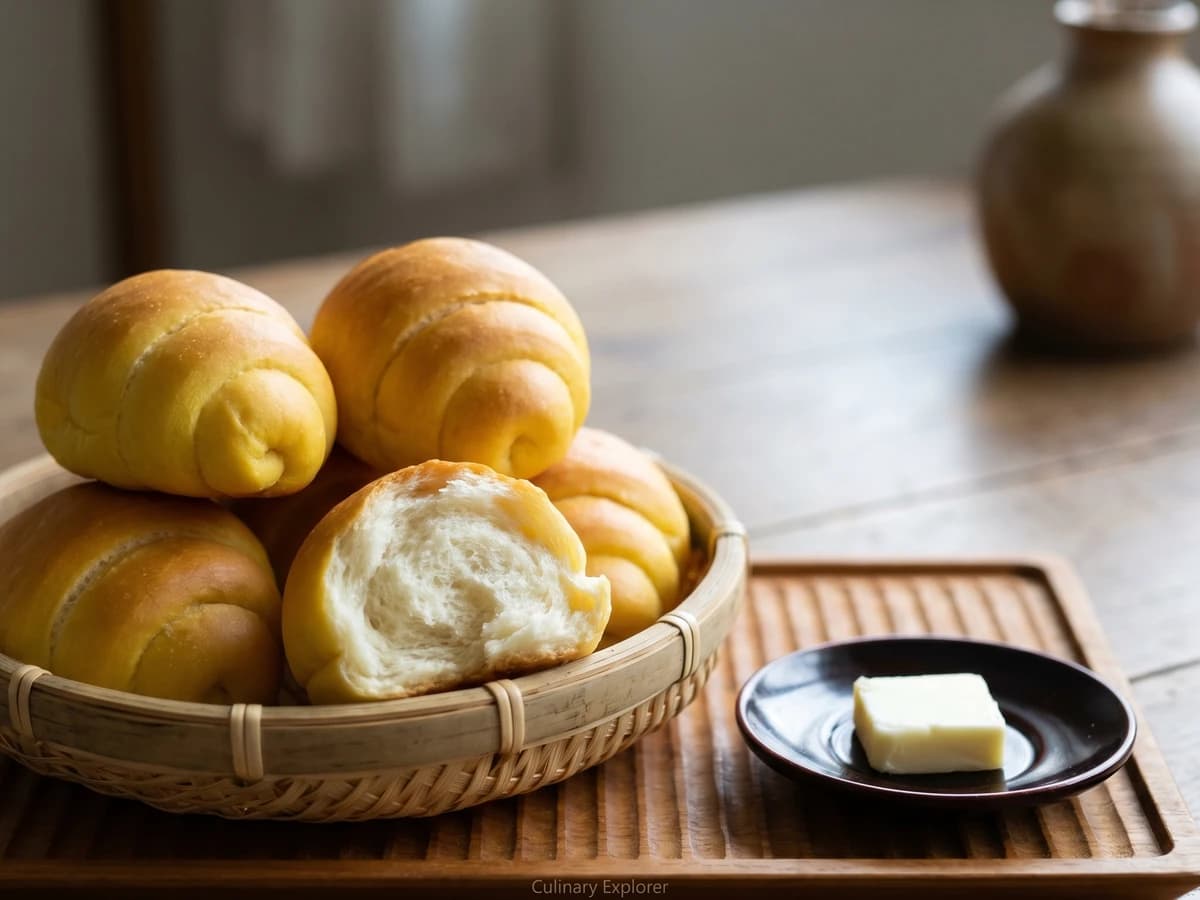
A panya staple made reachable: soft milk dough rolled wide-to-narrow into its little horn shape, proofed until light, then brushed with egg for that quiet gold crust.

Chef Takumi
Chigiri-pan is bread made small on purpose: soft enriched dough portioned into neat balls, crowded in a square tin, and baked until every tender roll tears away with its own golden edge.

Chef Takumi
Choco cornet looks clever, which is how bakery bread frightens sensible people. Wrap a soft rope around a cone, bake it golden, then pipe in chocolate cream only after the shell is cool.