
Chef Lupita
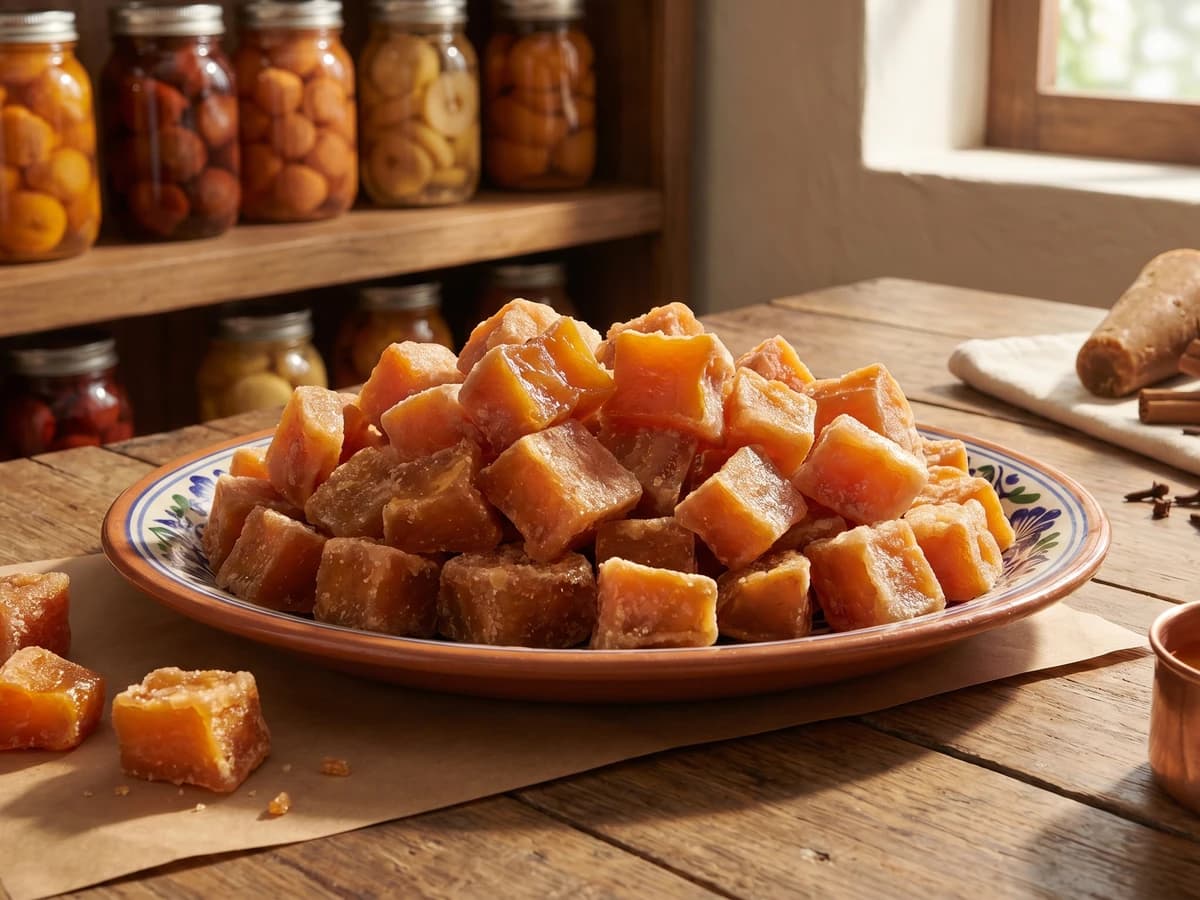
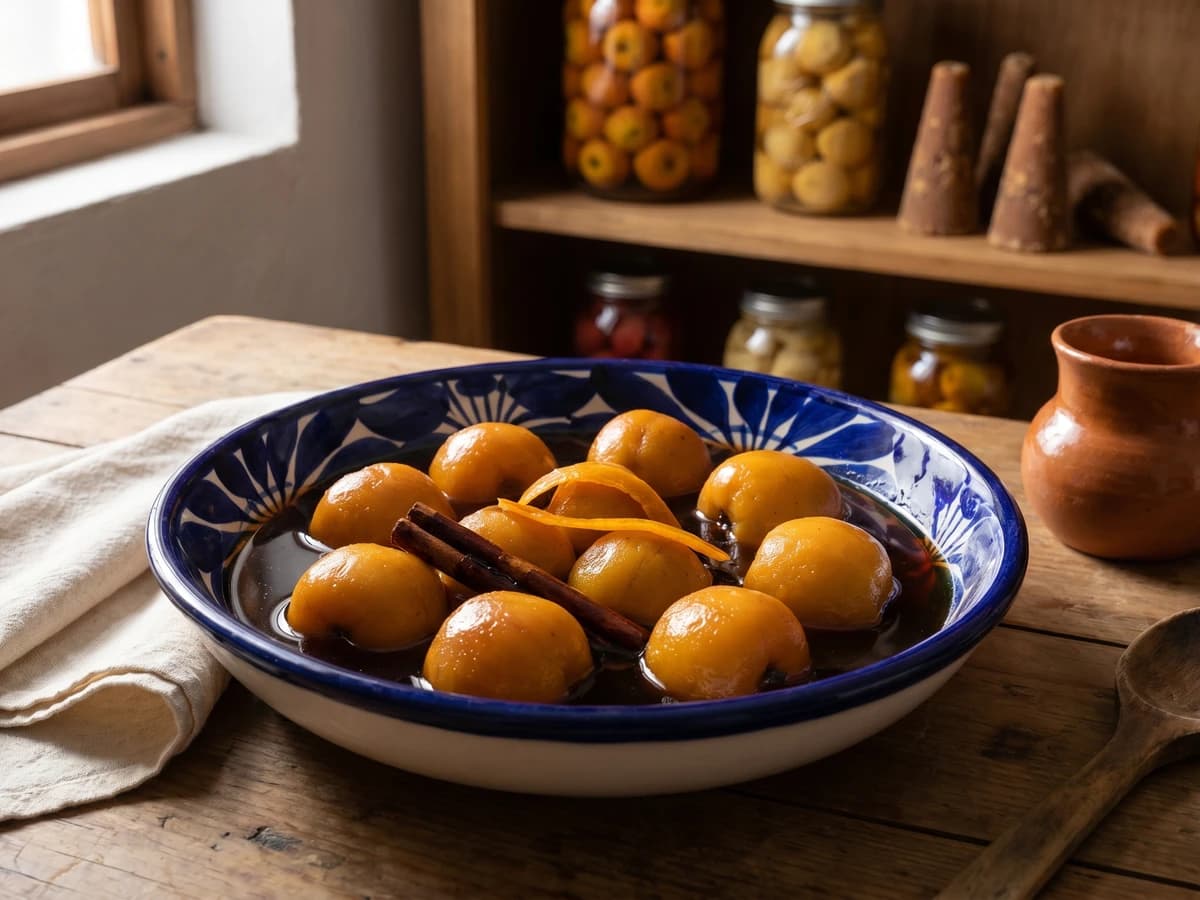
Ate de Perón Moreliano
Michoacán's highland perón fruit cooked down in a copper cazo with sugar until it sets into a sliceable brick, the Morelia convent sweet that turns harvest into winter food.

Updated May 31, 2026
The fruit pantry of the convent huerto. Ates from Morelia (membrillo, guayaba, mango, perón, ciruela, seis frutas), the cristalizados (acitrón de cidra, camote, surtido), calabaza en tacha, tejocotes en almíbar, higos rellenos de coco, limas rellenas de coco, dulce de papaya verde from Oaxaca, chilacayote en dulce from Michoacán, duraznos en conserva de Tlalpujahua, cocada conventual, capirotada de Cuaresma, and the Valle de Oaxaca wedding dish dulce de chilacayota con pan de yema. The preserved-harvest tradition the convents perfected because the harvest came free from the huerto.
A cooking platform built around craft, culture, and the stories behind what we eat.
Chef Lupita
Michoacán's highland perón fruit cooked down in a copper cazo with sugar until it sets into a sliceable brick, the Morelia convent sweet that turns harvest into winter food.
Chef Lupita
Puebla's convent sweet of camote, cooked by the old cristalizado method: lime-firmed sweet potato, repeated syrup baths, and the patience of a despensa built for winter.
Chef Lupita
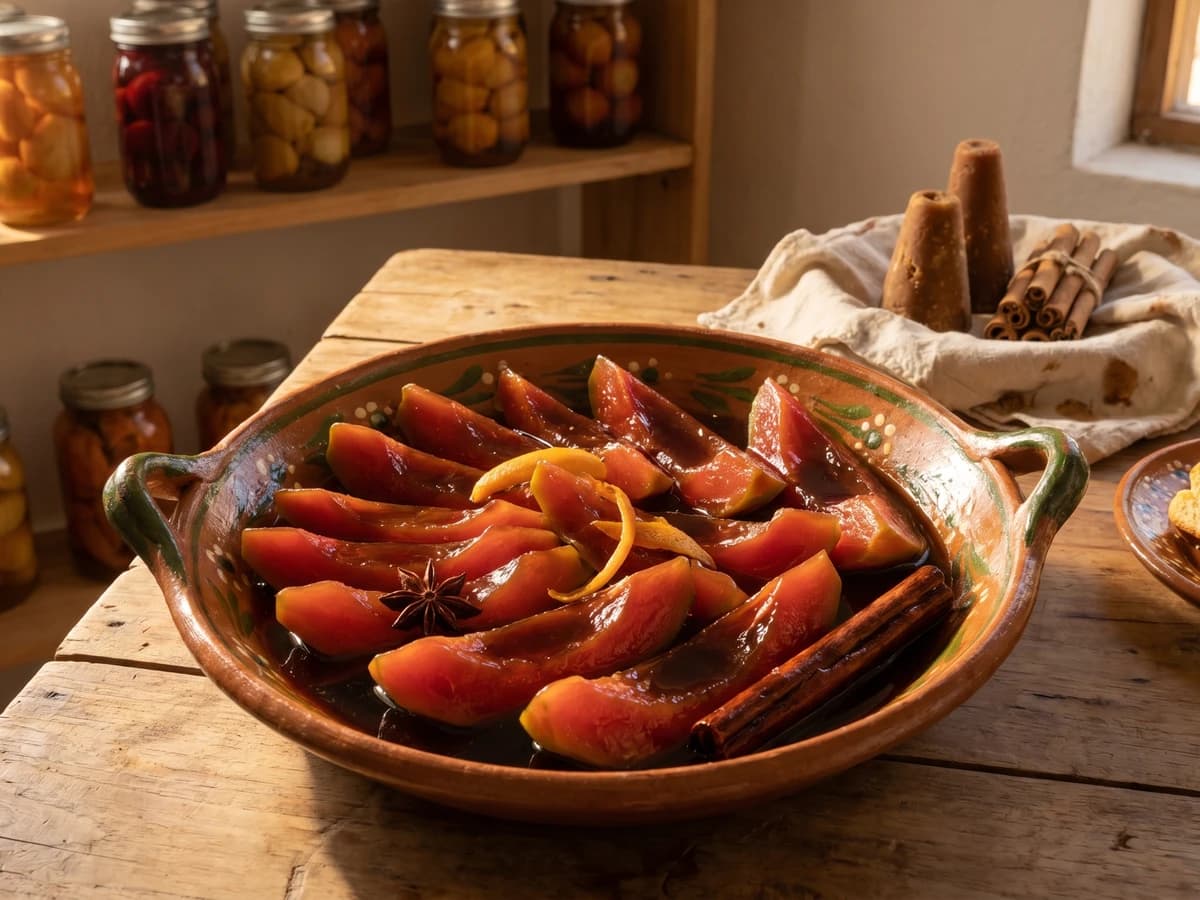
Oaxaca's Valles Centrales preserve of unripe papaya, cooked slowly in piloncillo and canela until the fruit turns ruby-translucent and the syrup tastes like a convent pantry.
Chef Lupita
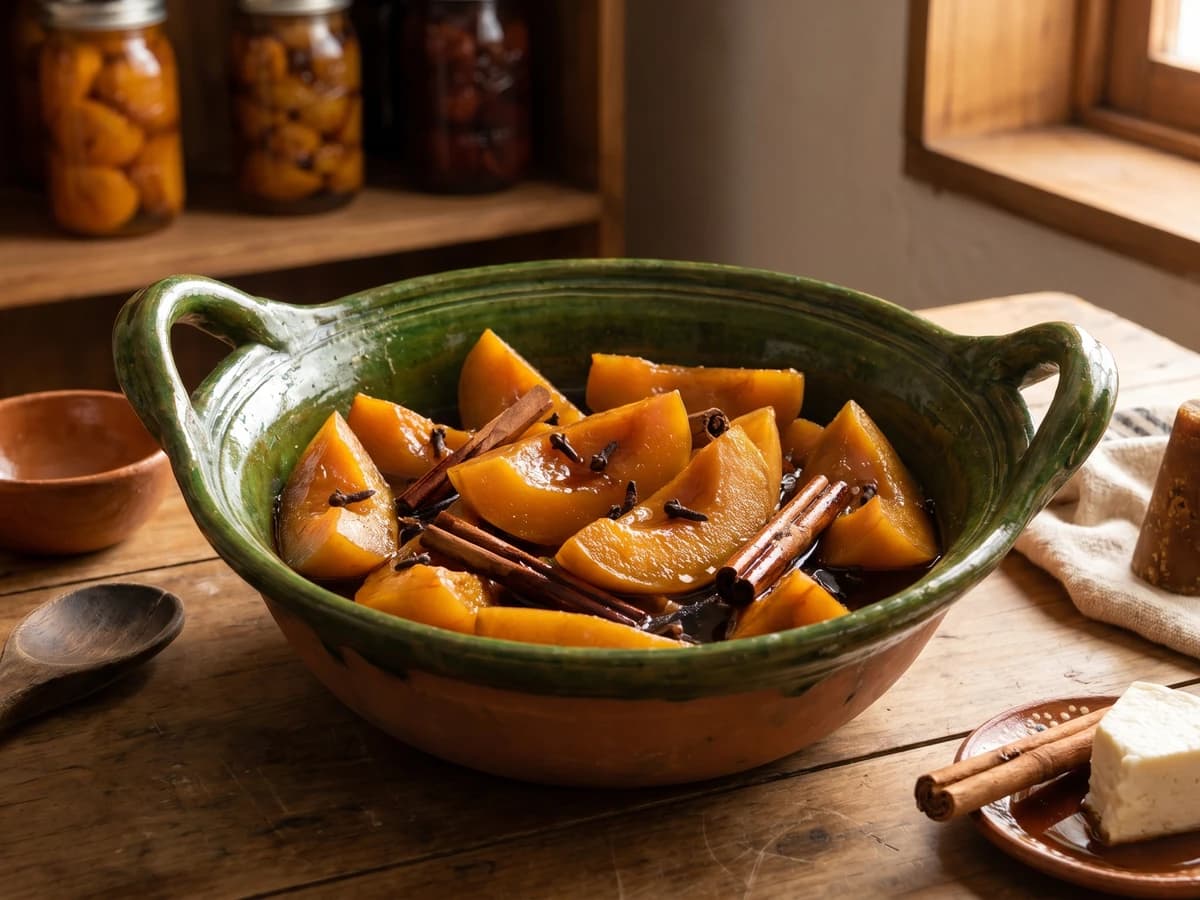
Michoacán's huerto sweet, firmed with cal, then cooked slowly in piloncillo, canela, and clavo until the pale squash turns amber and the syrup tastes like winter stores.
Chef Lupita
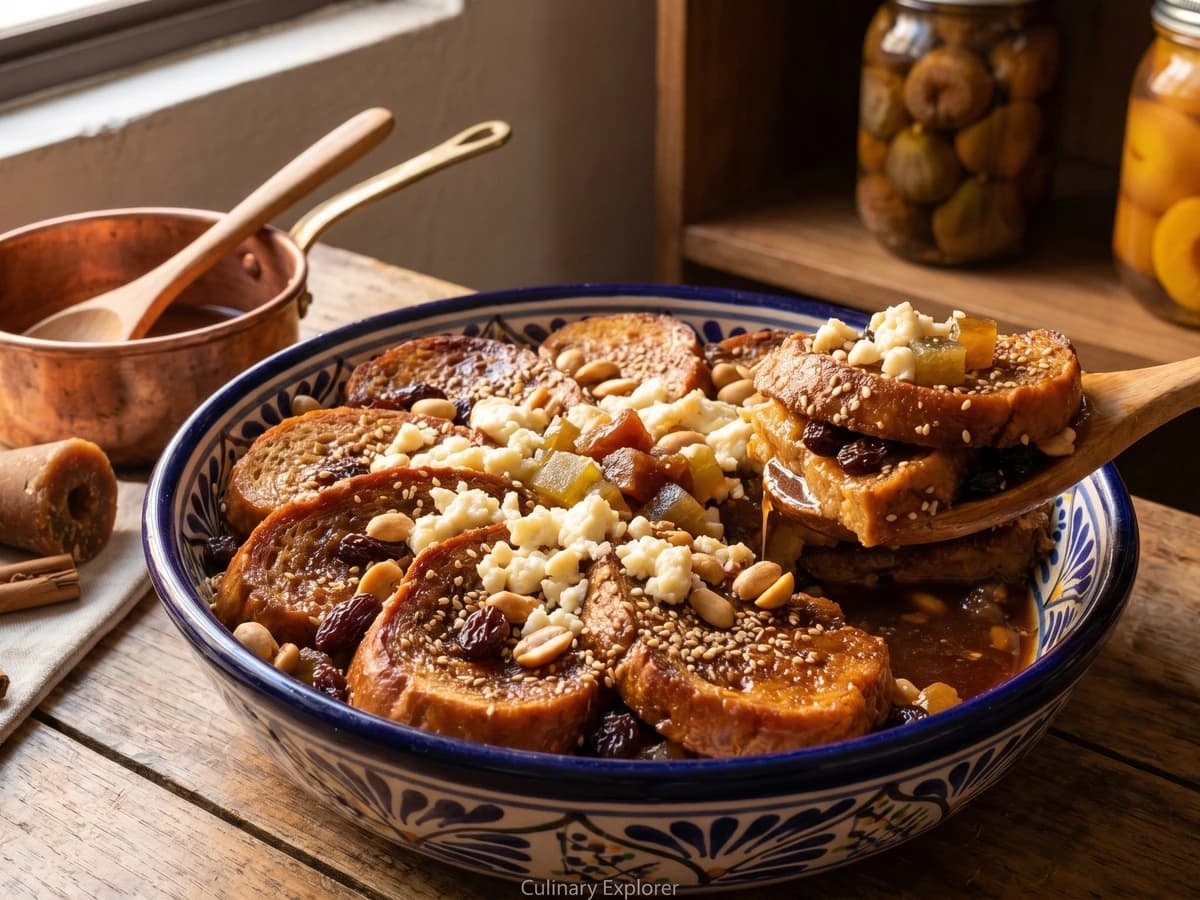
Puebla's convent bread pudding for Cuaresma, stale bolillo toasted in butter, layered with raisins, peanuts, cidra, and queso añejo, then soaked three times in piloncillo-canela syrup.

Chef Lupita
Michoacán's convent plum ate, slow-cooked in a copper cazo until the fruit turns dark, glossy, tart-sweet, and firm enough to cut into clean bricks.

Chef Lupita
Michoacan's guava ate is cooked slowly in a copper cazo until the fruit turns dense, pink, and sliceable, then served with fresh cheese the way Morelia's dulcerias still understand.

Chef Lupita
Michoacán's Morelia turns quince and cane sugar into a firm rosy paste in the copper cazo, a convent sweet made for slicing, wrapping, and serving with queso fresco.
Chef Lupita
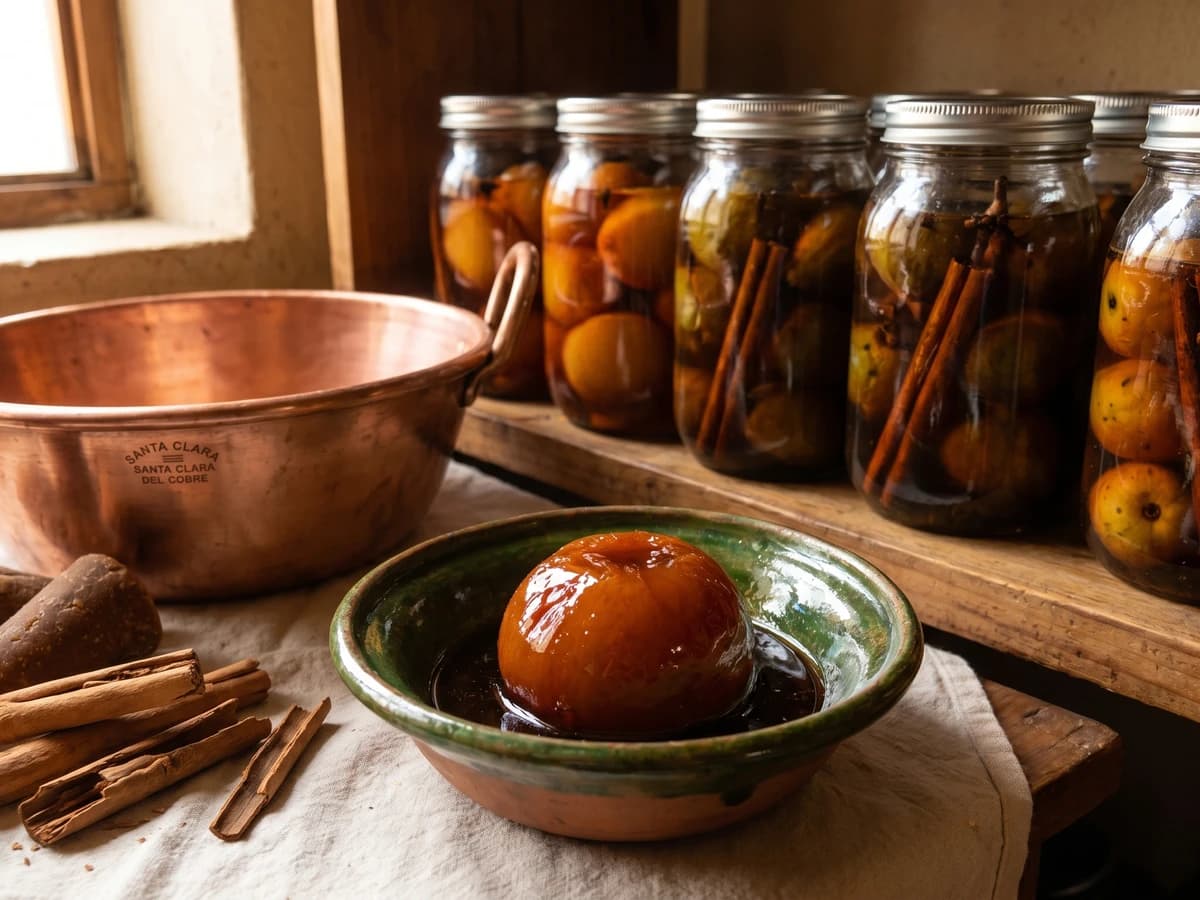
Puebla's highland tejocotes, peeled and slowly simmered in piloncillo, canela, and clavo until the fruit turns amber and the syrup tastes like the Christmas pantry.
Chef Lupita
Tlalpujahua's orchard peaches, peeled whole and rested overnight in piloncillo, canela, and clove syrup, the old Michoacán Real de Minas method that turns a short harvest into winter dessert.
Chef Lupita
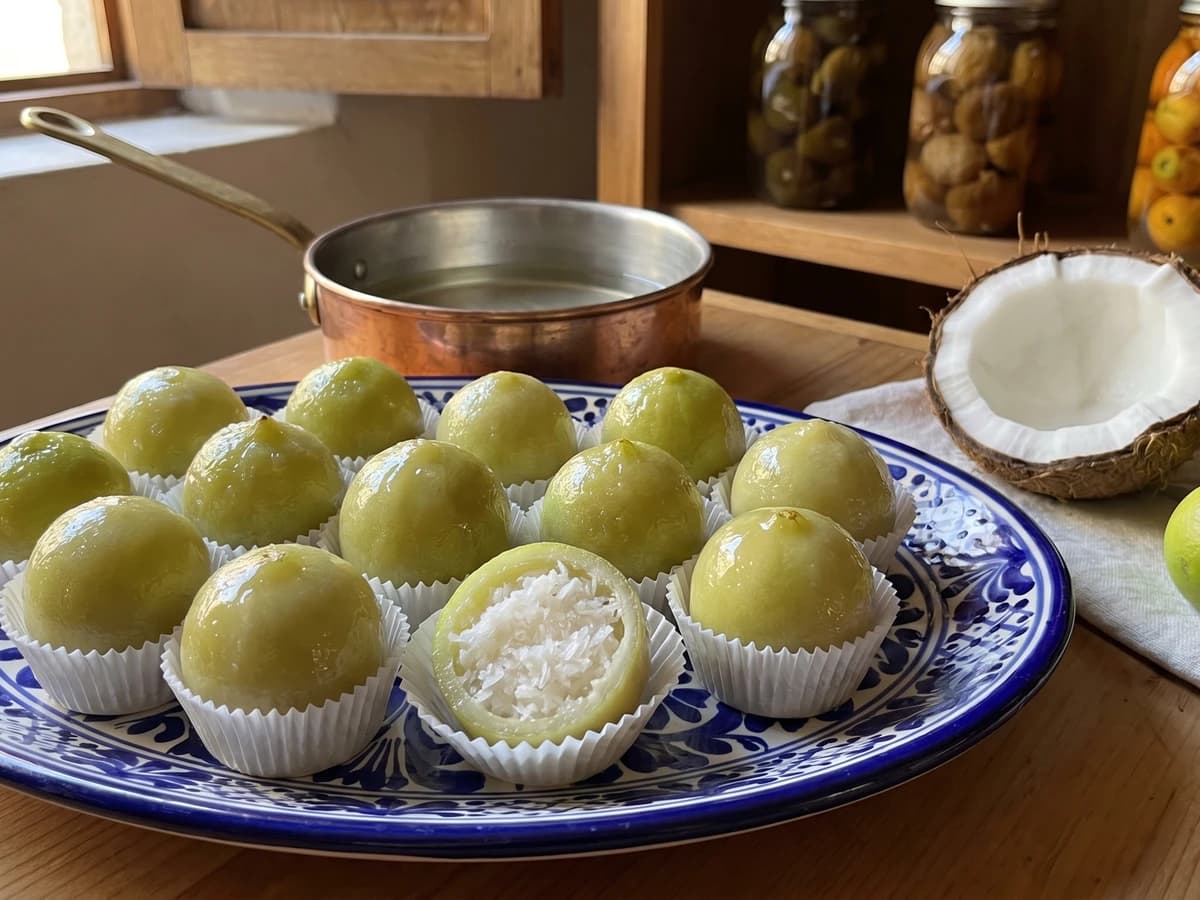
Ciudad de México's convent confection of whole candied lime rinds, patiently de-bittered, syrup-soaked, hollowed, and filled with sweet coconut, the preserved-harvest sweet that waits for feast days.
Chef Lupita
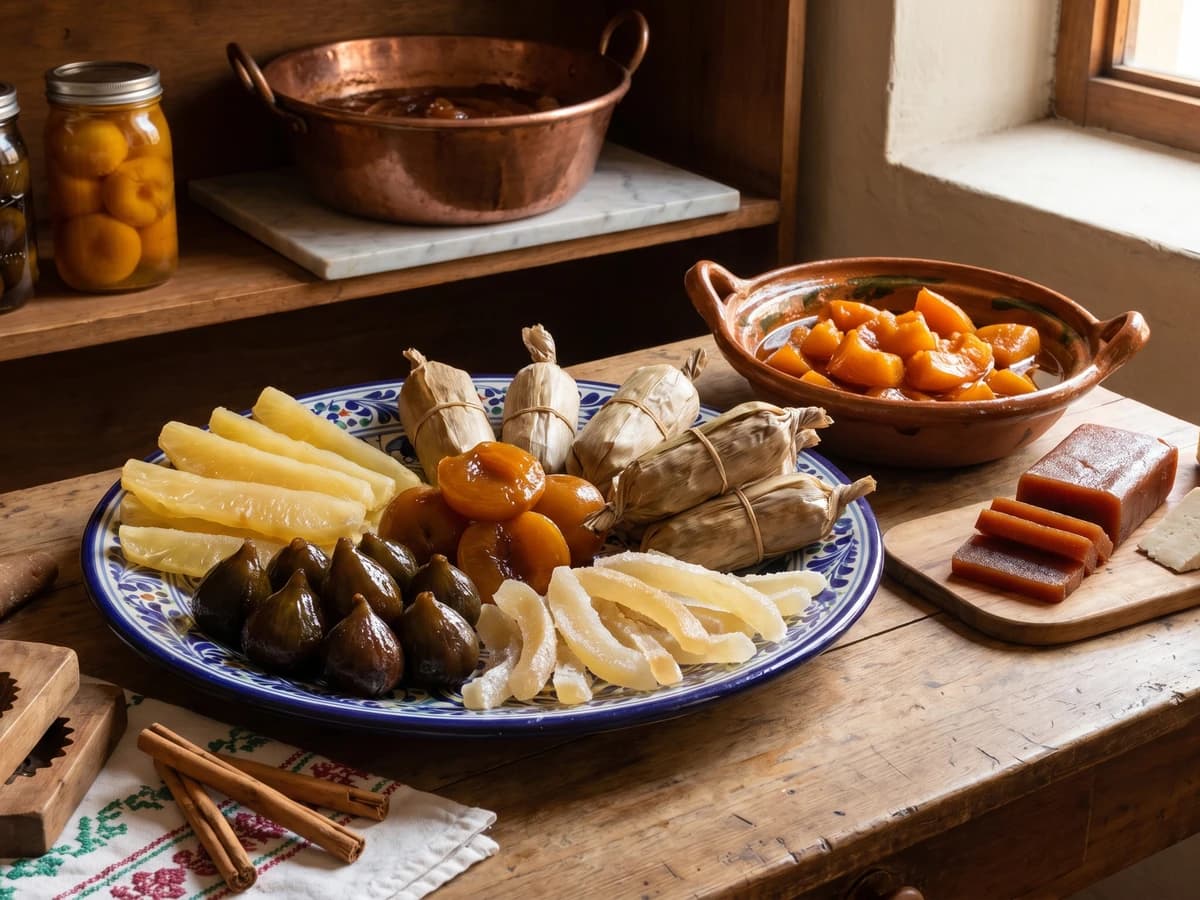
Puebla's conventual platter of cidra, fig, pineapple, camote, peaches, and squash, built through repeated syrup soakings, piloncillo reductions, and the patience that turned orchard surplus into winter candy.
Chef Lupita
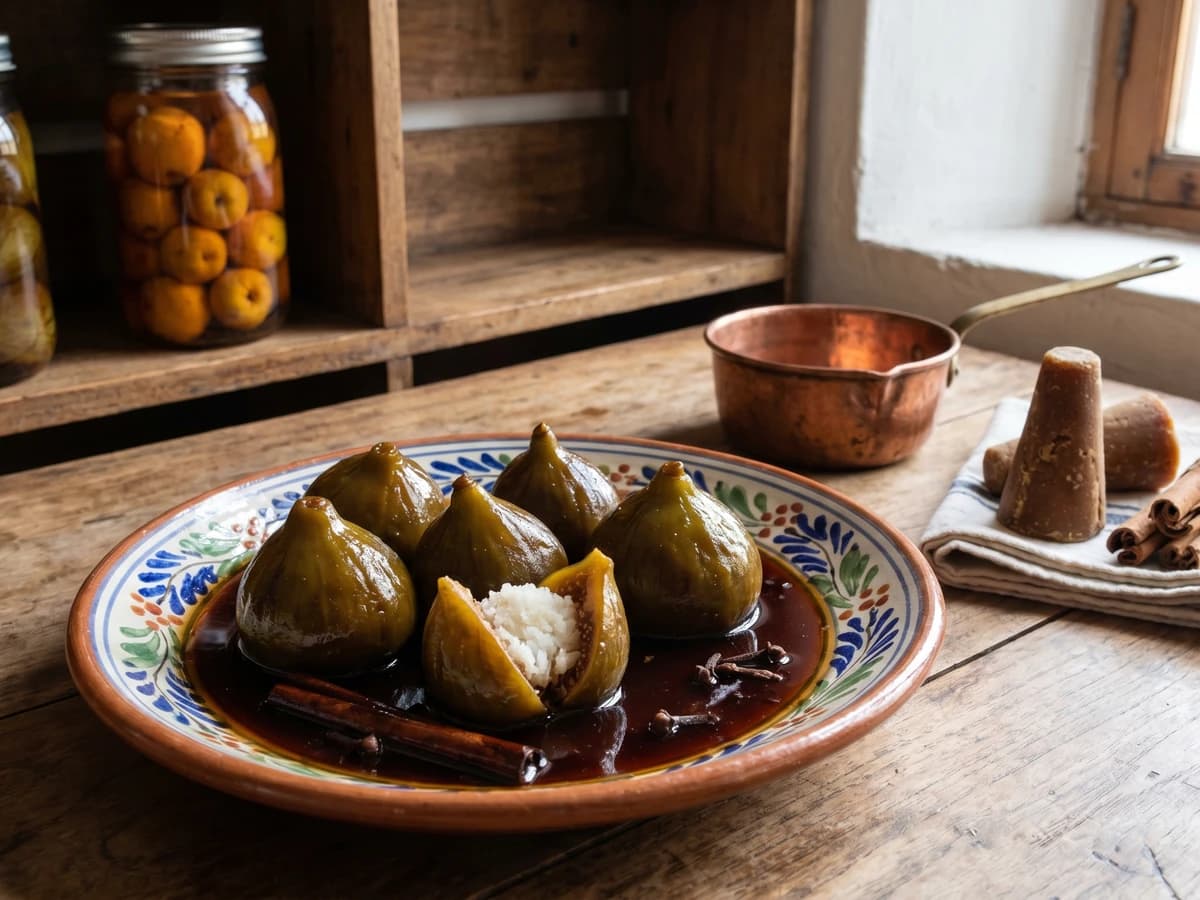
Puebla's convent sweet of whole figs slowly candied in piloncillo and canela, then opened and filled with coconut, the huerto preserved for the despensa.
Chef Lupita
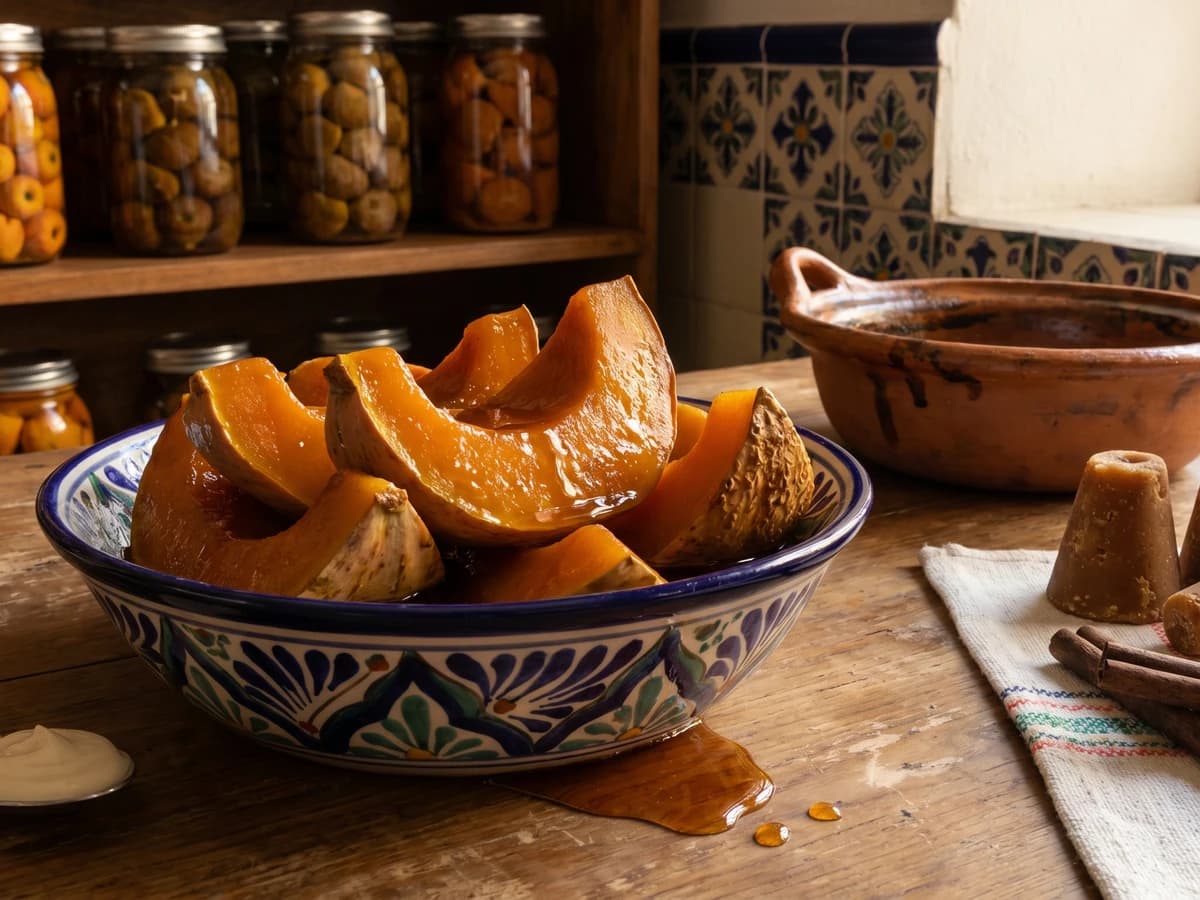
Puebla's Día de Muertos calabaza en tacha is autumn squash cooked slowly in piloncillo, canela, clove, and orange until the syrup thickens like a convent preserve.

Chef Lupita
Michoacán's Morelia ate format applied to fragrant Manila mango, cooked down in a copper cazo until the fruit becomes a firm confection for slicing with queso fresco.

Chef Lupita
Puebla's convent cocada, made with coconut that came inland from Veracruz, bound in piloncillo syrup and egg yolk, then baked until the edges grip the teeth.

Chef Lupita
Puebla's convent-style acitrón, made from cidra peel instead of endangered biznaga, built through repeated syrup soakings until the cubes turn firm, translucent, and ready for rosca or chiles en nogada.

Chef Lupita
Michoacan's convent fruit paste from Morelia, built in six patient layers of peron, guava, tejocote, peach, quince, and cranberry until the harvest becomes a sliceable bar.
Chef Lupita
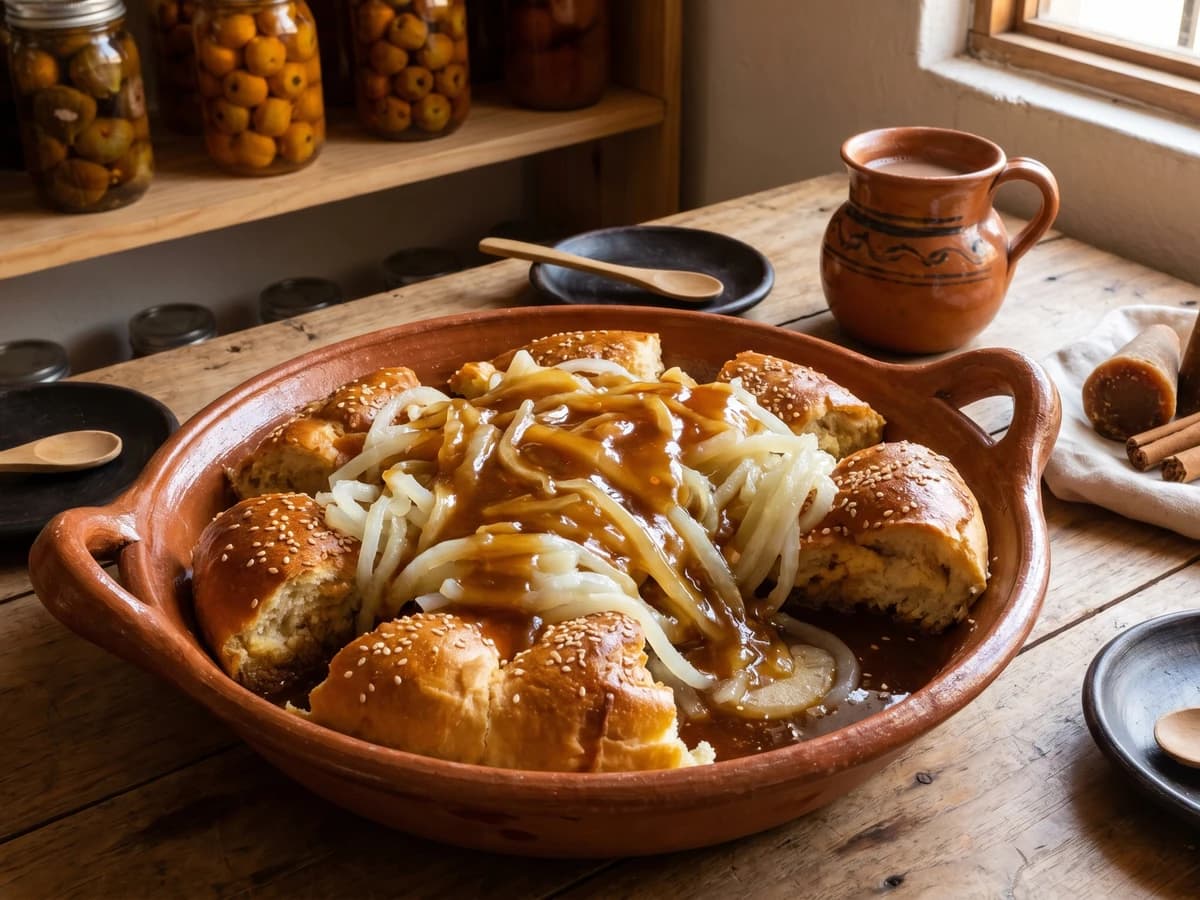
Oaxaca's Valles Centrales wedding sweet, mature chilacayota reduced slowly in piloncillo, canela, and clove until it falls into glossy threads, then spooned over egg-rich pan de yema.
Culinary guides, cultural storytelling, and the editorial depth that makes cooking meaningful.
Discover Culinary ExplorerChef Lupita is a fictional culinary guide to Regional Mexican Cuisine, written with the assistance of AI.