
Chef Lupita
Acitrón de Cidra Conventual
Puebla's convent-style acitrón, made from cidra peel instead of endangered biznaga, built through repeated syrup soakings until the cubes turn firm, translucent, and ready for rosca or chiles en nogada.
A cooking platform built around craft, culture, and the stories behind what we eat.
Created by
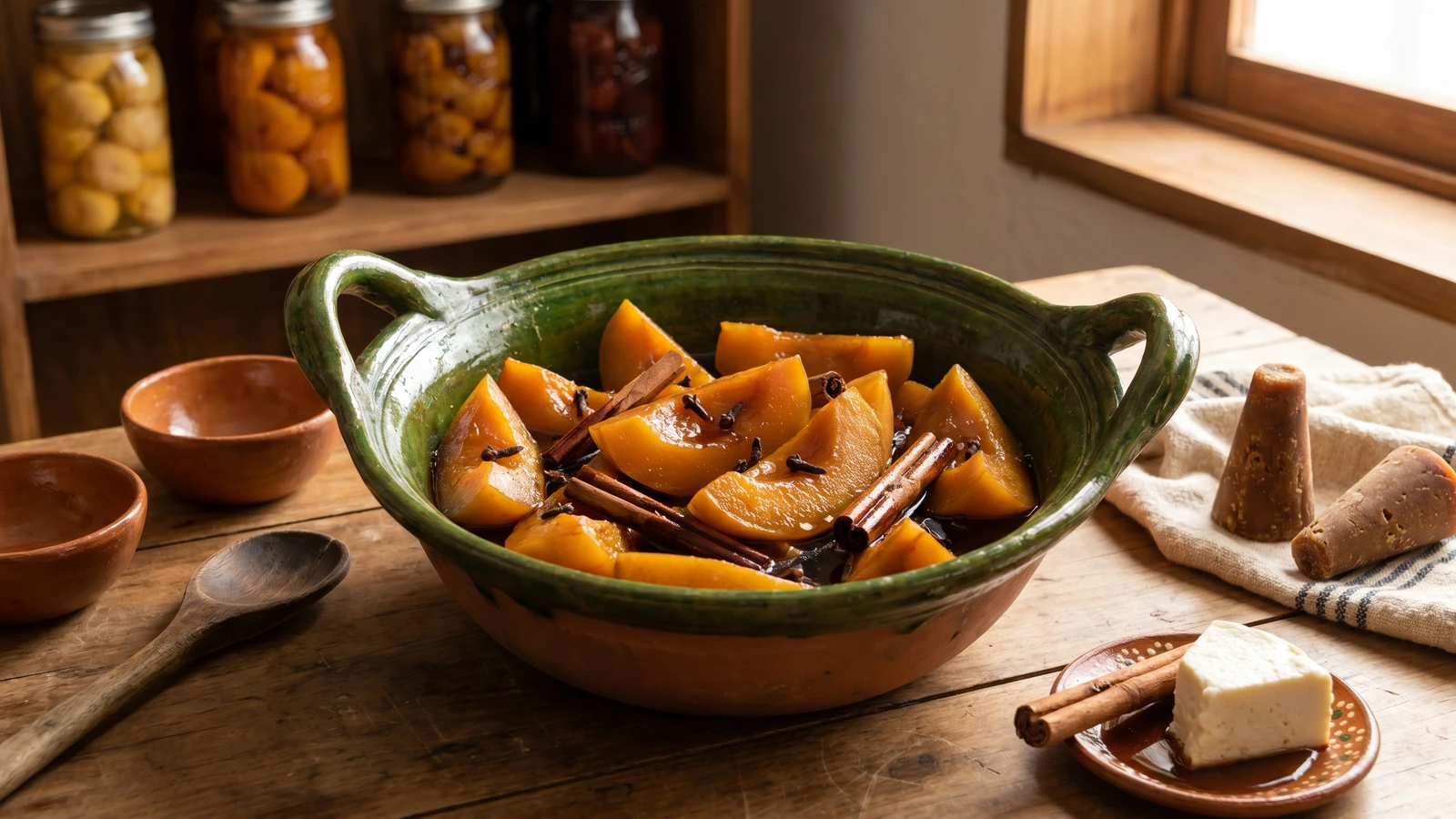
Michoacán's huerto sweet, firmed with cal, then cooked slowly in piloncillo, canela, and clavo until the pale squash turns amber and the syrup tastes like winter stores.
Michoacán, especially the huertos around Morelia, Pátzcuaro, and the Meseta Purépecha, knows what to do with a squash too large for one meal. Chilacayote grows hard and generous, the kind of vegetable that sits in the storeroom like a promise. In a Michoacán kitchen, it becomes dulce with piloncillo, canela, and patience.
This is preservation cooking. The women who perfected it were not trying to impress anyone. They were making the harvest last. The cal soak firms the flesh, then the piloncillo syrup works slowly into each piece until the squash turns amber and keeps its shape. If you rush it, you get mush. If you respect it, you get a sweet that belongs in a clay bowl on a wooden table, next to queso fresco and coffee.
Morelia's convent sweet tradition is famous for ate, especially the fruit pastes tied to Augustinian and Dominican kitchens and later to the dulcerias around the old city. Chilacayote en dulce lives in the same preservation grammar, the huerto made durable through sugar, spice, and time. My mother used to say that a pantry tells the truth about a cook. This dish proves it. Saber cocinar es saber vivir.
Chilacayote, Cucurbita ficifolia, is a Mesoamerican squash cultivated in the highlands of central and western Mexico long before the colonial period. In Michoacán, its candied preparation belongs to the same convent and household preservation tradition that made Morelia known for ates, fruit pastes associated with Augustinian and Dominican kitchens and sold in the city's dulcerias by the 18th and 19th centuries. The use of piloncillo and canela reflects the colonial sugar economy, but the squash itself is older than the convent walls.
Quantity
1 medium, about 5 pounds
washed and cut into 2-inch wedges with skin on
Quantity
1/2 cup
dissolved in 3 quarts cold water
Quantity
2 pounds
broken into chunks
Quantity
6 cups
Quantity
2
Quantity
4
Quantity
1 strip
white pith removed
Quantity
1/2 teaspoon
Quantity
for serving
| Ingredient | Quantity |
|---|---|
| chilacayote squashwashed and cut into 2-inch wedges with skin on | 1 medium, about 5 pounds |
| food-grade caldissolved in 3 quarts cold water | 1/2 cup |
| piloncillo conesbroken into chunks | 2 pounds |
| water for the syrup | 6 cups |
| Mexican cinnamon sticks | 2 |
| whole cloves | 4 |
| orange peelwhite pith removed | 1 strip |
| fine sea salt | 1/2 teaspoon |
| queso fresco or requeson (optional) | for serving |
Wash the chilacayote well. Cut it into thick wedges, about 2 inches wide, leaving the skin on. Scoop out loose seeds and stringy fibers, but do not peel it. The skin helps the pieces keep their shape during the long syrup cooking. This is a preserve, not a puree.
Stir the food-grade cal into 3 quarts cold water in a nonreactive bowl until cloudy. Add the chilacayote pieces and weigh them down with a plate so they stay submerged. Soak 6 hours. The cal firms the outside so the squash can drink syrup without collapsing. No me vengas con atajos. Without this step, the texture turns soft and sad.
Drain the chilacayote and rinse each piece under running water. Rub the surface with your fingers until no chalky film remains. Rinse the bowl too. Cal did its work already. Leaving it on the squash will muddy the syrup and give the sweet a mineral taste it should not have.
In a wide heavy pot or clay cazuela, combine the piloncillo, 6 cups water, canela, cloves, orange peel, and salt. Bring to a simmer over medium heat, stirring until the piloncillo dissolves. The syrup should smell dark and warm, like a Morelia dulceria in November. Piloncillo, not white sugar. The flavor lives in that cone.
Lower the rinsed chilacayote pieces into the syrup, skin side down where you can. Reduce the heat to low. Cook uncovered for 2 hours, turning the pieces every 30 minutes with a spoon, not tongs. The flesh will turn from pale green-white to honey amber. Keep the bubbles gentle. A hard boil tears the pieces apart.
When the chilacayote is tender but still holding its shape, lift the pieces into a shallow dish. Simmer the syrup 30 to 45 minutes more, until it thickens enough to coat a spoon and falls in slow drops. Taste it. You should get piloncillo first, then canela, then the quiet earthiness of the squash. Strain out the spices if you want a clean syrup.
Pour the hot syrup over the chilacayote. Let it cool, then cover and rest at room temperature 8 hours, or refrigerate overnight if your kitchen is hot. This rest is not decoration. The syrup moves into the squash while it sits. La paciencia es la regla del huerto.
Serve the chilacayote at room temperature in small clay bowls with a spoonful of its syrup. Add queso fresco or requeson on the side if you want the Michoacán table to answer back with salt and milk. This is sweet enough to feed many people. That was the point.
1 serving (about 290g)
Culinary guides, cultural storytelling, and the editorial depth that makes cooking meaningful.
Discover Culinary ExplorerChef Lupita
Puebla's convent-style acitrón, made from cidra peel instead of endangered biznaga, built through repeated syrup soakings until the cubes turn firm, translucent, and ready for rosca or chiles en nogada.

Chef Lupita
Ciudad de México's Tulyehualco alegría is popped huautli folded into piloncillo honey, pressed with peanuts, pepitas, and raisins, then cut into the rectangular bars that built a pueblo's identity.

Chef Lupita
Oaxaca's pre-Columbian amaranth bar, popped on a hot comal and bound with piloncillo, honey, and the sacred Zapotec grain that the Spanish tried, and failed, to outlaw.

Chef Lupita
Querétaro's mercado candy of popped amaranto pressed with dark piloncillo syrup, pepitas, pecans, and cacahuate, a Bajío sweet that respects the seed before it decorates the table.