
Chef Lupita
Acitrón de Cidra Conventual
Puebla's convent-style acitrón, made from cidra peel instead of endangered biznaga, built through repeated syrup soakings until the cubes turn firm, translucent, and ready for rosca or chiles en nogada.
A cooking platform built around craft, culture, and the stories behind what we eat.
Created by
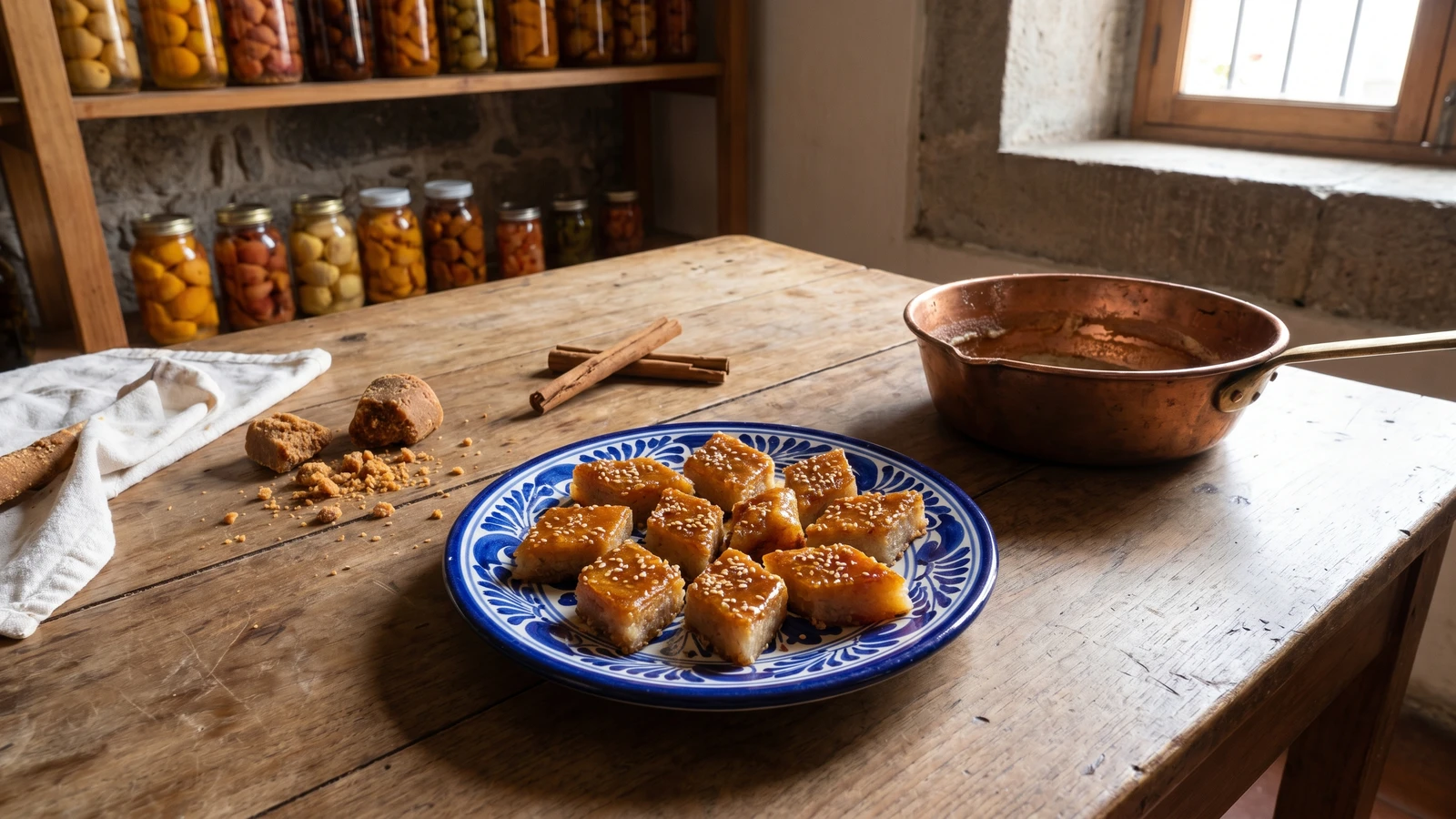
Puebla's convent cocada, made with coconut that came inland from Veracruz, bound in piloncillo syrup and egg yolk, then baked until the edges grip the teeth.
Puebla, Angelopolis, convent kitchen. This cocada belongs to the old despensas where coconut arrived from the Veracruz coast and was turned into something that could sit on a shelf, feed guests, and remind everyone that sugar work is discipline.
The coconut is the geography. Veracruz brought the fruit inland through trade routes, and Puebla's nuns knew what to do with it: grate it fine, bind it with syrup, enrich it with egg yolk, and bake it until the edges turn amber and crisp while the center stays dense and chewy. No me vengas con atajos. If the syrup is thin, the cocada weeps. If you overbake it, it dries out. The point is control.
I use piloncillo here because this is a preserved-harvest sweet, not a pale bakery square. Canela, clavo, and a little lime zest belong because the Pueblan despensa knew how to make imported coconut taste like Mexico. My mother wrote beside a similar recipe: "watch the corners." She was right. The corners tell you when the sugar has done its work. Saber cocinar es saber vivir.
Coconut entered New Spain through Pacific and Gulf trade networks after the 16th century, and coastal Veracruz became one of the ports through which tropical goods moved inland to Puebla and Mexico City. Puebla's convents, especially Santa Clara and Santa Rosa, were major centers of colonial sweet making in the 17th and 18th centuries, producing yema-based candies, fruit preserves, and sugar work for feast days and patronage tables. Cocada conventual is part of that same pantry logic: a coastal ingredient preserved through sugar, egg, and patient baking.
Quantity
4 cups
lightly packed
Quantity
10 ounces
chopped
Quantity
1/2 cup
Quantity
1
Quantity
2
Quantity
1/4 teaspoon
Quantity
6
Quantity
2 tablespoons, plus more for the pan
softened
Quantity
1 teaspoon
finely grated
Quantity
1 teaspoon
Quantity
1 tablespoon
| Ingredient | Quantity |
|---|---|
| fresh grated coconutlightly packed | 4 cups |
| piloncillochopped | 10 ounces |
| water | 1/2 cup |
| Mexican canela stick | 1 |
| whole cloves | 2 |
| fine sea salt | 1/4 teaspoon |
| large egg yolks | 6 |
| unsalted buttersoftened | 2 tablespoons, plus more for the pan |
| lime zestfinely grated | 1 teaspoon |
| vanilla extract | 1 teaspoon |
| toasted sesame seeds (optional) | 1 tablespoon |
Heat the oven to 350F. Butter an 8-inch square baking dish and line the bottom with parchment. Use a ceramic or metal pan, not glass if you can avoid it. Glass holds heat too aggressively and can darken the bottom before the center sets.
Put the piloncillo, water, canela, cloves, and salt in a heavy saucepan. Cook over medium heat until the piloncillo dissolves, then simmer 8 to 10 minutes, until the syrup thickens and falls from a spoon in a slow thread. This is the backbone of the cocada. Thin syrup makes loose candy. Proper syrup binds the coconut.
Remove the canela and cloves. Stir in the grated coconut and cook over medium-low heat for 10 to 12 minutes, stirring constantly with a wooden spoon. The coconut should drink the syrup, turn glossy, and pull together in a heavy mass. If liquid runs across the bottom of the pan, keep cooking. La paciencia es la regla del huerto.
Beat the egg yolks in a bowl until smooth. Whisk in three spoonfuls of the hot coconut mixture, one at a time, then scrape the warmed yolks back into the saucepan. Stir immediately. This keeps the yolks from scrambling and gives the cocada its convent richness, the yema flavor that belongs to Puebla's old dulcerias.
Add the butter, lime zest, and vanilla. Cook 3 to 5 minutes more over low heat, stirring until the mixture is thick, glossy, and leaves a clean path when you drag the spoon across the bottom. It should mound, not pour. That texture is your signal.
Scrape the mixture into the prepared pan and press it into an even layer with a buttered spatula. Sprinkle with sesame seeds if using. Bake 22 to 28 minutes, until the top is set, the corners are deep amber, and the edges look crisp. Watch the corners. They tell the truth before the center does.
Let the cocada cool completely in the pan, at least 1 hour. Do not cut it warm. Warm sugar tears and smears. Lift it out with the parchment and cut into small squares or diamonds with a lightly buttered knife. Serve on talavera, the way a Pueblan sweet deserves.
1 serving (about 30g)
Culinary guides, cultural storytelling, and the editorial depth that makes cooking meaningful.
Discover Culinary ExplorerChef Lupita
Puebla's convent-style acitrón, made from cidra peel instead of endangered biznaga, built through repeated syrup soakings until the cubes turn firm, translucent, and ready for rosca or chiles en nogada.

Chef Lupita
Ciudad de México's Tulyehualco alegría is popped huautli folded into piloncillo honey, pressed with peanuts, pepitas, and raisins, then cut into the rectangular bars that built a pueblo's identity.

Chef Lupita
Oaxaca's pre-Columbian amaranth bar, popped on a hot comal and bound with piloncillo, honey, and the sacred Zapotec grain that the Spanish tried, and failed, to outlaw.

Chef Lupita
Querétaro's mercado candy of popped amaranto pressed with dark piloncillo syrup, pepitas, pecans, and cacahuate, a Bajío sweet that respects the seed before it decorates the table.