
Chef Lupita
Acitrón de Cidra Conventual
Puebla's convent-style acitrón, made from cidra peel instead of endangered biznaga, built through repeated syrup soakings until the cubes turn firm, translucent, and ready for rosca or chiles en nogada.
A cooking platform built around craft, culture, and the stories behind what we eat.
Created by
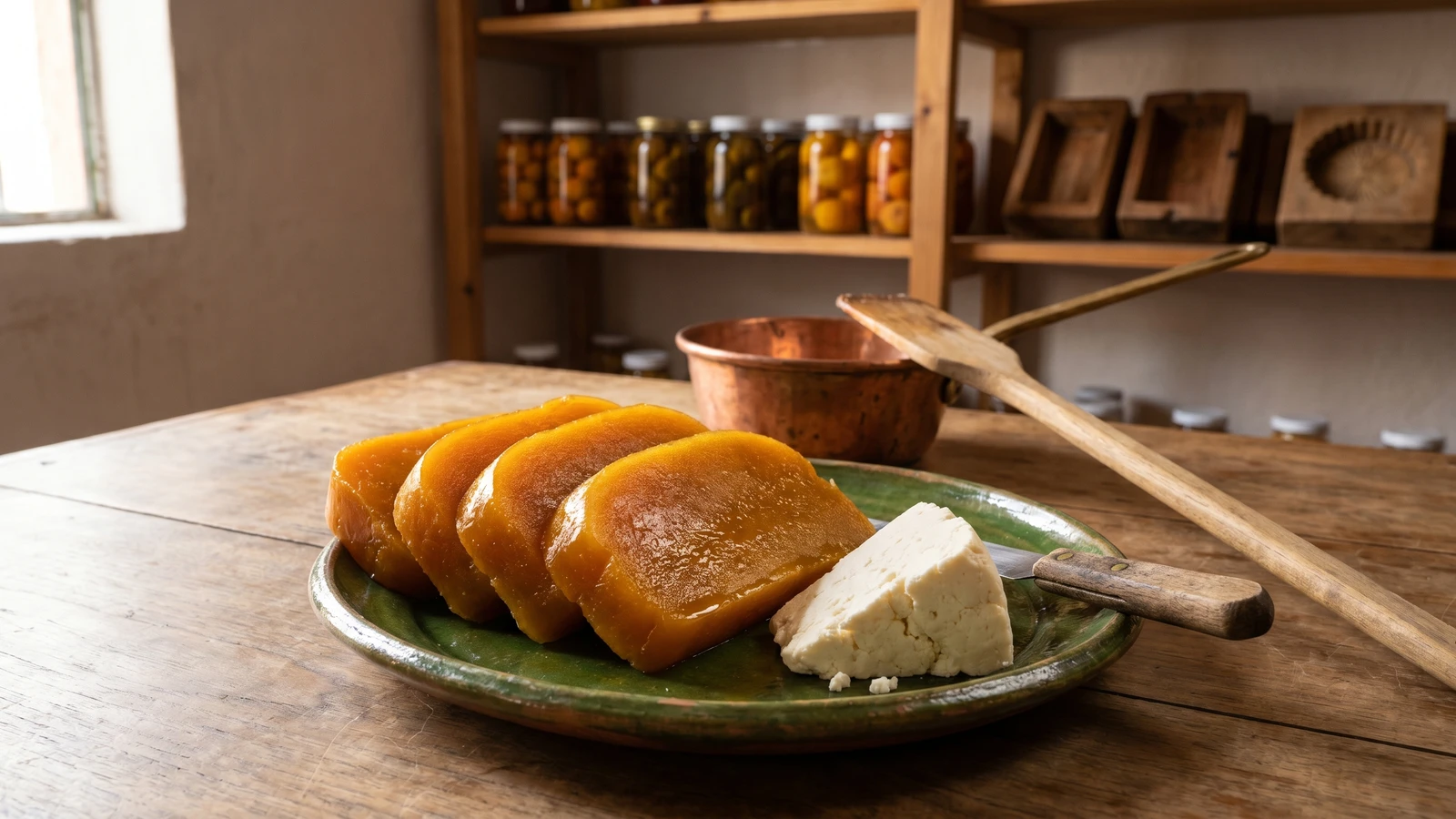
Michoacán's Morelia ate format applied to fragrant Manila mango, cooked down in a copper cazo until the fruit becomes a firm confection for slicing with queso fresco.
Michoacán, Morelia specifically, owns the ate table in Mexico. Walk the portals of the old city and you'll see the bricks of guayaba, membrillo, tejocote, pera, and mango stacked in clean colors behind glass. This is not jam. This is fruit preservation with discipline.
Ate de mango uses the Moreliano method: ripe Manila mango pulp, sugar, lime, and slow reduction in a copper cazo until the spoon leaves a clear path across the bottom. The fruit is tropical, but the technique is conventual Michoacán. The women who perfected it understood the rule of the huerto: ripe fruit arrives all at once, and if you don't preserve it, you lose it. La paciencia es la regla del huerto.
I learned to judge ate by texture in Morelia, not by a thermometer first. It should set firm enough to slice into bricks, with a clean edge and a glossy face. Serve it with queso fresco or queso adobera, not as decoration but as balance. Sweet fruit, salty milk, knife on a wooden board. Saber cocinar es saber vivir.
Morelia, called Valladolid during the colonial period, became famous for ates through the conventual sweet-making tradition associated with its Augustinian and Dominican religious houses and the commercial dulcerias that grew around them. Ate descends from Iberian fruit pastes such as membrillo, adapted in New Spain to local and tropical fruits as sugar production expanded in the 16th and 17th centuries. By the 19th century, Morelia's ates were a recognized regional specialty, sold in molded blocks and paired with fresh cheese across Michoacán.
Quantity
3 pounds
peeled and pitted, about 2 pounds prepared flesh
Quantity
2 cups
or 75 percent of the weight of the strained mango pulp
Quantity
2 tablespoons
Quantity
1/4 teaspoon
Quantity
as needed
for greasing the mold
| Ingredient | Quantity |
|---|---|
| ripe Manila mangoespeeled and pitted, about 2 pounds prepared flesh | 3 pounds |
| granulated sugaror 75 percent of the weight of the strained mango pulp | 2 cups |
| fresh lime juice | 2 tablespoons |
| fine sea salt | 1/4 teaspoon |
| neutral oil (optional)for greasing the mold | as needed |
Lightly oil a loaf pan or shallow rectangular mold and line it with parchment, leaving overhang on two sides. Ate sets where you put it. Have the mold ready before the fruit thickens, because once the paste reaches the right point, it waits for nobody.
Cut the mango flesh away from the pits and puree it in a blender until smooth. Strain through a fine-mesh sieve, pressing hard with a spatula. Manila mango has fibers, and fibers do not belong in a clean Moreliano ate. Weigh the strained pulp if you can, then use sugar equal to about three quarters of that weight.
Put the mango pulp, sugar, lime juice, and salt in a copper cazo or a heavy wide pot. Stir over medium heat until the sugar dissolves and the mixture loosens. The lime sharpens the mango and helps the fruit set. Do not add water. You are preserving fruit, not making syrup.
Lower the heat to medium-low and cook, stirring often with a wooden paddle, for 60 to 90 minutes. As it thickens, stir constantly and scrape the bottom and corners. The color will deepen from bright yellow to golden amber, the bubbles will become heavy, and the paste will pull away from the sides. No me vengas con atajos. This thickness is built by time.
Drag the spoon across the bottom of the pot. If the line stays open for two seconds before closing, you are close. Drop a teaspoon of paste on a chilled plate and let it sit one minute. It should hold its shape and peel away with your finger. A thermometer should read about 220F to 225F, but your eyes matter too. The paste must look thick, glossy, and stubborn.
Scrape the hot paste immediately into the prepared mold and smooth the top with an oiled spatula. Tap the mold firmly on the counter to settle air pockets. Let it cool uncovered at room temperature until firm, at least 6 hours or overnight. Preserved-harvest sweets are not impatient sweets.
Lift the ate from the mold using the parchment. Cut into thick slices or small bricks with a lightly oiled knife. Serve with queso fresco, queso adobera, or panela. Store wrapped tightly in parchment in a cool place for up to two weeks, or refrigerate for longer keeping. Recetas probadas y garantizadas.
1 serving (about 38g)
Culinary guides, cultural storytelling, and the editorial depth that makes cooking meaningful.
Discover Culinary ExplorerChef Lupita
Puebla's convent-style acitrón, made from cidra peel instead of endangered biznaga, built through repeated syrup soakings until the cubes turn firm, translucent, and ready for rosca or chiles en nogada.

Chef Lupita
Ciudad de México's Tulyehualco alegría is popped huautli folded into piloncillo honey, pressed with peanuts, pepitas, and raisins, then cut into the rectangular bars that built a pueblo's identity.

Chef Lupita
Oaxaca's pre-Columbian amaranth bar, popped on a hot comal and bound with piloncillo, honey, and the sacred Zapotec grain that the Spanish tried, and failed, to outlaw.

Chef Lupita
Querétaro's mercado candy of popped amaranto pressed with dark piloncillo syrup, pepitas, pecans, and cacahuate, a Bajío sweet that respects the seed before it decorates the table.