
Chef Lupita
Acitrón de Cidra Conventual
Puebla's convent-style acitrón, made from cidra peel instead of endangered biznaga, built through repeated syrup soakings until the cubes turn firm, translucent, and ready for rosca or chiles en nogada.
A cooking platform built around craft, culture, and the stories behind what we eat.
Created by
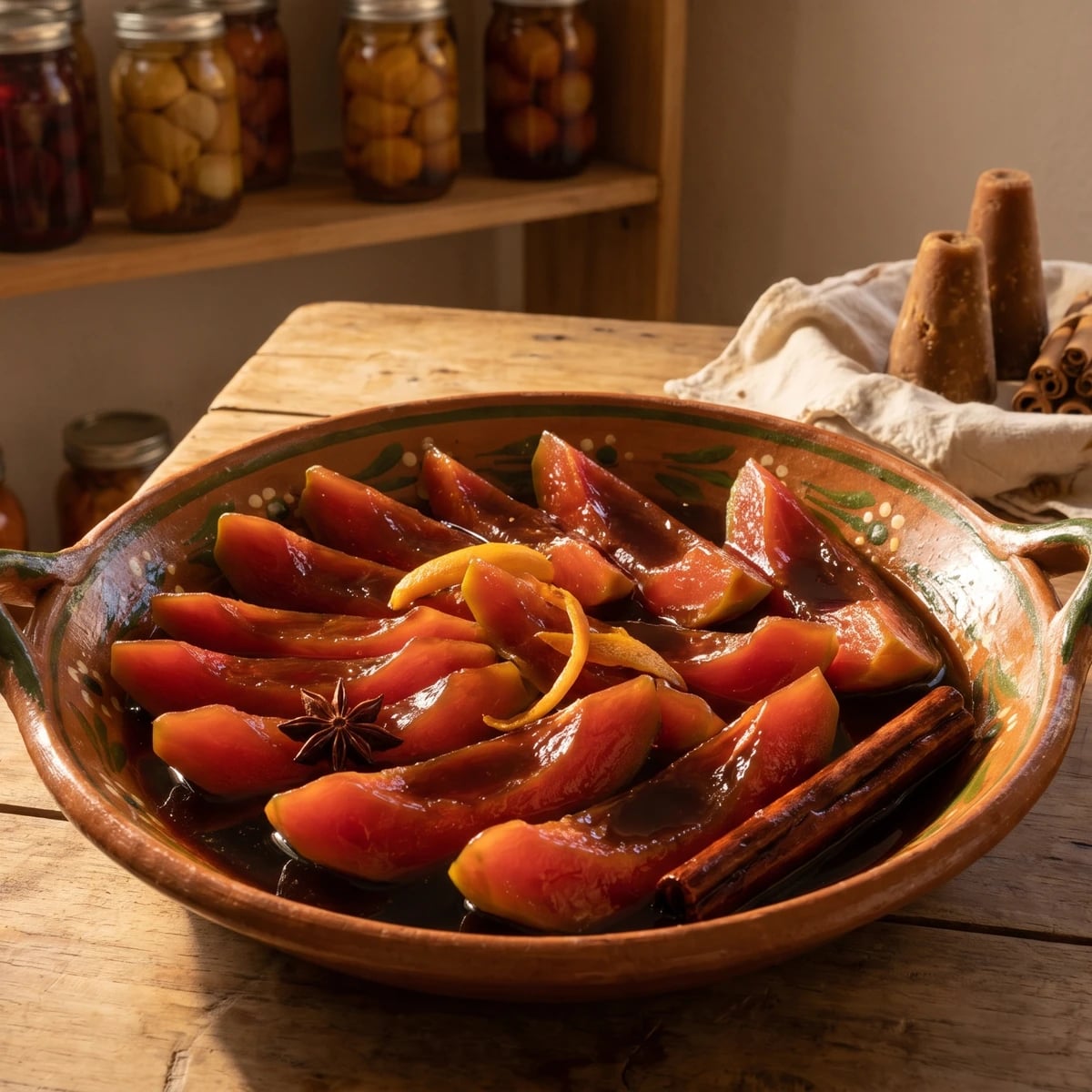
Oaxaca's Valles Centrales preserve of unripe papaya, cooked slowly in piloncillo and canela until the fruit turns ruby-translucent and the syrup tastes like a convent pantry.
Oaxaca, Valles Centrales, especially the old kitchens around Oaxaca de Juarez, is where this dulce de papaya verde belongs. You see it for Semana Santa, for Día de Muertos, and in family despensas where fruit in syrup waits in glass jars beside tejocote, higo, and chilacayota. This is not candy for impatience. The papaya is green, hard, almost unfriendly. That is exactly why it works.
The technique is conventual: firm the fruit with cal, then cook it slowly in piloncillo with canela, clove, and anise until the flesh turns translucent and the syrup stains it ruby-brown. The Dominican convent of Santa Catalina de Siena in Oaxaca City is part of this record of enclosed women turning orchard fruit into long-keeping sweets. The fruit was seasonal and cheap. The technique made it valuable.
I learned this version from a woman in the Mercado de la Merced in Oaxaca who sold jars of papaya, chilacayota, and higos in syrup during Lent. She told me the same thing three times: low fire, wide pot, no rushing. My mother wrote similar words in her notebook for guayaba en almibar: 'que beba despacio,' let it drink slowly. She was right. Saber cocinar es saber vivir.
Oaxaca's convent sweet tradition developed in the colonial period through enclosed kitchens such as the Dominican convent of Santa Catalina de Siena, founded in Oaxaca City in the late 16th century, where Spanish sugar preservation met local fruit harvests. Green papaya, introduced to Mexico after contact through tropical trade routes, became useful in almibares because its unripe flesh stays firm after a cal soak and absorbs piloncillo syrup without falling apart. In the Valles Centrales, preserved papaya shares the same seasonal grammar as chilacayota con panela, higos en dulce, and calabaza en tacha, sweets tied to Lent, Semana Santa, and Día de Muertos offerings.
Quantity
1 large, about 4 pounds
peeled, seeded, and cut into 2-inch wedges
Quantity
2 tablespoons
for firming the fruit
Quantity
3 quarts
divided
Quantity
2 pounds
chopped
Quantity
2
Quantity
4
Quantity
2
Quantity
1 strip
pith removed
Quantity
1/2 teaspoon
Quantity
1 tablespoon
| Ingredient | Quantity |
|---|---|
| green papayapeeled, seeded, and cut into 2-inch wedges | 1 large, about 4 pounds |
| food-grade cal (calcium hydroxide)for firming the fruit | 2 tablespoons |
| waterdivided | 3 quarts |
| piloncillo coneschopped | 2 pounds |
| Mexican canela sticks | 2 |
| whole cloves | 4 |
| whole star anise | 2 |
| Mexican orange peelpith removed | 1 strip |
| sea salt | 1/2 teaspoon |
| fresh lime juice | 1 tablespoon |
Peel the green papaya, split it lengthwise, scrape out the white seeds, and cut the flesh into thick 2-inch wedges. Wear gloves if your skin is sensitive. Green papaya releases a milky latex that can irritate your hands. The pieces must be thick because this fruit is going to cook for hours, not flirt with syrup for ten minutes.
Dissolve the cal in 2 quarts of water in a nonreactive bowl. Add the papaya and weigh it down with a plate so every piece stays submerged. Soak for 30 minutes. This is the old preserved-fruit technique: the cal firms the outside so the papaya can cook slowly without collapsing into jam.
Drain the papaya and rinse each piece under running water. Put the fruit back in the bowl, cover with clean water, swish, and drain again. Do this three times. If you leave cal on the fruit, the syrup tastes chalky. No me vengas con atajos. Rinse it properly.
In a wide clay cazuela or heavy pot, combine the chopped piloncillo, 1 quart water, canela, cloves, star anise, orange peel, and salt. Bring to a gentle simmer, stirring until the piloncillo dissolves. The syrup should be dark brown and smell of canela first, anise second. If the anise takes over, you used too much.
Lay the papaya wedges into the syrup in one snug layer if possible. Lower the heat until the syrup barely moves around the fruit. Cook uncovered for 2 1/2 to 3 hours, turning the pieces every 30 minutes. The papaya will move from pale green to amber, then to a deep ruby-brown translucence. That color is the piloncillo entering the flesh.
When the fruit is tender but still holds its shape, remove the papaya to a clay dish with a slotted spoon. Keep simmering the syrup for 20 to 30 minutes, until it coats the back of a spoon and falls in a heavy thread. Stir in the lime juice. This sharpens the syrup so it does not taste tired after all that sugar.
Return the papaya to the syrup, spooning it over every piece. Cool completely, cover, and let it rest overnight in the refrigerator or in a cool pantry. The fruit needs time to drink. La paciencia es la regla del huerto. The next day the pieces should be glossy, firm at the edge, soft inside, and stained all the way through.
Serve the papaya at room temperature in a shallow Oaxacan clay dish with some of its syrup. Put pan de yema or a plain piece of queso fresco on the table if you want contrast. Do not decorate it like a bakery dessert. This is preserved fruit from a convent pantry and a Oaxacan home altar. Así se hace y punto.
1 serving (about 215g)
Culinary guides, cultural storytelling, and the editorial depth that makes cooking meaningful.
Discover Culinary Explorer
Chef Lupita
Puebla's convent-style acitrón, made from cidra peel instead of endangered biznaga, built through repeated syrup soakings until the cubes turn firm, translucent, and ready for rosca or chiles en nogada.

Chef Lupita
Michoacán's convent plum ate, slow-cooked in a copper cazo until the fruit turns dark, glossy, tart-sweet, and firm enough to cut into clean bricks.

Chef Lupita
Michoacan's guava ate is cooked slowly in a copper cazo until the fruit turns dense, pink, and sliceable, then served with fresh cheese the way Morelia's dulcerias still understand.

Chef Lupita
Michoacán's Morelia ate format applied to fragrant Manila mango, cooked down in a copper cazo until the fruit becomes a firm confection for slicing with queso fresco.