
Chef Lupita
Acitrón de Cidra Conventual
Puebla's convent-style acitrón, made from cidra peel instead of endangered biznaga, built through repeated syrup soakings until the cubes turn firm, translucent, and ready for rosca or chiles en nogada.
A cooking platform built around craft, culture, and the stories behind what we eat.
Created by
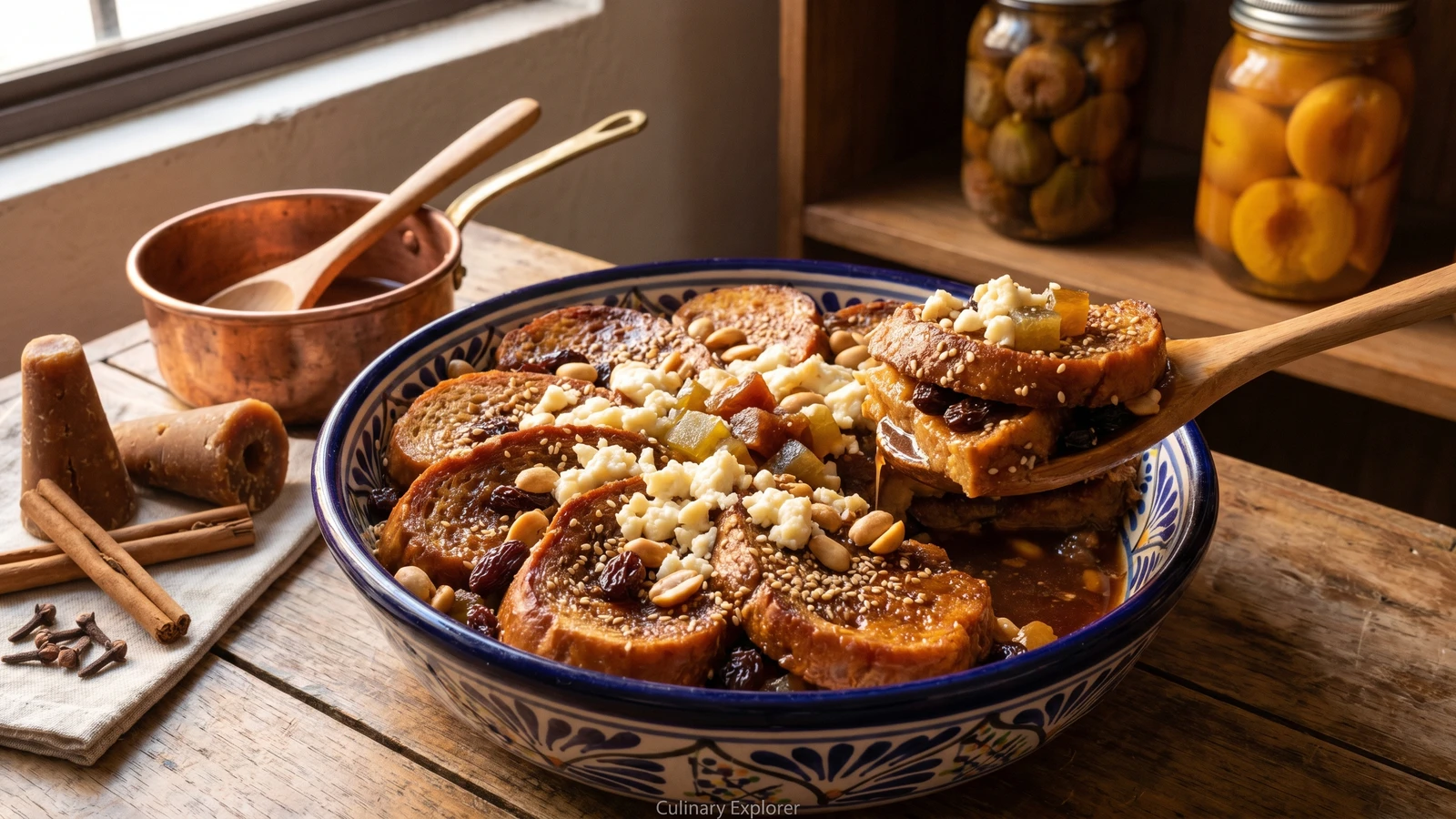
Puebla's convent bread pudding for Cuaresma, stale bolillo toasted in butter, layered with raisins, peanuts, cidra, and queso añejo, then soaked three times in piloncillo-canela syrup.
Puebla, the Angelópolis region, gives this Cuaresma capirotada its manners: Talavera on the table, bolillo dried hard, queso añejo for salt, and piloncillo with canela reduced until the syrup stains the bread dark amber. This is the sweet-salty bread pudding that belongs to the meatless weeks before Easter, when the kitchen turns stale bread and pantry sweets into something worth carrying to the table in a ceramic cazuela.
The convent logic matters. In the old kitchens around Santa Clara de Puebla, the Clarisas and the laywomen who cooked beside them understood preservation: fruit in almíbar, ate cut in blocks, cidra candied slowly, piloncillo kept in cones, bread saved when it went hard. The fruit was free when the huerto was generous. The technique made it last. La paciencia es la regla del huerto.
My mother made a Jalisciense capirotada and it was not this one. Hers sometimes had tomato in the syrup, because Jalisco has its own argument. This Pueblan conventual version is cleaner: piloncillo, canela, clavo, butter-toasted bolillo, raisins, peanuts, cidra, ate, and queso añejo. Cada estado, su propia cocina. Do not ask fresh bread to do this work. Fresh bread collapses. Stale bread receives the syrup and keeps its spine. Saber cocinar es saber vivir.
Capirotada appears in Spanish cookery before New Spain; Ruperto de Nola's Llibre del Coch, printed in 1520, includes capirotada as a layered bread dish with cheese and broth rather than the sweet Mexican Lenten pudding. In Puebla de los Ángeles, convent kitchens such as Santa Clara, Santa Rosa, and Santa Mónica helped turn European bread, colonial cane sugar, canela, clove, local piloncillo, and preserved fruits into Cuaresma sweets for the meatless table. By the 19th century, Mexican capirotadas had become regional: Jalisco often kept tomato or onion in the syrup, northern versions favored nuts and dried fruits, and Puebla's conventual table leaned into sweet-salty layers baked in ceramic cazuelas.
Quantity
8, about 1 1/2 pounds total
sliced 1/2 inch thick
Quantity
6 tablespoons, plus more for the baking dish
melted
Quantity
2 large, about 16 ounces total
chopped
Quantity
5 cups
Quantity
2
Quantity
4
Quantity
1 wide strip
white pith removed
Quantity
1/4 teaspoon
Quantity
3/4 cup
Quantity
3/4 cup
Quantity
1/2 cup
diced, never biznaga
Quantity
1/2 cup
diced
Quantity
8 ounces
crumbled
Quantity
2 tablespoons
lightly toasted
| Ingredient | Quantity |
|---|---|
| stale bolillossliced 1/2 inch thick | 8, about 1 1/2 pounds total |
| unsalted buttermelted | 6 tablespoons, plus more for the baking dish |
| piloncillo coneschopped | 2 large, about 16 ounces total |
| water | 5 cups |
| Mexican canela sticks | 2 |
| whole cloves | 4 |
| orange peelwhite pith removed | 1 wide strip |
| fine sea salt | 1/4 teaspoon |
| raisins | 3/4 cup |
| roasted unsalted peanuts | 3/4 cup |
| acitrón de cidradiced, never biznaga | 1/2 cup |
| ate de membrillo or ate de guayabadiced | 1/2 cup |
| queso añejo or aged Cotijacrumbled | 8 ounces |
| sesame seedslightly toasted | 2 tablespoons |
If the bolillos are not already hard, spread the slices on racks and leave them uncovered overnight. For same-day cooking, place them in a 275F oven for 18 to 22 minutes, turning once, until dry at the edges but not browned. Capirotada needs bread with backbone. Fresh bread turns to paste and then people blame the recipe.
Put the piloncillo, water, canela, cloves, orange peel, and salt in a copper cazo or heavy saucepan. Bring to a simmer over medium heat, stirring until the piloncillo dissolves. Reduce gently for 25 to 30 minutes, until the syrup is glossy, dark brown, and reduced to about 3 1/2 cups. Strain it. This is the piloncillo-and-canela almíbar that carries the dish. White sugar gives sweetness, not character.
Brush both sides of the dried bolillo slices lightly with melted butter. Toast them on a hot comal or on sheet pans in a 350F oven for 12 to 15 minutes, turning once, until the edges are golden and the surface feels crisp. The right fat here is butter, used with discipline. The bread should drink syrup later, not grease now.
Butter a 9 by 13 inch glazed ceramic baking dish or a deep Talavera cazuela. Do not use unglazed clay unless you know it is food-safe and meant for syrup. Keep the raisins, peanuts, cidra, ate, queso añejo, and sesame seeds ready in separate bowls. Convent cooking is organized cooking. La cocina no es decoración, es trabajo.
Lay one third of the toasted bolillo in the bottom of the cazuela, overlapping the slices slightly. Scatter over one third of the raisins, peanuts, cidra, ate, and queso añejo. Repeat twice more, finishing with cheese, peanuts, sesame seeds, and a few pieces of cidra visible on top. The salt from the cheese is not an accident. Sweet meets salt by design.
Pour one third of the hot piloncillo syrup slowly over the layered bread, working from the edges toward the center. Wait 10 minutes. Press the bread gently with the back of a spoon so it receives the syrup without breaking apart. Repeat with the second third of syrup, wait 10 minutes, then repeat with the final third. Three soakings. No me vengas con atajos. One flood of syrup gives you wet top and dry bottom.
Cover the cazuela tightly with foil and bake at 350F for 25 minutes. The covered bake lets the syrup move through the layers and soften the bread evenly. You should see the edges darken and the cheese soften into the top layer.
Remove the foil and bake 18 to 22 minutes more, until the top edges are crisp, the center is set but still glossy, and the piloncillo syrup bubbles thickly at the sides. Do not bake it dry. Capirotada is a pudding, not toast with decorations.
Let the capirotada rest at least 20 minutes before serving. The syrup settles, the bread firms, and the salt from the queso añejo comes forward. Serve warm or at room temperature, directly from the Talavera cazuela. Recetas probadas y garantizadas.
1 serving (about 240g)
Culinary guides, cultural storytelling, and the editorial depth that makes cooking meaningful.
Discover Culinary ExplorerChef Lupita
Puebla's convent-style acitrón, made from cidra peel instead of endangered biznaga, built through repeated syrup soakings until the cubes turn firm, translucent, and ready for rosca or chiles en nogada.

Chef Lupita
Ciudad de México's Tulyehualco alegría is popped huautli folded into piloncillo honey, pressed with peanuts, pepitas, and raisins, then cut into the rectangular bars that built a pueblo's identity.

Chef Lupita
Oaxaca's pre-Columbian amaranth bar, popped on a hot comal and bound with piloncillo, honey, and the sacred Zapotec grain that the Spanish tried, and failed, to outlaw.

Chef Lupita
Querétaro's mercado candy of popped amaranto pressed with dark piloncillo syrup, pepitas, pecans, and cacahuate, a Bajío sweet that respects the seed before it decorates the table.