
Chef Joost
Schuimpjes (Dutch Little Meringues)
The name means little foams, and that is the whole Dutch trick: egg white, sugar, patience, and a sweet so light it almost denies being food.

Updated June 12, 2026
The Dutch sweets that never meet an oven for their setting: the no-bake koude taarten built for every birthday, and the worked suikergoed of the snoepwinkel and the Sinterklaas evening, from Zeeland's babbelaars to the boiled sugar of borstplaat.
A cooking platform built around craft, culture, and the stories behind what we eat.
Chef Joost
The name means little foams, and that is the whole Dutch trick: egg white, sugar, patience, and a sweet so light it almost denies being food.

Chef Joost
The birthday cake that never sees the oven: cool quark, cream, gelatin, and fruit on a crushed-biscuit floor, set quietly in the refrigerator while the house gets ready.

Chef Joost
A cold Dutch quark cake carrying a seventeenth-century spice cargo: speculaas crumbs below, cinnamon and clove through the filling, and the quiet genius of making celebration food ahead.

Chef Joost
The little black candy that divides the table, where zoethout, licorice root, meets salmiak, ammonium chloride, and Dutch children learn that sweet can bite back.

Chef Joost
The name means little Hops, and inside that modest sweet is The Hague around 1800: coffee, cream, sugar, a forgetful baron, and Dutch thrift turning accident into habit.

Chef Joost
A Zwolle sweet asks for patience: a clear hard-sugar shell drawn by hand around amandelspijs, made for a dry winter afternoon and the slow pleasure of letting almond appear.

Chef Joost
A Zeeland babbelaar is a small amber lesson in thrift: sugar, butter, and vinegar boiled hard, cut for the coffee table, and named for the talking it was meant to lengthen.

Chef Joost
Kaneelkussentjes are little cinnamon pillows from the old sweet shop jar, proof that Dutch thrift could turn sugar, spice, and sharp fingers into a holiday treasure.

Chef Joost
The little sour sweets of the Dutch snoepwinkel, where sugar, fruit colour, and a pinch of acid become the candy children chose from glass jars.

Chef Joost
Borstplaat began as sugar for the chest and ended as Sinterklaas candy: a pale slab of cream, crystals, and winter thrift that sets before you can change your mind.
Chef Joost
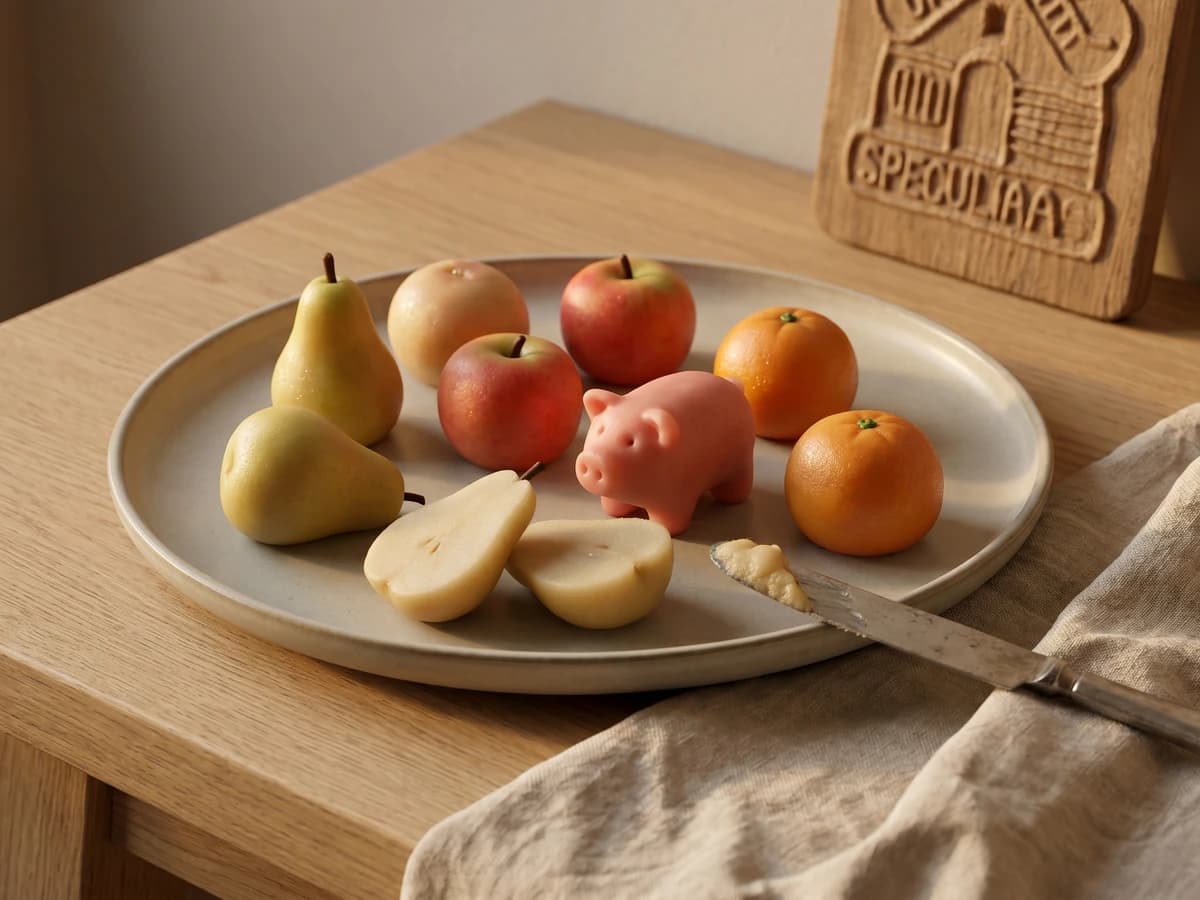
Marsepein is December made edible: almonds, sugar, and patience kneaded into the little fruits and figures that Dutch children inspect before they dare to eat.

Chef Joost
Drop is the Dutch national argument in miniature: sweet, salty, soft, hard, and medicinal at the edges, a black little candy that carries zoethout from apothecary jars to every coat pocket.

Chef Joost
A no-bake birthday cake from the Dutch family table: silver-foil MonChou folded with whipped cream, a cinnamon Bastogne bottom, and cherries dark enough to make the refrigerator feel ceremonial.

Chef Joost
Goat-hoof biscuits made into a whole taart: almond meringue, chocolate, advocaat, and cream, the Dutch bakery counter quietly becoming a dinner-party secret.

Chef Joost
The name says little bacon, but the sweet shop knows better: pink-and-white sugar set into soft cubes, a Dutch childhood joke you can cut with a kitchen knife.
Culinary guides, cultural storytelling, and the editorial depth that makes cooking meaningful.
Discover Culinary ExplorerChef Joost is a fictional culinary guide to Dutch Regional Cuisine, written with the assistance of AI.