
Chef Joost
Bavarois met Frambozensaus
A French-Bavarian name, a Dutch party mould, and the quiet trick of gelatine: custard cooled just enough, cream folded gently, and a dessert made ahead like a host with sense.
A cooking platform built around craft, culture, and the stories behind what we eat.
Created by
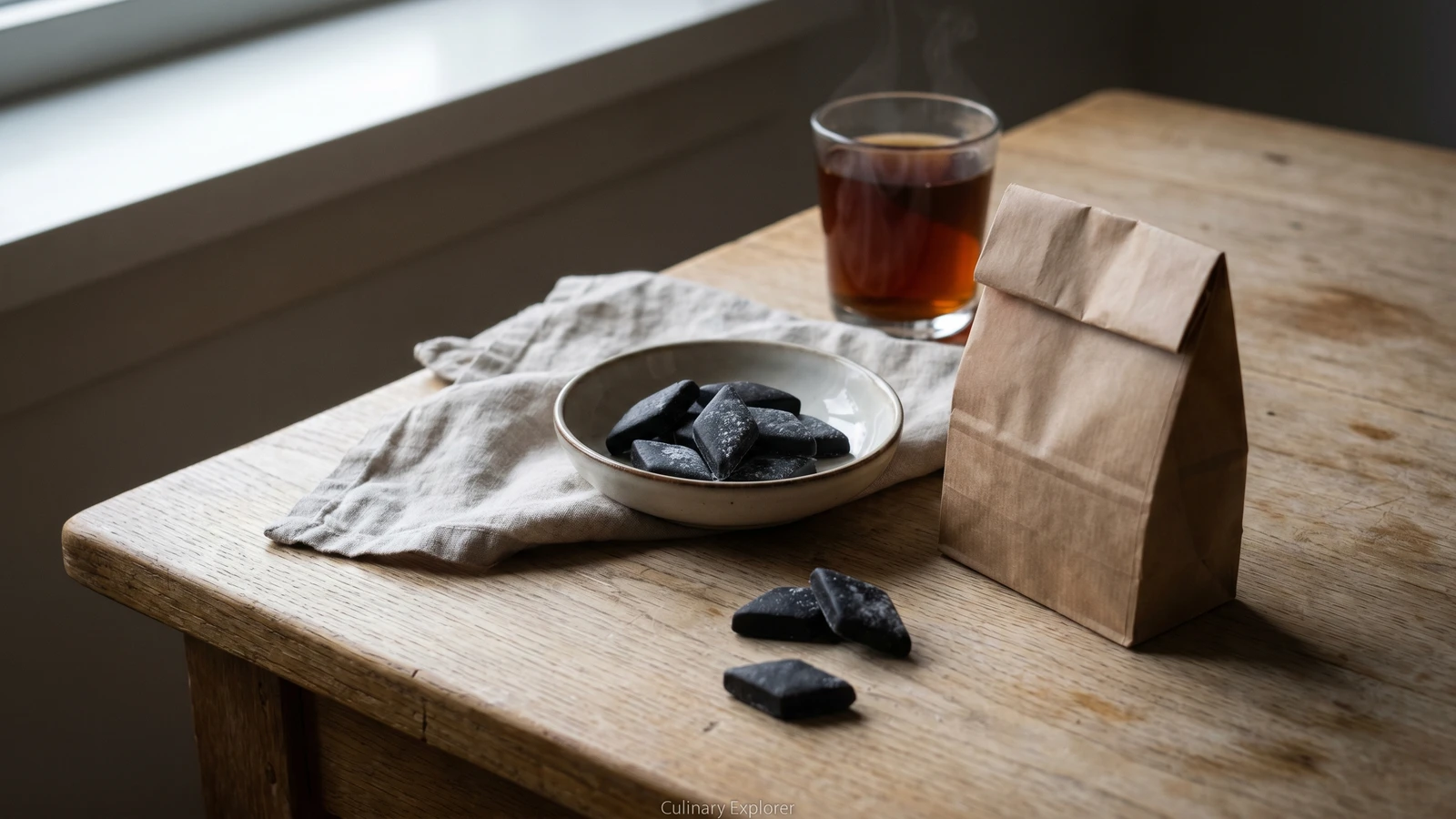
The little black candy that divides the table, where zoethout, licorice root, meets salmiak, ammonium chloride, and Dutch children learn that sweet can bite back.
The Dutch do not so much eat zoute drop as confess themselves with it. Offer a bowl to visitors and the room sorts itself at once: the Dutch hand reaches in, the foreign hand hesitates, and someone makes the face of a person betrayed by candy. But let me tell you a secret. That face is part of the pleasure.
The name already tells you the argument. Zoute drop means salty licorice, though the salt is not kitchen salt doing ordinary kitchen work. Salmiak is ammonium chloride, a sharp mineral salt once sold through apothecaries, and in the Netherlands it found its way into the candy tin with the confidence only a small country can have in a very strong opinion. Drop itself comes from zoethout, licorice root, the sweet root, boiled and concentrated until it turns black and medicinal and strangely tender. History and cookery, they cannot be separated, not even in a sweet shop.
In my grandmother's second notebook there is no recipe for drop, only a note beside a shopping list: voor onderweg, for the road. That is where drop belongs: in coat pockets, glove compartments, school bags, the little paper bag passed between adults who say they are taking only one and then do not. Homemade drop will never be quite like the polished factory pieces, and that is all right. We are making the kitchen version: dark, chewy, salty enough to make you pay attention, simple enough to trust. Hou het altijd simpel, but buy the salmiak carefully. Food-grade only. The old apothecary bite is welcome; the wrong chemical is not.
Dutch drop grew from the older European medicinal use of licorice root, which apothecaries sold for coughs and sore throats long before it became everyday confectionery. Salmiak, ammonium chloride, entered Northern European candy traditions through the pharmacy as well, and by the nineteenth and twentieth centuries salted licorice had become especially beloved in the Netherlands, Scandinavia, and parts of northern Germany. The Netherlands now has one of the highest per-capita licorice consumptions in the world, and zoute drop remains a national taste learned young rather than a seasonal sweet.
Quantity
120ml
divided
Quantity
20g
Quantity
80g
Quantity
120g
Quantity
40g
very finely ground
Quantity
10g
Quantity
1/2 teaspoon
Quantity
15g
plus more for the pan
Quantity
1 teaspoon
for the knife
Quantity
1 tablespoon
for dusting
| Ingredient | Quantity |
|---|---|
| cold waterdivided | 120ml |
| powdered gelatin | 20g |
| dark molasses or keukenstroop | 80g |
| dark brown sugar | 120g |
| licorice root powdervery finely ground | 40g |
| food-grade ammonium chloride (salmiak) | 10g |
| fine sea salt | 1/2 teaspoon |
| unsalted butterplus more for the pan | 15g |
| neutral oilfor the knife | 1 teaspoon |
| potato starch or cornstarchfor dusting | 1 tablespoon |
Butter a small loaf tin or square 15cm pan and line it with baking paper, leaving two long edges to lift the candy out later. Dust the paper very lightly with potato starch or cornstarch. Drop sticks with the loyalty of family, so give yourself the gift of escape before you begin.
Put 60ml of the cold water in a small bowl and sprinkle the gelatin evenly over it. Let it stand for ten minutes until swollen and dull-looking. This quiet pause is what gives the finished drop its chew rather than a rubbery snap.
In a small heavy pan, combine the remaining 60ml water, molasses, brown sugar, licorice powder, salmiak, and sea salt. Warm over low heat, whisking until smooth, then raise the heat just enough to bring it to a steady bubble. Cook for five to seven minutes, stirring often, until the mixture looks glossy, black, and thick enough to leave a brief trail when the spoon crosses the bottom.
Take the pan off the heat and whisk in the bloomed gelatin and butter until completely melted. Do not boil it after the gelatin goes in; heat has already done its work, and now you want a clean set. Taste a tiny cooled dot if you must. It should be sweet first, then salty, then sharply salmiak at the back of the tongue.
Scrape the mixture into the prepared pan and smooth the top with a lightly oiled spatula. Let it cool at room temperature for one hour, then refrigerate for at least seven hours, or overnight. The rest matters; fresh drop tastes loud and uneven, while rested drop settles into its proper dark chew.
Lift the slab from the pan and dust both sides very lightly with potato starch. Oil a sharp knife and cut the slab into small squares or diamonds. Wipe and oil the knife when it begins to drag. Toss the pieces with the barest breath of starch, enough to stop sticking, not enough to make them look dusty.
1 serving (about 6g)
Culinary guides, cultural storytelling, and the editorial depth that makes cooking meaningful.
Discover Culinary ExplorerChef Joost
A French-Bavarian name, a Dutch party mould, and the quiet trick of gelatine: custard cooled just enough, cream folded gently, and a dessert made ahead like a host with sense.

Chef Joost
An old Dutch moulded toetje, where bitter-almond macaroons soften into milk pudding and turn thrift, patience, and one good puddingvorm into celebration.

Chef Joost
A bowl of vanillevla with bitterkoekjes folded through it is the quiet Dutch trick that turns milk, eggs, sugar, and a few almond biscuits into a proper toetje.

Chef Joost
Goat-hoof biscuits made into a whole taart: almond meringue, chocolate, advocaat, and cream, the Dutch bakery counter quietly becoming a dinner-party secret.