
Chef Joost
Bavarois met Frambozensaus
A French-Bavarian name, a Dutch party mould, and the quiet trick of gelatine: custard cooled just enough, cream folded gently, and a dessert made ahead like a host with sense.
A cooking platform built around craft, culture, and the stories behind what we eat.
Created by
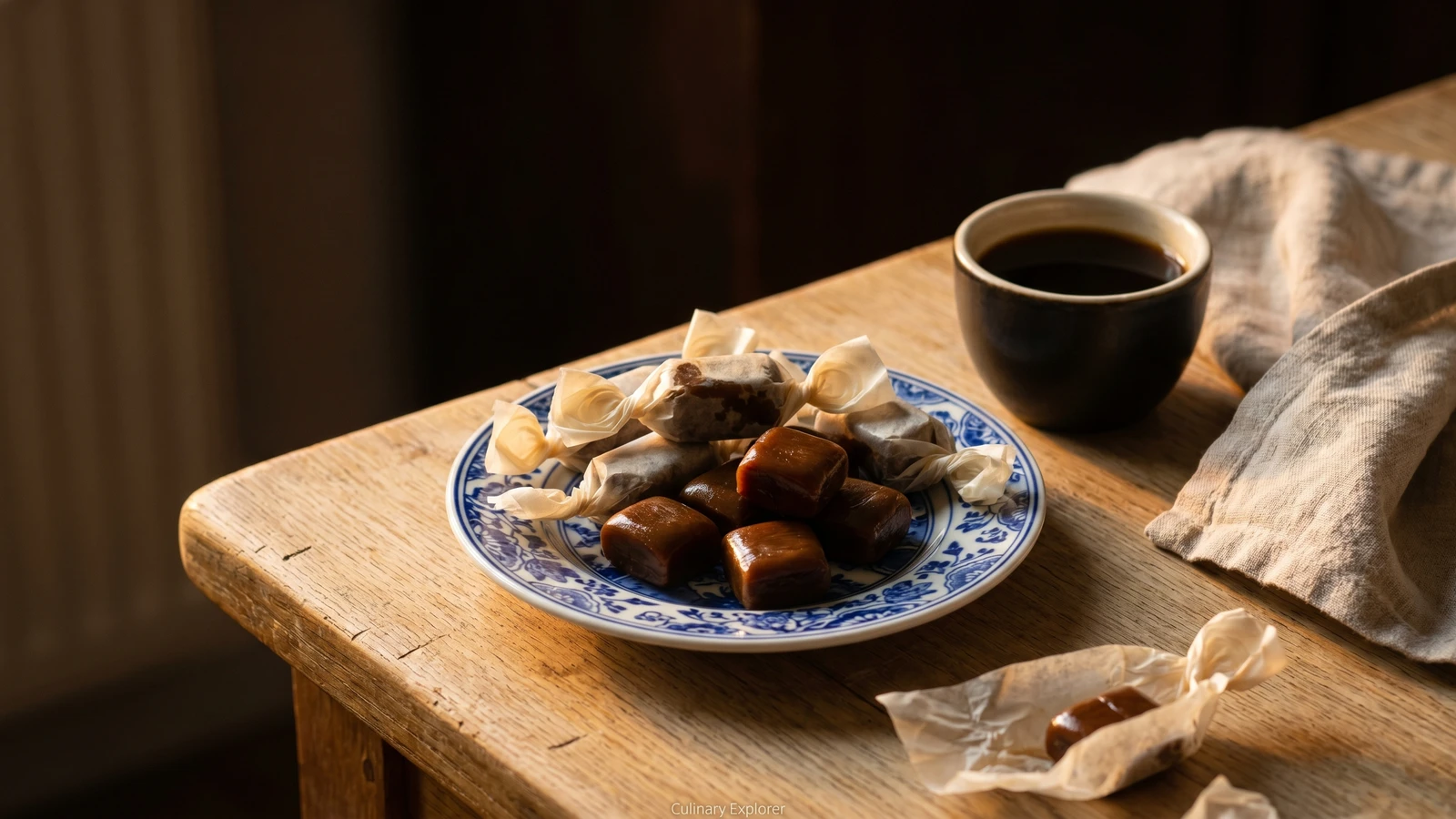
The name means little Hops, and inside that modest sweet is The Hague around 1800: coffee, cream, sugar, a forgetful baron, and Dutch thrift turning accident into habit.
The first Haagse Hopje was not invented with a copper pan and a proud recipe card. It began, if the old story is allowed to keep its hat on, with a cup of coffee left too long by the fire. Very Dutch. We waste nothing, not even a mistake.
The name already tells you the joke. Hopjes are little Hops, named for Baron Hendrik Hop, a coffee-loving gentleman in The Hague who is said to have taken his coffee with sugar and cream until his doctor tried to separate him from the cup. The sweet was the compromise: coffee boiled with cream and sugar until it became something you could keep in your pocket and pretend was not quite coffee. For obvious reasons, doctors are rarely consulted about confectionery after that.
But let me tell you a secret: a good Hopje is not just coffee caramel. It should taste first of dark sugar, then roasted coffee, then cream at the back of the tongue, with a clean snap under the teeth and no burnt bitterness. Hou het altijd simpel, always keep it simple. Use strong coffee, a heavy pan, and a thermometer if you have one. Sugar forgives many things, but it does not forgive inattention.
Haagse Hopjes are traditionally traced to Baron Hendrik Hop, who lived in The Hague around the turn of the nineteenth century and whose sweetened coffee with cream was said to have inspired the candy. The name is a diminutive of Hop, making a hopje literally a little Hop, not a reference to the plant. In the nineteenth century confectioners and later firms such as Rademaker made the sweet famous far beyond The Hague, wrapping coffee culture, urban thrift, and Dutch sugar work into one small brown paper twist.
Quantity
200g
Quantity
100g
Quantity
150ml
Quantity
60ml
Quantity
40g
Quantity
1 tablespoon
Quantity
1/4 teaspoon
| Ingredient | Quantity |
|---|---|
| granulated sugar | 200g |
| light brown sugar or witte basterdsuiker | 100g |
| heavy cream | 150ml |
| very strong brewed coffee or espresso | 60ml |
| unsalted butter | 40g |
| golden syrup or glucose syrup | 1 tablespoon |
| fine salt | 1/4 teaspoon |
Line a small loaf tin or square dish, about 20 by 20 centimetres, with baking parchment and butter it lightly. Have a second sheet of parchment ready. Once the sugar reaches its point, it will not wait while you rummage through a drawer.
Put the cream, strong coffee, butter, syrup, and salt into a small saucepan and warm until the butter melts. Keep it warm, not boiling. Cold cream hitting hot sugar can seize the mixture, and seized sugar is a sulking child in a pan.
Put both sugars into a heavy-bottomed saucepan over medium heat. Stir gently until the edges begin to melt, then stop stirring and swirl the pan now and then. Let the sugar become a deep amber, the colour of strong tea held to a window. If it smells harsh or smoky, you have gone too far.
Carefully pour in the warm coffee cream in a thin stream, stirring with a wooden spoon. It will rise and complain. Keep stirring until smooth, then boil steadily until the mixture reaches 150C on a sugar thermometer, the hard-crack stage. Without a thermometer, drop a little into cold water; it should set into brittle threads that snap cleanly.
Pour the caramel immediately into the prepared tin and tilt it into an even layer. Let it sit for 5 to 8 minutes, until the surface is set but still warm enough to mark, then score into small rectangles with a buttered knife. Do not cut all the way through yet; you are giving the candy its future fault lines.
Let the slab cool completely, about 1 hour. Break it along the scored lines, then wrap each Hopje in small squares of wax paper or baking parchment. Store airtight. Sugar pulls moisture from the air like a sermon pulls sleep from a child, so keep the lid closed.
1 serving (about 12g)
Culinary guides, cultural storytelling, and the editorial depth that makes cooking meaningful.
Discover Culinary ExplorerChef Joost
A French-Bavarian name, a Dutch party mould, and the quiet trick of gelatine: custard cooled just enough, cream folded gently, and a dessert made ahead like a host with sense.

Chef Joost
An old Dutch moulded toetje, where bitter-almond macaroons soften into milk pudding and turn thrift, patience, and one good puddingvorm into celebration.

Chef Joost
A bowl of vanillevla with bitterkoekjes folded through it is the quiet Dutch trick that turns milk, eggs, sugar, and a few almond biscuits into a proper toetje.

Chef Joost
Goat-hoof biscuits made into a whole taart: almond meringue, chocolate, advocaat, and cream, the Dutch bakery counter quietly becoming a dinner-party secret.