
Chef Joost
Bokkenpootjestaart
Goat-hoof biscuits made into a whole taart: almond meringue, chocolate, advocaat, and cream, the Dutch bakery counter quietly becoming a dinner-party secret.
A cooking platform built around craft, culture, and the stories behind what we eat.
Created by
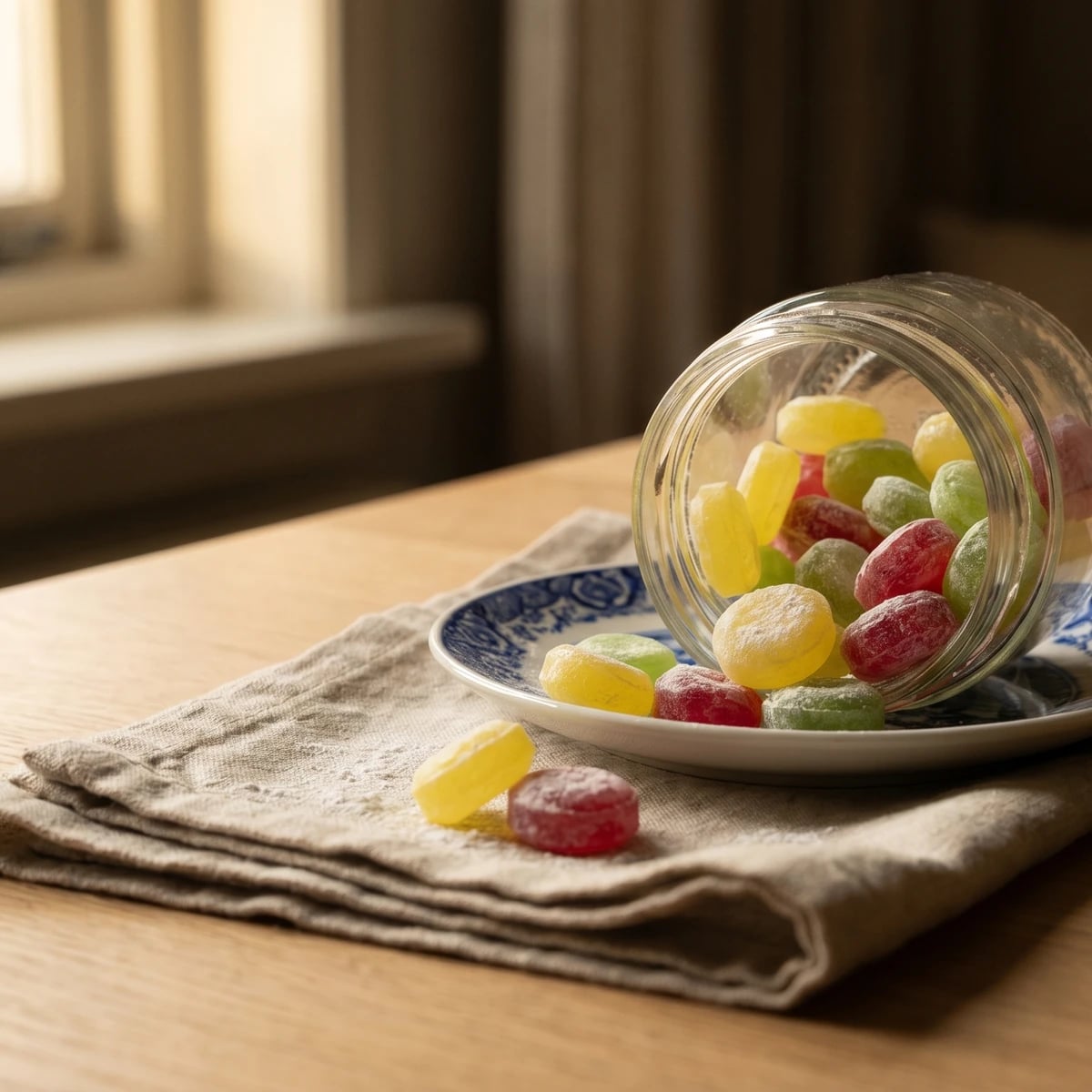
The little sour sweets of the Dutch snoepwinkel, where sugar, fruit colour, and a pinch of acid become the candy children chose from glass jars.
The name already tells you the whole trick. Zuurtjes means little sour ones, from zuur, sour, with that Dutch diminutive that makes even a boiled sugar drop sound as if it belongs in a child's coat pocket. In the old snoepwinkel, the sweet shop, they sat in glass jars with metal lids: lemon yellow, raspberry red, apple green, each one catching the window light like a tiny stained-glass window from a church where the saints had a sugar habit.
But let me tell you a secret. These are not complicated candies. They only pretend to be, because hot sugar frightens sensible people, and sensible people are right to be frightened. Hou het altijd simpel, always keep it simple: sugar, glucose syrup, water, heat, then acid and flavour at the end. Add the sourness too early and the syrup darkens, splits its character, and turns sticky under your hand. Add it late, and the candy keeps its clean glassy snap with the sour edge exactly where it belongs, on the tongue.
This is holiday food in the old Dutch way: cheap ingredients, made ahead, kept in a tin, produced when visitors arrive and children begin looking hopeful. A dish without its story is half a meal, and a candy without its little ritual is only sugar. Dust the work surface, warm the knife, keep your hands away from the boiling syrup, and make the sweets small enough that one more feels reasonable. That, for obvious reasons, is how tins become empty.
Hard boiled sweets became common in the Netherlands in the nineteenth century as refined sugar grew cheaper, helped by the rise of European sugar-beet production after the Napoleonic period. Zuurtjes belonged to the glass-jar culture of the Dutch snoepwinkel, sold by weight alongside pepermunt, drop, and kaneelstokjes, with fruit flavouring and food colouring turning an economical sugar boil into a bright treat. The name is plain Dutch rather than mysterious: zuur means sour, and zuurtjes are the small sour sweets that made tartness part of everyday confectionery.
Quantity
300g
Quantity
120g
Quantity
90ml
Quantity
1/2 teaspoon
Quantity
1/2 teaspoon
lemon, raspberry, or orange
Quantity
a few drops
Quantity
2 tablespoons
for dusting
| Ingredient | Quantity |
|---|---|
| granulated sugar | 300g |
| glucose syrup or light corn syrup | 120g |
| water | 90ml |
| citric acid | 1/2 teaspoon |
| natural fruit extractlemon, raspberry, or orange | 1/2 teaspoon |
| food colouring (optional) | a few drops |
| icing sugarfor dusting | 2 tablespoons |
Line a baking tray with parchment or a silicone mat and dust it very lightly with icing sugar. Set out a sugar thermometer, a heatproof spatula, and a sharp knife rubbed with a little neutral oil. Once the syrup reaches its point, it will not wait while you search for tools.
Put the sugar, glucose syrup, and water in a heavy saucepan over medium heat. Stir only until the sugar dissolves, then stop stirring and let the syrup boil cleanly to 150C, the hard-crack stage. The bubbles will grow tight and quick, and the syrup will look clear and heavy rather than watery.
Take the pan off the heat and let the bubbling settle for about thirty seconds. Stir in the citric acid, fruit extract, and food colouring quickly but gently. This is why the acid waits until the end: it gives the clean sour bite without turning the whole syrup sticky and dull.
Pour the syrup onto the prepared tray in a thin sheet. When the edges begin to firm but the centre is still pliable, score it into small squares or lozenges with the oiled knife. If it hardens too fast, leave it as a sheet and break it into pieces later; the snoepwinkel will forgive irregular corners.
Let the candy cool completely until hard and glassy, about thirty minutes. Break along the scored lines, then toss the zuurtjes with the smallest dusting of icing sugar to stop them from sticking. Store them in an airtight tin, away from damp air, which is the old enemy of boiled sugar.
1 serving (about 7g)
Culinary guides, cultural storytelling, and the editorial depth that makes cooking meaningful.
Discover Culinary Explorer
Chef Joost
Goat-hoof biscuits made into a whole taart: almond meringue, chocolate, advocaat, and cream, the Dutch bakery counter quietly becoming a dinner-party secret.

Chef Joost
Borstplaat began as sugar for the chest and ended as Sinterklaas candy: a pale slab of cream, crystals, and winter thrift that sets before you can change your mind.

Chef Joost
Drop is the Dutch national argument in miniature: sweet, salty, soft, hard, and medicinal at the edges, a black little candy that carries zoethout from apothecary jars to every coat pocket.

Chef Joost
The name means little Hops, and inside that modest sweet is The Hague around 1800: coffee, cream, sugar, a forgetful baron, and Dutch thrift turning accident into habit.