
Chef Joost
Bokkenpootjestaart
Goat-hoof biscuits made into a whole taart: almond meringue, chocolate, advocaat, and cream, the Dutch bakery counter quietly becoming a dinner-party secret.
A cooking platform built around craft, culture, and the stories behind what we eat.
Created by
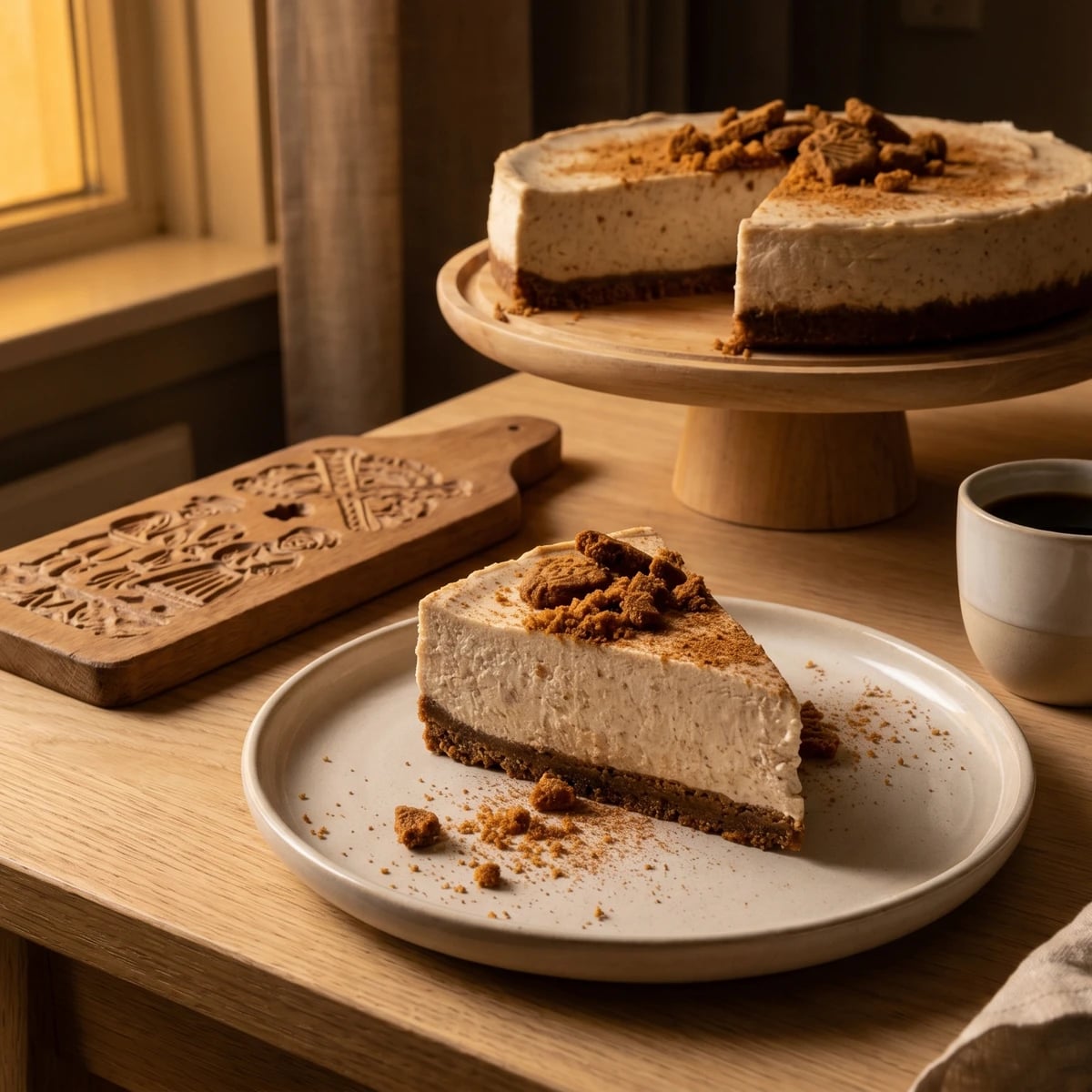
A cold Dutch quark cake carrying a seventeenth-century spice cargo: speculaas crumbs below, cinnamon and clove through the filling, and the quiet genius of making celebration food ahead.
Smell speculaas and you're smelling a ship's hold made domestic. Cinnamon, clove, nutmeg, mace, ginger, white pepper: the speculaaskruiden, speculaas spices, in this cake are a cargo manifest softened into dairy. A frugal country built a winter feast on spices that once crossed oceans, and then, with our usual talent for understatement, crushed them into biscuits for children and saints.
The name already tells you the whole practical joke. Speculaas is the dark spiced biscuit of Sinterklaas season, often pressed from carved wooden molds; kwarktaart is tart made with kwark, fresh curd cheese, lighter and more tangy than cream cheese. Put them together and you get something very Dutch: a no-bake celebration cake that tastes as if it should have required drama, but asks only for crumbs, patience, and a refrigerator.
But let me tell you a secret. This is not an old Sinterklaas relic from a canal-house archive. It is a modern home-kitchen cake wearing older clothes, and I like it for exactly that reason. History and cookery, they cannot be separated, but they don't always arrive in the same century. The spice route is old. The cold-set kwarktaart is the refrigerator age. Together they make sense at a December table.
Hou het altijd simpel, always keep it simple. Press the speculaas base firmly, dissolve the gelatine gently, and cool it before it meets the kwark, or you'll make little rubber threads where there should be silk. Then let the cold do its work overnight. The best Dutch party desserts are often the ones that free the cook before the guests arrive.
Speculaas belongs to the Dutch winter and Sinterklaas season, with carved wooden biscuit molds common by the seventeenth and eighteenth centuries and spices supplied through the VOC trade after its founding in 1602. The word speculaas has a disputed origin, often linked either to Latin speculum, mirror, because the biscuit mirrors the carved mold, or to speculator, an old title associated with bishops; no serious cook should pretend the question is settled. Kwarktaart, by contrast, is a postwar Dutch home-kitchen cake, made practical by domestic refrigeration, packet gelatine, and the ready availability of kwark.
Quantity
250g
Quantity
90g
melted
Quantity
1 pinch
Quantity
6 leaves, about 10g total
Quantity
75ml
Quantity
500g
Quantity
110g
Quantity
2 teaspoons
Quantity
1 teaspoon
Quantity
1 teaspoon
finely grated
Quantity
1 tablespoon
Quantity
250ml
Quantity
2 tablespoons
Quantity
1/2 teaspoon
| Ingredient | Quantity |
|---|---|
| speculaas biscuits | 250g |
| unsalted buttermelted | 90g |
| fine salt | 1 pinch |
| gelatine leaves | 6 leaves, about 10g total |
| whole milk | 75ml |
| full-fat kwark | 500g |
| dark brown basterdsuiker or soft dark brown sugar | 110g |
| speculaaskruiden | 2 teaspoons |
| vanilla extract | 1 teaspoon |
| orange zestfinely grated | 1 teaspoon |
| lemon juice | 1 tablespoon |
| cold whipping cream | 250ml |
| crumbled speculaas (optional) | 2 tablespoons |
| speculaaskruiden for dusting (optional) | 1/2 teaspoon |
Line the base of a 20cm springform tin with baking paper and lightly grease the sides. Crush the speculaas biscuits to fine crumbs, either in a food processor or under a rolling pin, then mix with the melted butter and salt until the crumbs look like wet sand. Press them firmly into the tin in an even layer. The base is frugal engineering: loose crumbs become a floor only when you compact them properly.
Put the gelatine leaves in a bowl of cold water for five minutes, until soft and floppy. Warm the milk in a small pan until just hot to the touch, then take it off the heat. Squeeze the water from the gelatine leaves and stir them into the warm milk until completely dissolved. Let this cool for a few minutes. Hot gelatine thrown into cold kwark is how good intentions become strings.
In a large bowl, whisk the kwark with the brown sugar, 2 teaspoons speculaaskruiden, vanilla, orange zest, and lemon juice until smooth. Taste it now. You want the spice clearly present, not shouting; speculaas should walk into the room before the clove kicks the door open.
Whisk two spoonfuls of the seasoned kwark into the cooled gelatine milk, then whisk that mixture back into the main bowl of kwark. This little detour matters. It brings the gelatine and dairy to terms before they have to live together in the cake.
Whip the cold cream to soft peaks. It should mound gently, not stand like a soldier. Fold it through the kwark mixture with a spatula, turning from the bottom of the bowl until no white streaks remain. Pour the filling over the speculaas base and smooth the top.
Cover the tin and refrigerate for at least six hours, though overnight is better. The cake should feel firm at the edge and softly set in the middle when you touch it. This is where the refrigerator earns its place in Dutch culinary history: quietly, without applause, while you sleep.
Run a thin knife around the edge of the tin, release the springform, and slide the cake onto a plate. Dust lightly with the remaining speculaaskruiden and scatter the crumbled speculaas over the top just before serving. Cut with a warm, wiped knife for clean slices, then serve cold with coffee or a small glass of genever if the evening has earned it.
1 serving (about 130g)
Culinary guides, cultural storytelling, and the editorial depth that makes cooking meaningful.
Discover Culinary Explorer
Chef Joost
Goat-hoof biscuits made into a whole taart: almond meringue, chocolate, advocaat, and cream, the Dutch bakery counter quietly becoming a dinner-party secret.

Chef Joost
Borstplaat began as sugar for the chest and ended as Sinterklaas candy: a pale slab of cream, crystals, and winter thrift that sets before you can change your mind.

Chef Joost
Drop is the Dutch national argument in miniature: sweet, salty, soft, hard, and medicinal at the edges, a black little candy that carries zoethout from apothecary jars to every coat pocket.

Chef Joost
The name means little Hops, and inside that modest sweet is The Hague around 1800: coffee, cream, sugar, a forgetful baron, and Dutch thrift turning accident into habit.