
Chef Lupita
Champurrado Chiapaneco
Chiapas' cold-morning atole, built with nixtamalized masa, cacao from Soconusco, canela, and piloncillo, whisked until thick enough to coat a spoon.

Recipe Archive
Beverages include bright refreshers, hot drinks, smoothies, cocktails, and alcohol-free options where balance and garnish matter as much as the base.
602 recipes
A cooking platform built around craft, culture, and the stories behind what we eat.
Chef Lupita
Chiapas' cold-morning atole, built with nixtamalized masa, cacao from Soconusco, canela, and piloncillo, whisked until thick enough to coat a spoon.

Chef Lupita
Puebla's convent champurrado, from the city of talavera and chocolate de metate, thickened with masa de maiz and whisked with a molinillo for Christmas morning.
Chef Lupita
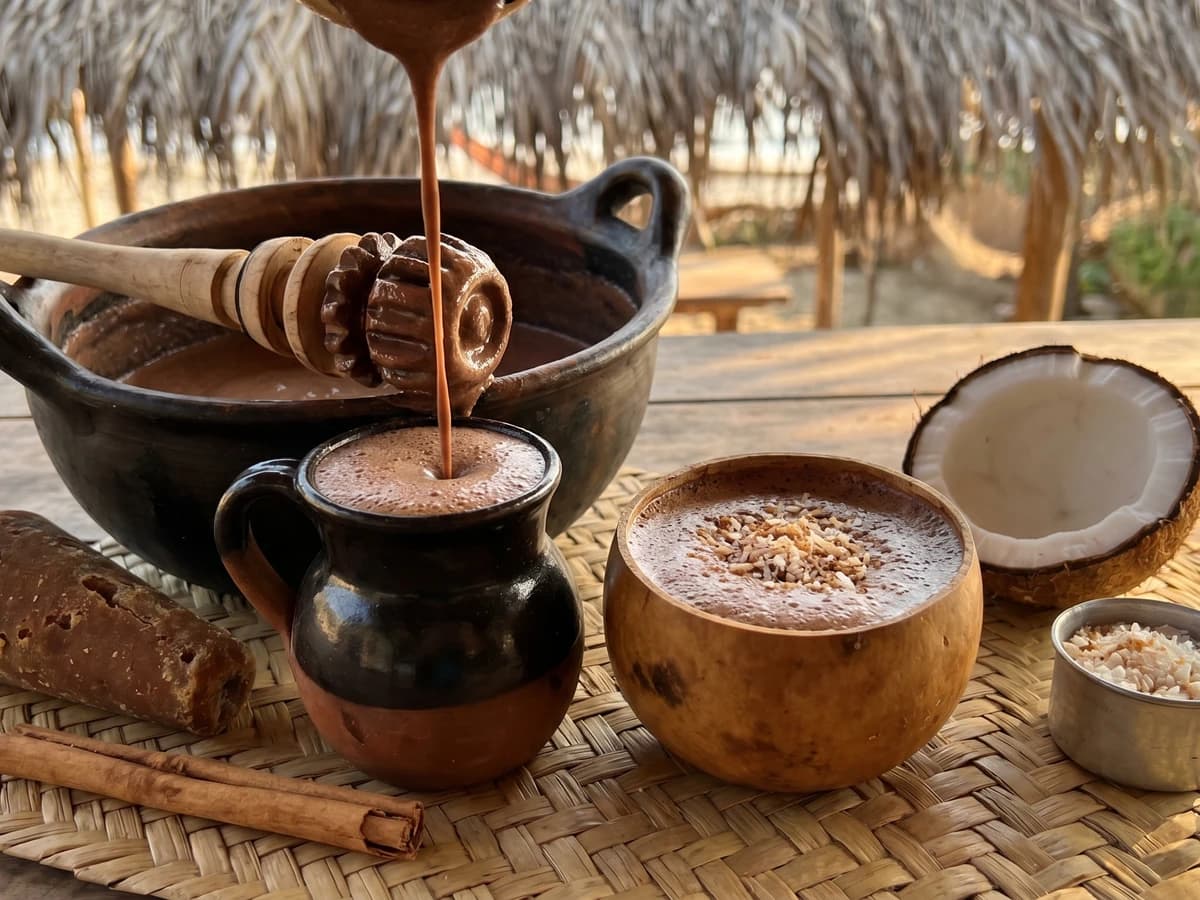
The Costa Chica's coconut champurrado, masa and cacao whisked thick with a molinillo and finished with coconut milk instead of dairy. The Afro-Mexican Pacific coast's answer to the champurrado of central Mexico, and proof that one cuisine has many faces.

Chef Lupita
From Michoacán's Meseta P'urhépecha and Lago de Pátzcuaro, this champurrado thickens with fresh masa and toasted pinole, darkens with metate chocolate, and belongs beside corundas at a cold Christmas dawn.

Chef Lupita
Sonora's champurrado built on toasted whole wheat flour instead of corn masa, finished with Mexican chocolate, piloncillo, canela, and orange peel. The hot drink of the wheat country on a cold desert morning.

Chef Lupita
Estado de México's chocolate atole from the cold central highlands, thickened with nixtamal masa, sweetened with piloncillo, scented with canela, and beaten with a molinillo until frothy.

Chef Lupita
Uruapan's cane spirit poured over hard ice with Michoacán lima and cold mineral soda, a dry highland drink for comida in the sun, not a margarita in disguise.

Chef Lupita
Michoacán's charanda from the Uruapan region, poured neat in a clay copita so the cane, piloncillo, and red volcanic soil speak without lime, ice, or noise.

Chef Lupita
Michoacan's Patzcuaro charape is real pulque fermented with piloncillo, canela, clavo, and a little masa, a sweet-sour celebration drink tied to Purepecha kitchens and Augustinian convent houses.

Chef Lupita
Michoacan's old Purépecha celebration drink, fresh pulque cured with piloncillo, canela, clove, and pineapple until lightly fizzy, tangy, and cold enough for a feast table.
Chef Lupita
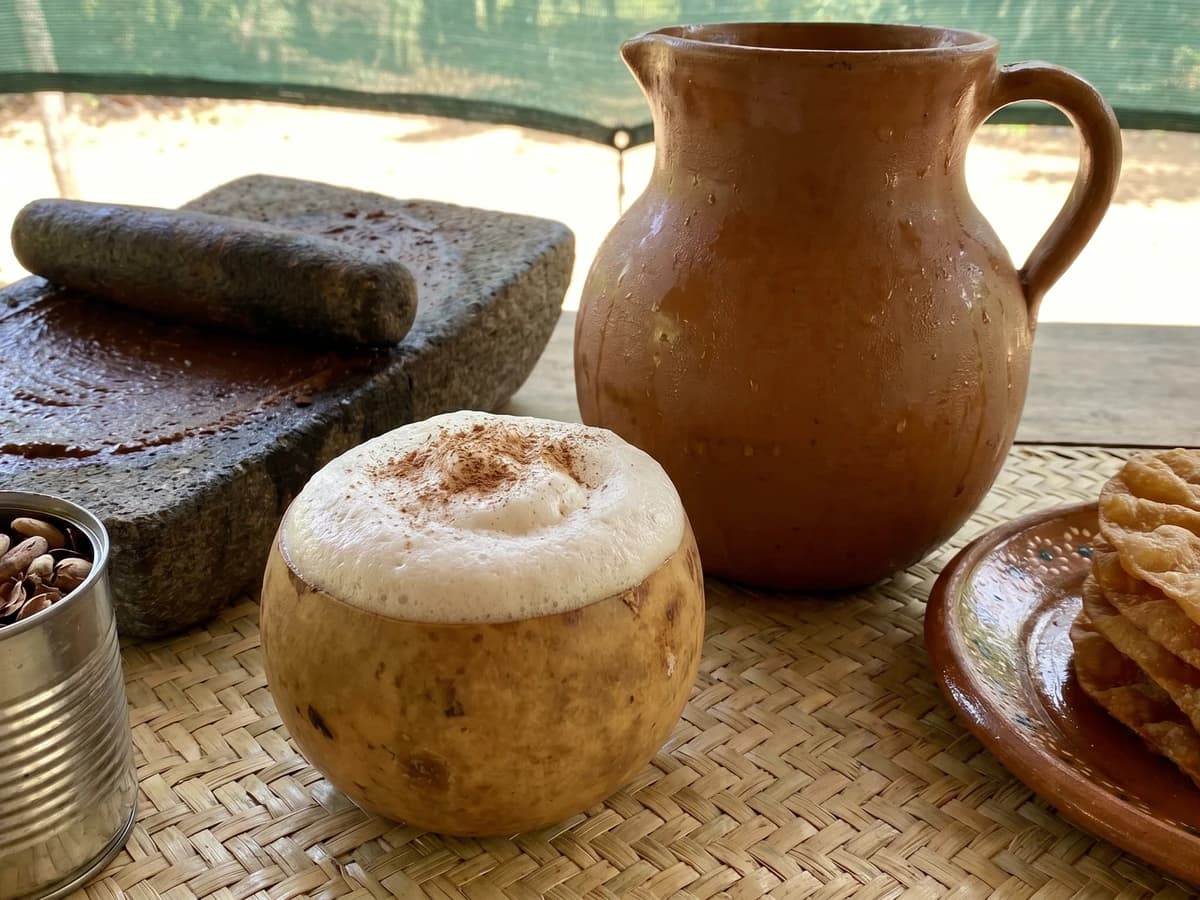
From the Costa Chica of Guerrero, the ceremonial cold cacao drink of Afro-Mexican and indigenous communities: white cacao, toasted rice, panela, and canela ground on the metate and beaten by hand until a thick foam crowns the jícara.
Chef Lupita
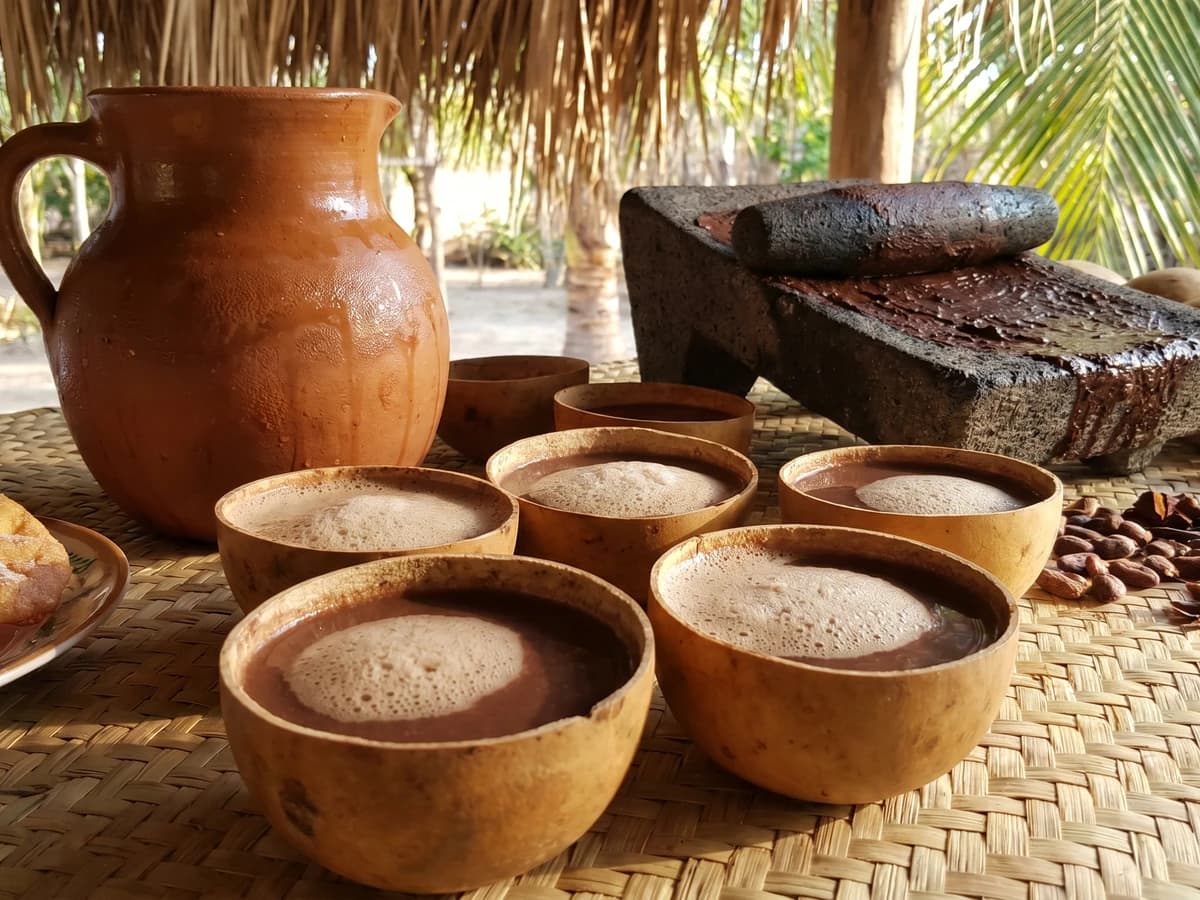
From the Afro-Mexican towns of Guerrero's Costa Chica, this is the ceremonial drink of Cuajinicuilapa and Ometepec: toasted cacao and rice ground on the metate, beaten into a thick foam, and served ice-cold beside a plate of buñuelos.

Chef Lupita
The Afro-Mexican drink of Oaxaca's Costa Chica, built on toasted cacao, rice, cinnamon, and piloncillo, then poured from a great height until it froths and served ice-cold in jicaras.

Chef Lupita
Michoacán's Meseta P'urhépecha chiliatole is a salted kamáta of toasted chile ancho, fresh nixtamal masa, and nurite leaf, served in clay jarros with corunda at the side.

Chef Juliana
You think the cuia is a southern secret. It's not. Pack the erva, protect the wall, pour water below the boil, and suddenly the circle at the table makes sense.

Chef Lupita
Yucatán's December cup. Mexican chocolate tablets melted into milk with true canela and pimienta gorda, whisked with a molinillo until the foam crowns the jarrito. The drink that closes a Mérida holiday night.
Chef Lupita
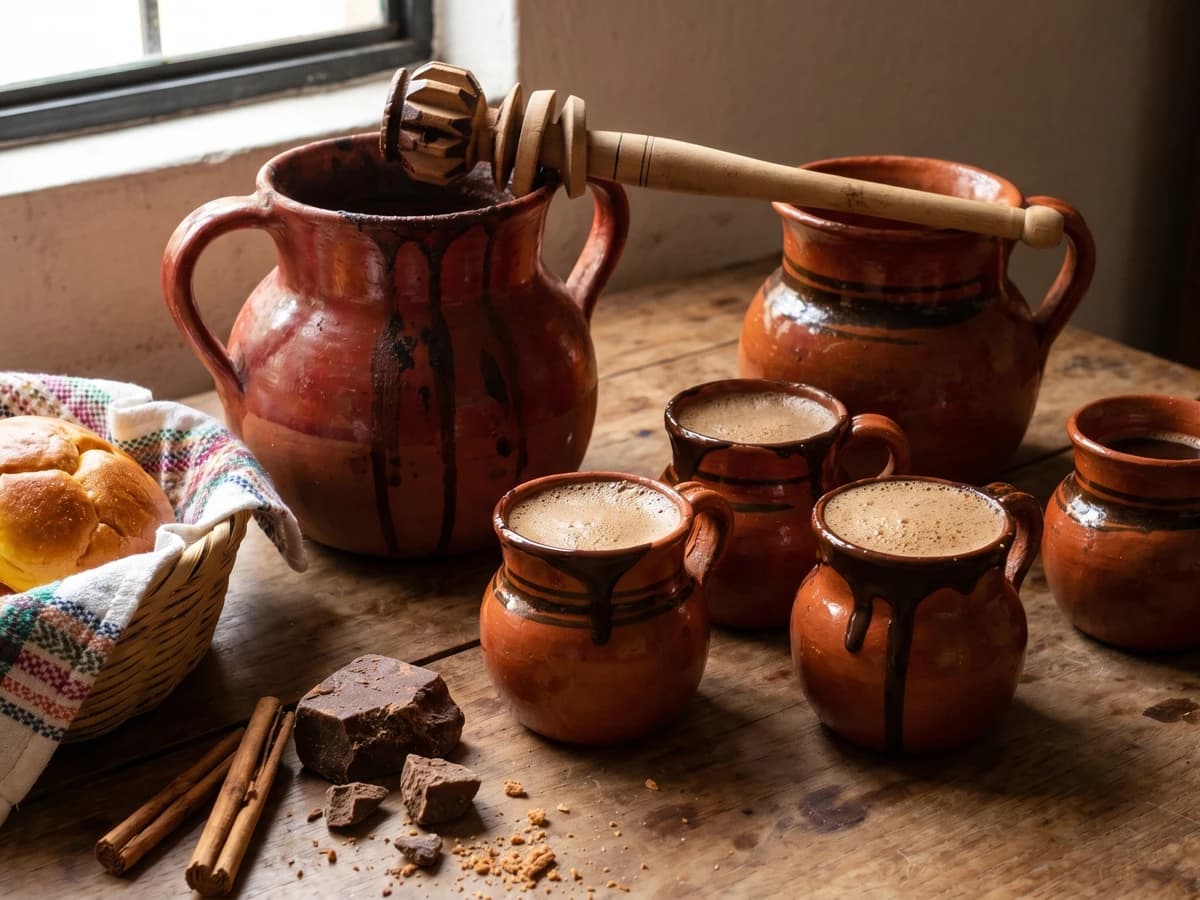
Oaxaca's market chocolate de agua, made with cacao, canela, sugar, and water, then beaten hard with a molinillo until the foam rises thick on top.

Chef Lupita
Guanajuato's Bajío morning chocolate, ground on a warm metate with cacao, canela, almonds, and piloncillo, then beaten with hot milk until the molinillo raises a thick foam.

Chef Lupita
Puebla's convent morning chocolate, cacao from the southern trade routes stone-ground with almonds, Mexican canela, and cane sugar into tablets, then beaten with water until the foam stands.

Chef Lupita
Michoacán's P'urhépecha chocolate de metate, built from cacao roasted on a comal, canela, almond, and piloncillo, beaten with a molinillo until the foam rises thick in a clay jarro.

Chef Juliana
For everyone too young or too sensible for quentão, this is the cup. Milk, cocoa, sugar, and one spoon of cornstarch, taught properly, until it turns thick enough to coat the spoon.

Chef Lupita
Ciudad de México's mercado chocomil is cold milk, banana, chocolate powder, and air, whipped in a chocomilera until the foam rises above the glass.

Chef Lupita
Tabasco's Chontal chorote is a thick cacao and nixtamal drink, fermented in banana leaf and beaten into cold water until it tastes earthy, sour, and old in the right way.

Chef Takumi
Chūhai is not a sweet can with a clever label. It is shōchū, ice, hard-cold soda, and one clean squeeze of citrus, built for grilled food and easy company.
Culinary guides, cultural storytelling, and the editorial depth that makes cooking meaningful.
Discover Culinary Explorer