
Chef Juliana
Arroz-Doce de Festa Junina
You can make the pot your tia guards at every arraiá. Rice, milk, sugar, cloves, cinnamon, and patience turn into a creamy spoonful of June.
A cooking platform built around craft, culture, and the stories behind what we eat.
Created by
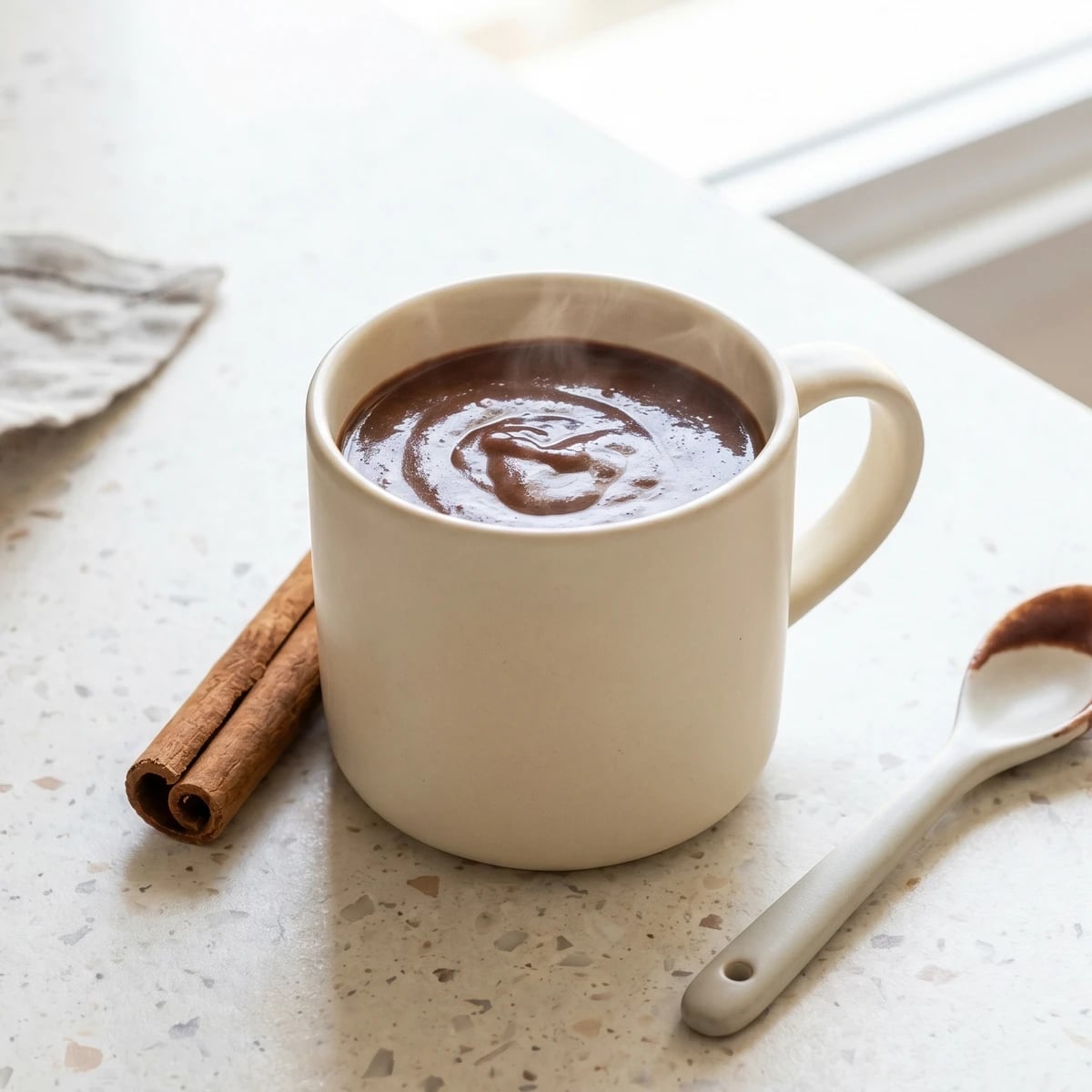
For everyone too young or too sensible for quentão, this is the cup. Milk, cocoa, sugar, and one spoon of cornstarch, taught properly, until it turns thick enough to coat the spoon.
You know that little voice at the festa table saying, isso não é pra mim, I'll burn the milk, it'll clump, I'll ruin it? Good. Bring that voice here so a gente can make it useful for once. Thick hot chocolate is not talent. Cozinhar não é dom, é um aprendizado, even when the lesson fits inside a mug.
I learned plenty of kitchen things late, with my cheap caderno open and my pride bruised. Cornstarch was one of them. Add it straight to hot liquid and it turns into little white lumps with ambition. Mix it cold first, whisk it into warm milk, then keep stirring until the drink changes under your spoon. That's the whole method. A recipe that works is usually just someone telling you the order of things before you make the mistake.
This is Festa Junina comfort, yes, but it still belongs to comida de verdade. Not a packet pretending to be chocolate. Not powdered dessert with a cartoon on the front. Milk, cocoa, sugar, a pinch of salt, and a little starch doing honest work. After the pê-efe, after the rice and beans and something green did their serious weekday job, this is the cup that lets the night sit down by the bonfire.
Expect it to thicken slowly, then suddenly. Watch the spoon. When the chocolate coats the back and a line drawn with your finger holds for a second, it's ready. Anota aí: the point is not mystery, it's attention.
Chocolate quente became part of Brazilian winter and Festa Junina tables through the meeting of cacao, milk, sugar, and European-style hot chocolate habits adapted to local home kitchens. In many Brazilian houses, especially for school festas and June gatherings, cornstarch is the practical thickener that turns a simple cocoa drink into the spoon-coating version served to children while adults drink quentão or vinho quente. The debate is usually thickness: some families like it drinkable, others want it almost like mingau, and both belong to the party.
Quantity
4 cups
divided
Quantity
1/4 cup
Quantity
1/3 cup, plus more to taste
Quantity
2 tablespoons
Quantity
1 pinch
Quantity
1
Quantity
1 teaspoon
| Ingredient | Quantity |
|---|---|
| whole milkdivided | 4 cups |
| unsweetened cocoa powder | 1/4 cup |
| sugar | 1/3 cup, plus more to taste |
| cornstarch | 2 tablespoons |
| salt | 1 pinch |
| cinnamon stick (optional) | 1 |
| vanilla extract (optional) | 1 teaspoon |
Pour 1/2 cup of the cold milk into a small bowl. Add the cornstarch and whisk until smooth, with no dry powder hiding at the bottom. Cornstarch needs to dissolve in cold liquid first, or it grabs onto hot milk in clumps and then you spend the night chasing little lumps around the pan.
In a heavy saucepan, whisk the cocoa powder, sugar, salt, and another 1/2 cup of the milk until you have a dark, smooth paste. Do this before adding all the milk, because cocoa floats and sulks when you dump it into a full pan. A paste gives you chocolate all the way through, not brown milk with specks.
Whisk in the remaining 3 cups milk and add the cinnamon stick if using. Set the pan over medium heat and warm it until tiny bubbles gather around the edge and the milk smells like chocolate and cinnamon. Don't boil it hard. Milk boiled with enthusiasm climbs the pan, scorches on the bottom, and makes a mess you did not invite.
Whisk the cornstarch slurry once more, then pour it into the warm chocolate while stirring. Keep the heat at medium-low and stir with a spoon or whisk for 3 to 5 minutes, scraping the bottom and corners. The drink will look thin, then it will suddenly feel heavier. That's the starch cooking and thickening the milk, not magic, not luck.
Lift the spoon and look at the back. The chocolate should coat it in a glossy layer, and a line drawn through it with your finger should stay open for a second before closing. If it's still running off like plain milk, cook one more minute. If it gets thicker than you like, whisk in a splash of milk and let it loosen. You are in charge of the ponto.
Turn off the heat, remove the cinnamon stick, and stir in the vanilla if using. Taste for sugar while it's hot, because cold sweetness lies and hot chocolate tells the truth. Pour into mugs and drink right away, glossy and thick, the kind that leaves a chocolate mustache and nobody needs to be elegant about it.
1 serving (about 260g)
Culinary guides, cultural storytelling, and the editorial depth that makes cooking meaningful.
Discover Culinary Explorer
Chef Juliana
You can make the pot your tia guards at every arraiá. Rice, milk, sugar, cloves, cinnamon, and patience turn into a creamy spoonful of June.

Chef Juliana
You think a creamy cake needs a mixer and courage. It doesn't. A thin blender batter, real erva-doce, and patience in the oven give you cake on top, cream underneath.

Chef Juliana
You think a creamy corn cake is for someone else's kitchen. It's not. Cut the kernels, blend the batter, bake until the edges go gold and the center still gives a little.

Chef Juliana
You don't need a whole festa junina to make canjica. Soak the corn, cook it tender, then simmer it in spiced milk until the pot turns creamy.