
Chef Juliana
Ambrosia Baiana
You think curdled milk means you ruined dessert. Good. Tonight you'll do it on purpose, with lemon, yolks, cravo, and sugar, until the pot turns into golden gruminhos.
A cooking platform built around craft, culture, and the stories behind what we eat.
Created by
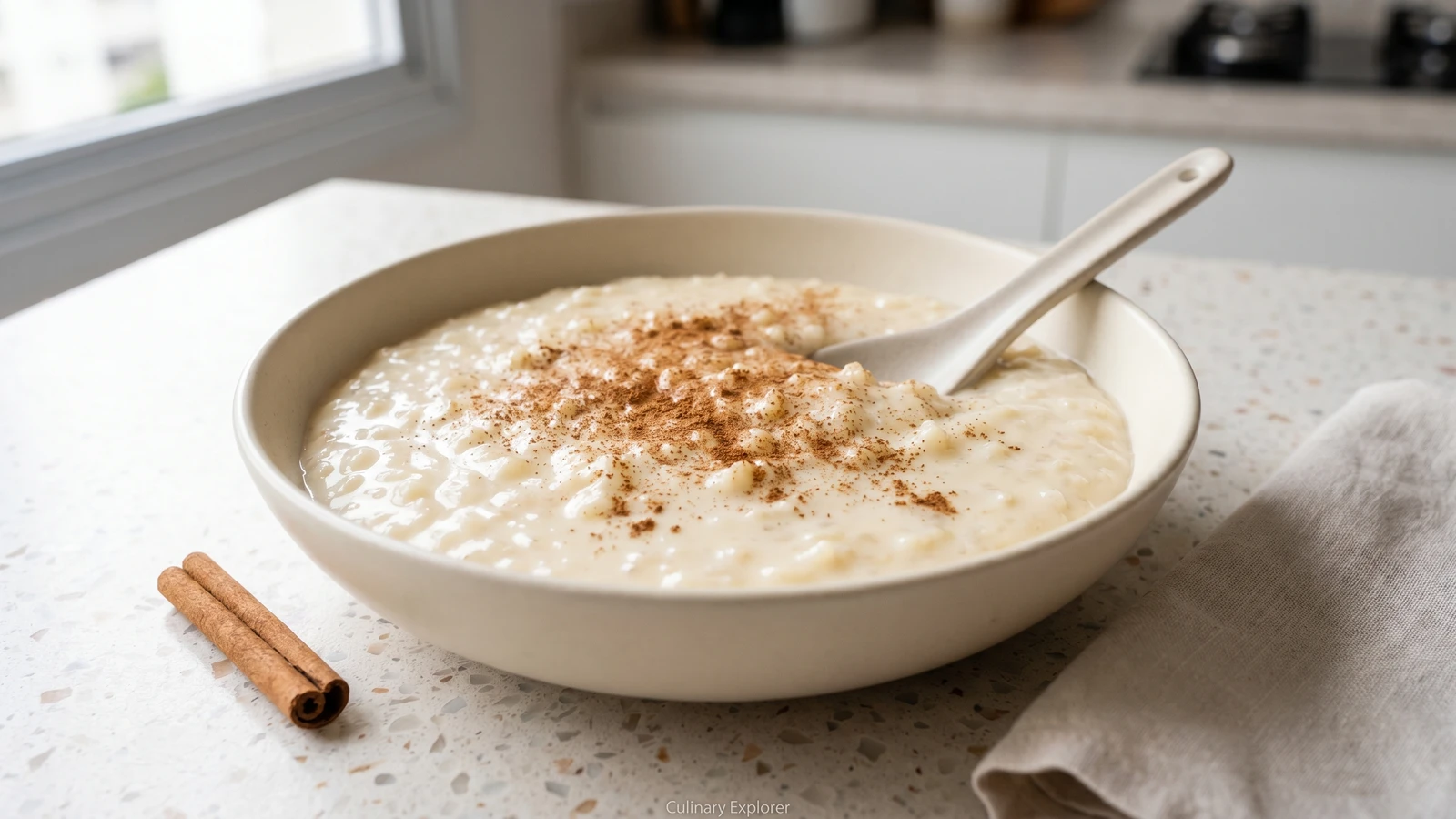
You can make the pot your tia guards at every arraiá. Rice, milk, sugar, cloves, cinnamon, and patience turn into a creamy spoonful of June.
You know that quiet little voice saying, isso não é pra mim, when you see the pot at the arraiá table? Tell it to sit down. Arroz-doce is not a mystery. It's rice learning a second job after lunch: first it holds the pê-efe, rice and beans and something green, then it comes back at night soft, creamy, and smelling of canela.
I like this dish because it tells the truth about Brazilian cooking. A gente doesn't need a packet pretending to be dessert. Rice, milk, sugar, cloves, cinnamon. That's comida de verdade, the same pantry that resolves dinner turning around to resolve festa. Cozinhar não é dom, é um aprendizado, and here the lesson is simple: cook the rice until it's tender before you ask it to drink the milk.
The why matters. Start the rice in water so the grains soften evenly without scorching the milk. Add the milk warm and in stages so it turns creamy instead of catching on the bottom. Stir often, not forever, just enough to keep the starch moving and the pudding glossy. Watch the spoon. When it leaves a soft path through the pot and the grains are plump, you've got ponto.
By the end, you'll have a bowl that tastes like June: sweet but not silly, creamy but still rice, dusted with cinnamon like somebody loved you enough to finish it properly.
Arroz-doce in Brazil descends from Portuguese rice puddings, with sugar, milk, cinnamon, and cloves carried into colonial kitchens and adapted to local tables. It became a standard Festa Junina sweet because the June festivals gather warm, spoonable foods that can sit in a big pot and feed a crowd. Regional versions may add coconut milk, grated coconut, or condensed milk, but the recognizable base stays the same: rice cooked soft, milk, sugar, and canela.
Quantity
1 cup
Quantity
2 cups
Quantity
1/4 teaspoon
Quantity
4 cups
warmed
Quantity
3/4 cup
Quantity
1
Quantity
4
Quantity
1 strip
white pith removed
Quantity
1/2 cup
Quantity
1 teaspoon
Quantity
1/2 teaspoon
for finishing
| Ingredient | Quantity |
|---|---|
| white long-grain rice | 1 cup |
| water | 2 cups |
| salt | 1/4 teaspoon |
| whole milkwarmed | 4 cups |
| sugar | 3/4 cup |
| cinnamon stick | 1 |
| whole cloves | 4 |
| orange peel (optional)white pith removed | 1 strip |
| sweetened condensed milk (optional) | 1/2 cup |
| vanilla extract (optional) | 1 teaspoon |
| ground cinnamonfor finishing | 1/2 teaspoon |
Put the rice, water, and salt in a heavy pot over medium heat. Bring to a gentle boil, then lower the heat and cook uncovered until the water is mostly absorbed and the rice looks swollen but still wet, about 12 minutes. Start in water because rice softens cleanly there; if you begin with milk, the milk can catch before the grain is tender.
Stir in the warm milk, sugar, cinnamon stick, cloves, and orange peel if using. Keep the heat low enough for small bubbles at the edge, not a rolling boil. Warm milk joins the pot without shocking the rice, and gentle heat keeps the bottom from scorching while the grains release starch.
Cook, stirring every few minutes and scraping the bottom of the pot, until the rice is very tender and the milk has thickened into a loose cream, about 20 minutes. The spoon should leave a soft path that closes slowly. Don't cook it until stiff in the pot, because arroz-doce thickens as it cools and nobody asked for sweet cement.
Remove the cinnamon stick, cloves, and orange peel. Stir in the condensed milk and vanilla, if using, and cook 2 to 3 minutes more, until glossy and spoonable. Condensed milk is the honest festa shortcut: it gives body and that familiar sweetness, but it also makes the pot richer, so taste before adding more sugar.
Spoon the arroz-doce into a serving bowl or small cups and dust the top with ground cinnamon. Serve warm, room temperature, or chilled. Warm is softer and more fragrant; chilled is thicker and cuts sweeter on the tongue. Both count, anota aí.
1 serving (about 215g)
Culinary guides, cultural storytelling, and the editorial depth that makes cooking meaningful.
Discover Culinary ExplorerChef Juliana
You think curdled milk means you ruined dessert. Good. Tonight you'll do it on purpose, with lemon, yolks, cravo, and sugar, until the pot turns into golden gruminhos.

Chef Juliana
You are not ruining the milk. You're curdling it on purpose, slowly, until sugar, eggs, cinnamon, and patience turn cheap ingredients into dessert.

Chef Juliana
You think curdled milk means failure. Not here. Milk, yolks, sugar, and lemon cook into golden curds in amber whey, a Minas sweet where the ponto teaches the whole recipe.

Chef Juliana
You already trust rice for dinner. Trust it for dessert: cook it gently with milk, coconut, and canela until each grain turns soft, creamy, and impossible to blame on lack of talent.