
Chef Takumi
Awamori Mizuwari (泡盛水割り, awamori with water)
Awamori mizuwari is not a trick of the bar. It is three parts awamori, seven parts cold water, and enough patience to let the black-kōji aroma open.
A cooking platform built around craft, culture, and the stories behind what we eat.
Created by
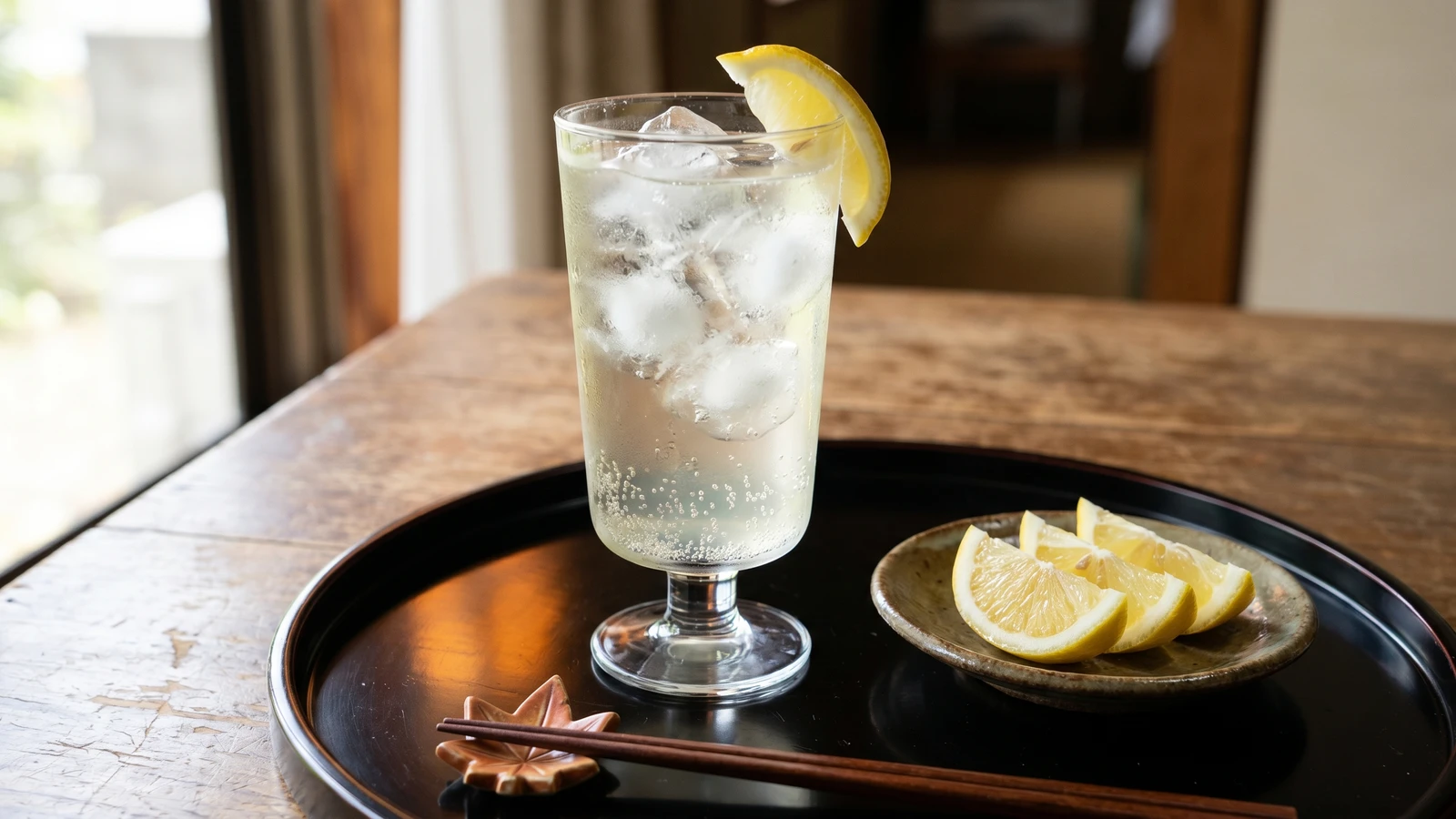
Chūhai is not a sweet can with a clever label. It is shōchū, ice, hard-cold soda, and one clean squeeze of citrus, built for grilled food and easy company.
Chūhai looks almost too plain: clear shōchū, clear soda, ice, and a piece of citrus. That plainness is its virtue. It belongs beside grilled food, where smoke, salt, and fat want a drink that refreshes rather than competes.
If you know it only from sweet cans, the honmono version may surprise you by how little it asks. Use kōrui shōchū, the continuous-distilled kind, for the postwar Tokyo line: clean, inexpensive, and made to lengthen with soda. Honkaku shōchū can be lovely, but it speaks more loudly, so choose it knowing you're changing the glass.
The one detail that decides it is cold. Chill the glass, shōchū, and soda, then stir once, not like you're angry at it. Cold keeps the bubbles tight and the drink bright; rough stirring spends the fizz before you've reached the table. Squeeze the citrus fresh, because bottled juice turns a clean drink tired. Nothing hidden, nothing sweetened into politeness.
Chūhai is a shortened form of shōchū highball, and it took shape in postwar Tokyo's inexpensive drinking houses as a dry, affordable alternative to whisky highballs. By the 1950s and 1960s it was closely associated with taishū sakaba, everyday bars, and yakitori counters, often mixed from kōrui shōchū, carbonated water, and lemon. The canned version came later: Takara Shuzō released a canned chūhai in 1984, helping turn the bar drink into a national convenience-store category.
Quantity
enough to fill a chilled highball glass
Quantity
60 ml (2 oz)
chilled
Quantity
10 to 15 ml (2 to 3 teaspoons)
from about 1/4 lemon
Quantity
120 to 150 ml (4 to 5 oz)
Quantity
1 thin wedge
Quantity
1 wedge
use in season instead of lemon, not alongside it
| Ingredient | Quantity |
|---|---|
| ice | enough to fill a chilled highball glass |
| kōrui shōchū (continuous-distilled shōchū, 25% ABV)chilled | 60 ml (2 oz) |
| fresh lemon juicefrom about 1/4 lemon | 10 to 15 ml (2 to 3 teaspoons) |
| very cold soda water | 120 to 150 ml (4 to 5 oz) |
| lemon wedge or squeezed lemon peel (optional) | 1 thin wedge |
| sudachi, kabosu, or yuzu (optional)use in season instead of lemon, not alongside it | 1 wedge |
Put the shōchū, soda water, and glass in the cold before you begin. Fill the glass with ice and stir it for ten seconds, then pour off any water that gathers at the bottom. This isn't fuss. A cold glass keeps the soda lively, and the drink stays dry instead of turning watery before the first sip.
Measure 60 ml of chilled kōrui shōchū and pour it over the ice. Kōrui is clean and quiet, which is why it suits this postwar highball. It leaves room for the soda and citrus, instead of making the drink about the spirit alone.
Squeeze in the fresh lemon juice, then drop in the squeezed peel if you like its scent. Use bottled juice only when you want to be disappointed efficiently. Fresh citrus gives the clean edge this drink needs, and there is no syrup to hide a tired squeeze.
Tilt the glass slightly and pour the very cold soda water down the side, filling the glass without flooding it. Give it one slow lift with a bar spoon or long chopstick. Stir hard and you drive out the bubbles, and the bubbles are half the seasoning here.
Serve immediately, while the outside of the glass is beaded with cold and the drink still snaps at the tongue. Chūhai is made to drink long beside grilled food: yakitori, salted fish, vegetables from the fire. Keep it dry. Once sugar leads, you're making another drink.
1 serving (about 220g)
Culinary guides, cultural storytelling, and the editorial depth that makes cooking meaningful.
Discover Culinary ExplorerChef Takumi
Awamori mizuwari is not a trick of the bar. It is three parts awamori, seven parts cold water, and enough patience to let the black-kōji aroma open.

Chef Takumi
Hot awamori asks for one small discipline: pour the hot water first, then the spirit. Do that, and the glass turns round, fragrant, and calmer than its strength suggests.

Chef Takumi
Bancha is the honest daily cup: late-season leaves, hot water, a short steep, and a clean amber-green liquor that asks for no ceremony to be good.

Chef Takumi
Whole black soybeans, roasted until their skins split, make a clear amber tea with a roasted sweetness and no caffeine. Drink it plain, then eat the softened beans while they still hold their warmth.