
Chef Takumi
Awamori Mizuwari (泡盛水割り, awamori with water)
Awamori mizuwari is not a trick of the bar. It is three parts awamori, seven parts cold water, and enough patience to let the black-kōji aroma open.
A cooking platform built around craft, culture, and the stories behind what we eat.
Created by
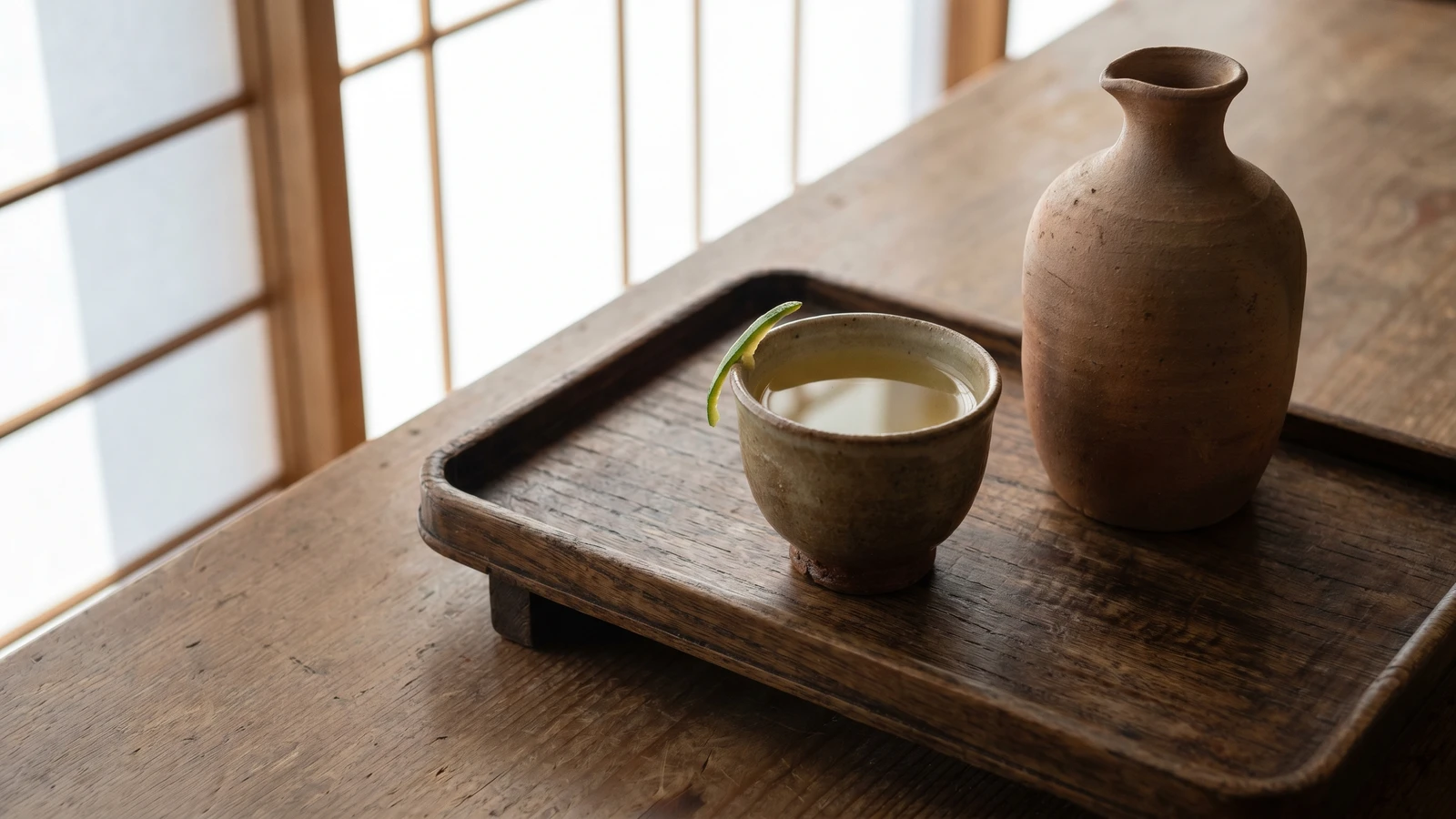
Hot awamori asks for one small discipline: pour the hot water first, then the spirit. Do that, and the glass turns round, fragrant, and calmer than its strength suggests.
Awamori looks severe on the label. Thirty percent alcohol, sometimes more, and a name that seems to arrive from far south of the usual Japanese table. Then you add hot water and it becomes sociable. Not weak. Sociable.
Oyuwari means cutting with hot water, and the order matters. Pour the hot water first, then add the awamori. The hotter, lighter water rises as the cooler spirit sinks through it, and the drink mixes itself without the roughness that comes from stirring hard. This is the little detail that decides it.
Use good awamori, the kind made from long-grain indica rice and black kōji, and don't bury it under citrus or sugar. Heat opens the grainy, earthy aroma and rounds the edge of the alcohol. Three parts awamori to seven parts hot water is gentle enough for the table. If the night is cold and the bottle is sturdy, four to six has its place. Nothing hidden, only softened.
Awamori is Okinawa's native distilled spirit, made with black kōji mold and traditionally with imported long-grain rice, a practice tied to the Ryukyu Kingdom's trade with Southeast Asia from at least the fifteenth century. The name awamori appears in records from the late seventeenth century, after the Satsuma domain brought Ryukyu under its control and the spirit began moving more formally toward mainland Japan. Serving it oyuwari, cut with hot water, belongs to the broader Japanese custom of warming spirits at the table, though Okinawa's subtropical climate makes the winter pour feel almost like a quiet confession.
Quantity
45ml
preferably 30% alcohol by volume
Quantity
105ml
about 70 to 80 C
Quantity
1 small strip
| Ingredient | Quantity |
|---|---|
| awamoripreferably 30% alcohol by volume | 45ml |
| hot waterabout 70 to 80 C | 105ml |
| Okinawan citrus peel, such as shikuwasa (optional) | 1 small strip |
Fill a heatproof ceramic cup with hot water, let it stand for half a minute, then pour it out. A warm cup keeps the drink from falling flat before the awamori has opened its aroma.
Add 105ml hot water to the warmed cup first. Aim for 70 to 80 C, hot enough to lift the black-kōji fragrance but not so fierce that the alcohol leaps up sharp in the nose.
Pour in 45ml awamori slowly. Don't stir hard. The cooler spirit sinks through the hot water and the drink folds together on its own, which keeps the mouthfeel round instead of thin and harsh.
If using citrus, express a narrow strip of shikuwasa peel over the cup and set it on the rim, not in the drink. You want a passing fragrance, not fruit taking command. Serve at once while the surface is glossy and still.
1 serving (about 150g)
Culinary guides, cultural storytelling, and the editorial depth that makes cooking meaningful.
Discover Culinary ExplorerChef Takumi
Awamori mizuwari is not a trick of the bar. It is three parts awamori, seven parts cold water, and enough patience to let the black-kōji aroma open.

Chef Takumi
Bancha is the honest daily cup: late-season leaves, hot water, a short steep, and a clean amber-green liquor that asks for no ceremony to be good.

Chef Takumi
Whole black soybeans, roasted until their skins split, make a clear amber tea with a roasted sweetness and no caffeine. Drink it plain, then eat the softened beans while they still hold their warmth.

Chef Takumi
Brandy umeshu asks for patience, not skill: firm green ume, slow-dissolving rock sugar, and 1.8 liters of brandy left alone until the fruit gives up its perfume.