Culinary Explorer
A cooking platform built around craft, culture, and the stories behind what we eat.
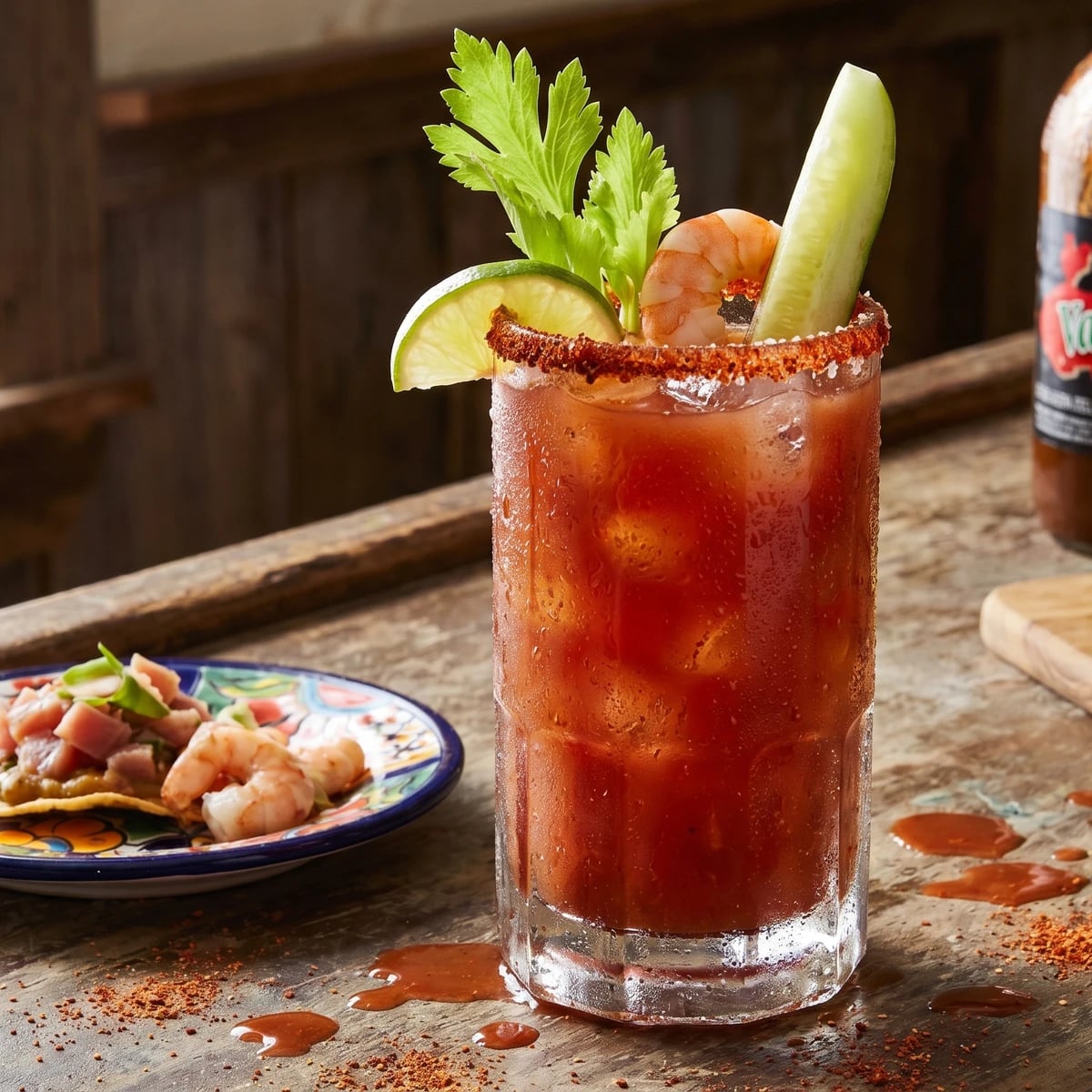
Clamato Preparado Mexicalense
Created by Chef Lupita
Mexicali's hometown clamato preparado, built in a chile-salt rimmed glass with cold tomato-clam juice, fresh lime, Worcestershire, Valentina, and Maggi. The desert in a tall glass, served beside a cold seafood plate.
Clamato was invented in Mexicali. Not in Texas, not in California, not in some bar in Los Angeles. Mexicali, Baja California, 1966, at the Hotel Lucerna, where a bartender mixed tomato juice with clam broth and changed the way northern Mexico drinks. The Americans bottled it and exported it. Mexicali built a culture around it.
This is the preparado. Not the michelada, that comes later when you add beer. Not the chelada, the lighter beer version. The preparado is the base: cold Clamato, the juice of two limones, Worcestershire, Valentina, Maggi, salt and chile on the rim, ice all the way to the top. It is what you order at a marisqueria in the Valle de Mexicali when the seafood plate hits the table and the thermometer outside reads 43 grados. It cuts through the salt of the shrimp, the lime of the aguachile, the richness of the tostada de atun. It is engineered for the heat and for the food.
Mexicali is not the rest of Mexico. This is the desert that pours into the glass. The Cucapa harvested clams from the delta of the Colorado River for centuries before any bartender thought to mix the broth with tomato. The cuisine is Chinese-Mexican on one block and ranchero on the next. The wheat tortilla rules here, not the corn. Build this drink and serve it cold with mariscos and you understand a piece of Baja California that the rest of the country still treats like a footnote. Cada estado, su propia cocina, and this glass is mexicalense.
Ingredients
Clamato (tomato-clam juice)
Quantity
16 ounces
well chilled
limones mexicanos (Mexican key limes)
Quantity
2 large
juiced, about 3 tablespoons
Worcestershire sauce (salsa inglesa)
Quantity
2 teaspoons
| Ingredient | Quantity |
|---|---|
| Clamato (tomato-clam juice)well chilled | 16 ounces |
| limones mexicanos (Mexican key limes)juiced, about 3 tablespoons | 2 large |
| Worcestershire sauce (salsa inglesa) | 2 teaspoons |
Where cooking meets culture.
Culinary guides, cultural storytelling, and the editorial depth that makes cooking meaningful.
Discover Culinary Explorer