
Chef Makoa
ʻAva (Sāmoan Kava Ceremony Drink)
Sāmoa's ʻava is kava root worked in cool water, strained clear-brown into the tānoa, and passed in chiefly order. This is welcome, rank, and quiet, not a party drink.
A cooking platform built around craft, culture, and the stories behind what we eat.
Created by
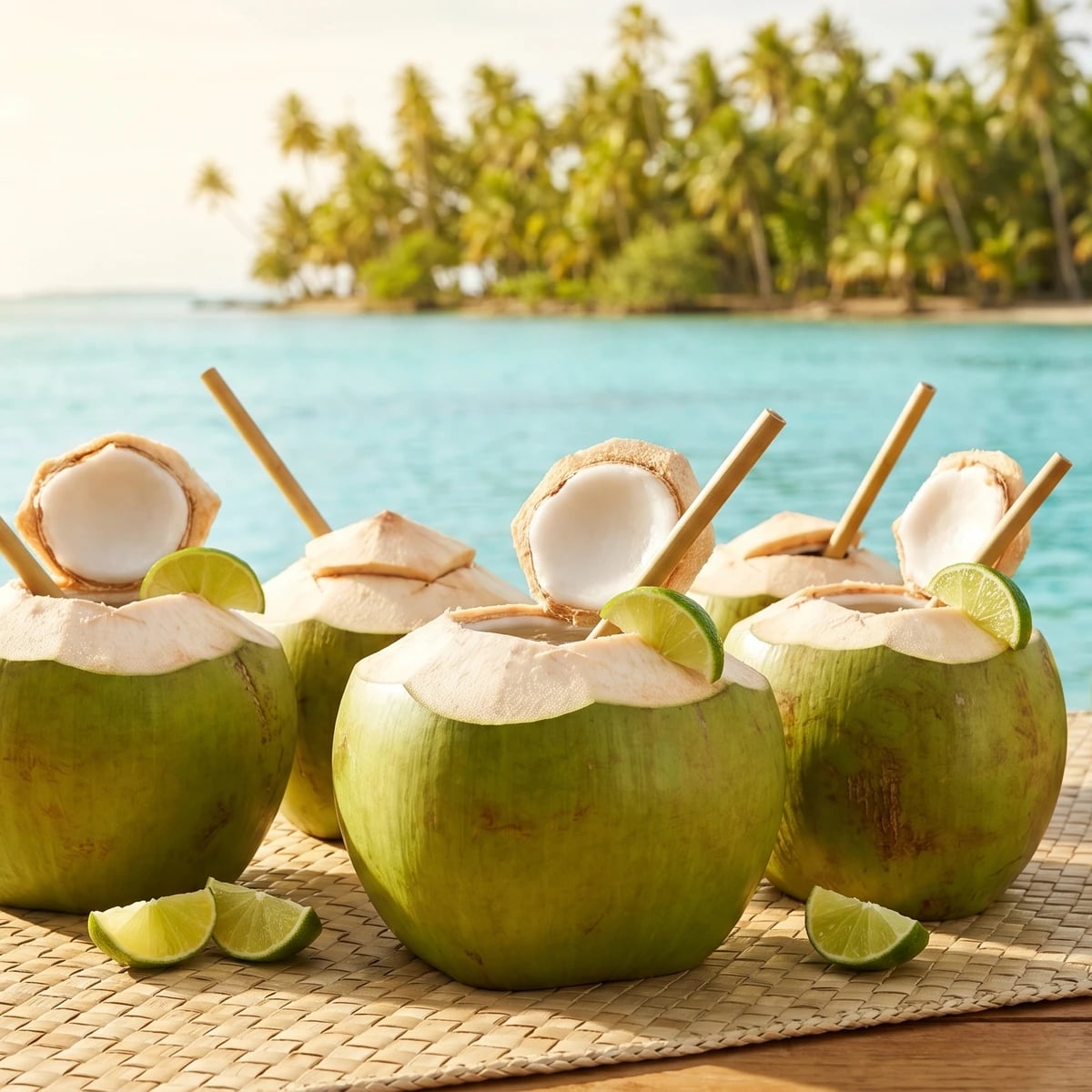
Tahiti's coco glacée is young coconut served cold in its own husk, clean and sweet from the fenua, cousin to Hawaiʻi's niu and the coconut drinks kept across the Triangle.
The canoe carried the coconut same as it carried the people, and Tahiti knows how to let it speak without fuss. Coco glacée, the French name you hear around Papeʻete and the beach stands, is young haʻari, coconut in reo Tahiti, chilled hard and opened right before drinking. The water is clear, sweet, and clean, and the soft jelly inside is the little gift after the straw is done.
This is Tahitian everyday food, not ceremony. Same family as Hawaiʻi's niu off the tree, the Sāmoan niu young men open after work, the Tongan niu vai, the Cook Islands niu, each island drinking the same canoe crop by its own hand. One ocean, one canoe, one root, and still every table has its own way.
The method is almost nothing, so the source matters. Pick a young coconut heavy for its size, full of water, with no sour smell or soft bruised spots. Chill it until the husk feels cold all the way through, open it clean, add ice only if the day is pushing hard, and drink it close to opening. Eat what you have, yeah, but don't make the coconut fight bad handling. No blame the coconut.
Coconut was one of the great canoe plants carried by Polynesian voyagers, useful for drink, food, fiber, oil, and shelter from Sāmoa and Tonga east to Tahiti, the Cook Islands, Hawaiʻi, and Rapa Nui. In Tahiti, coco glacée carries a French name from the colonial period, but the act is older and simpler: young haʻari opened for its water and soft flesh, served cold for the heat of the fenua. It sits beside deeper ceremonial drinks like ʻava or kava without pretending to be them, an everyday refreshment rather than a chiefly protocol.
Quantity
4
well chilled
Quantity
2 cups
for serving
Quantity
4
Quantity
pinch
only if the coconut water tastes flat
| Ingredient | Quantity |
|---|---|
| young coconuts (haʻari)well chilled | 4 |
| ice (optional)for serving | 2 cups |
| lime wedges (optional) | 4 |
| sea salt (optional)only if the coconut water tastes flat | pinch |
Set the young coconuts in the coldest part of the refrigerator for at least 4 hours, or overnight if you can. The husk should feel cold through the hand, not just cool on the skin. This drink is served close and clean, so the chill is the whole comfort.
Set one coconut on a steady towel. With a heavy knife or cleaver, shave the pointed top in thin cuts until you expose the pale inner shell. Keep your other hand away from the blade. No need act brave in the kitchen.
Tap a small square or round opening through the exposed shell, then lift the cap out. The coconut water should smell fresh, sweet, and almost grassy. If it smells sour, fermented, or stale, let that one go.
Slide in a straw and serve the coconut in its own husk. If the day is hot and the coconut is not cold enough, pour the water over a little ice in a coconut shell or carved wooden bowl, then return it to the husk if you like. A squeeze of lime is fine, but don't bury the haʻari.
After drinking, split the coconut or widen the opening and scrape the tender white jelly with a spoon. It should be soft, clean, and lightly sweet. That part is not garnish. That's food, and we no waste good food.
1 serving (about 430g)
Culinary guides, cultural storytelling, and the editorial depth that makes cooking meaningful.
Discover Culinary Explorer
Chef Makoa
Sāmoa's ʻava is kava root worked in cool water, strained clear-brown into the tānoa, and passed in chiefly order. This is welcome, rank, and quiet, not a party drink.

Chef Makoa
Hawaiian ʻawa is kava root kneaded cool, strained into an ʻapu coconut cup, and shared with a quiet hand: earthy, peppery, calming, and far older than the tourist glass.

Chef Makoa
A quiet Hawaiian cup from native koʻokoʻolau leaves, steeped golden and clean, the kind of comfort the kūpuna kept close beside māmaki and shared without fuss.

Chef Makoa
Hawaiʻi's lilikoʻi, pressed from wrinkled passion fruit and chilled sweet-tart, is everyday local refreshment: bright enough straight, gentle enough to stir into POG.