
Chef Makoa
Koʻokoʻolau Tea (Hawaiian Native Herbal Infusion)
A quiet Hawaiian cup from native koʻokoʻolau leaves, steeped golden and clean, the kind of comfort the kūpuna kept close beside māmaki and shared without fuss.
A cooking platform built around craft, culture, and the stories behind what we eat.
Created by
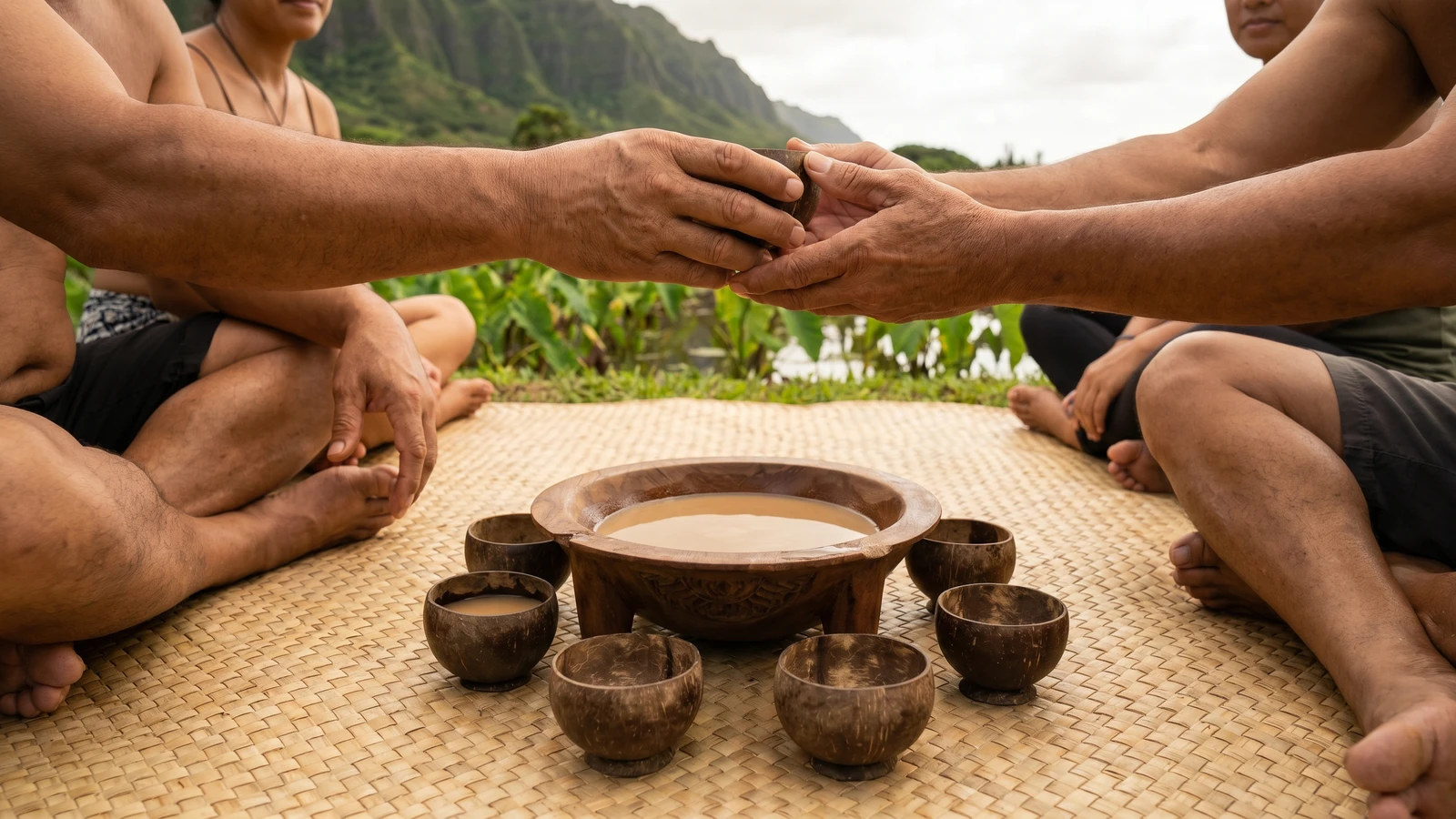
Hawaiian ʻawa is kava root kneaded cool, strained into an ʻapu coconut cup, and shared with a quiet hand: earthy, peppery, calming, and far older than the tourist glass.
My kumu used to say the root that quiets your mouth should quiet your whole self before you lift the cup. This is Hawaiʻi's ʻawa, our kava root drink, kneaded in cool water and strained into an ʻapu, a coconut-shell cup. It isn't a mocktail, even if the modern shelf wants to file every sober drink that way. ʻAwa sits deeper than that: ʻāina, kānaka, meaʻai, land, people, food, with kuleana, responsibility, in the passing.
Back home on windward Oʻahu, I learned that some foods feed your belly and some teach your place. ʻAwa does both in a quiet way. The bitterness opens first, then that peppery numbness on the lips, then the body comes down a notch and the room gets softer. You don't chug it. You receive it.
The cousins keep the same root in their own hands. Sāmoa has ʻava, Tonga gathers around kava, and Tahiti keeps ʻava, each with rank and words and protocols that belong to them. For Hawaiian ceremonial protocol, go sit with kūpuna, elders, and practitioners who carry it; for Sāmoan or Tongan rounds, go to the matai, Sāmoan family chiefs, or the ʻeiki, Tongan chiefs. Here, in the kitchen, we're making the plain bowl: clean root, cool water, patient kneading, no fruit juice, no little umbrella, no pretending.
The why behind the method is simple. Hot water pulls harshness, and a blender can make the cup gritty if you lean too hard. Your hands knead slow until the water turns clay-tan and slick. That's the drink. Not fancy. Not sweet. A cup with memory in it.
ʻAwa (kava, Piper methysticum) was a canoe plant in Hawaiʻi, carried by Polynesian voyagers and kept in named cultivars for medicine, prayer, and chiefly ceremony; old Hawaiian sources describe ʻawa offerings to akua, gods, and cups served in the grammar of rank. Sāmoa's ʻava and Tonga's kava hold their own protocols with matai and ʻeiki, while Tahiti's ʻava shows the same root moving through the Triangle by different hands, one ocean, one canoe, one root. In 2018 Hawaiʻi named ʻawa the official state beverage, a modern law recognizing a drink far older than plantation soda or the mai tai.
Quantity
1 cup
traditional grind, peeled root only, or dried root chips pounded coarse
Quantity
4 cups
Quantity
2 cups
| Ingredient | Quantity |
|---|---|
| noble ʻawa (kava, Piper methysticum) root powdertraditional grind, peeled root only, or dried root chips pounded coarse | 1 cup |
| cool filtered water | 4 cups |
| cool filtered water for a lighter second wash (optional) | 2 cups |
Buy noble ʻawa, kava, from peeled root only, preferably Hawaiʻi-grown or from a seller who names the cultivar and harvest. It should smell clean, peppery, and earthy, never moldy, perfumed, or sour. Sourcing first, always; a muddy source makes a muddy cup.
Put the ʻawa root powder in a fine kava strainer bag and set the bag in a 3-quart bowl. Pour in 4 cups cool filtered water and let it sit 5 minutes so the dry root softens. Cool water keeps the drink steady and rounded; boiling water pulls rough edges you don't need.
Keep the bag under the water and knead it 8 to 10 minutes, squeezing, folding, pressing, and turning it like you're washing a cloth. The water will turn opaque clay-tan, the surface will take on a soft satin sheen, and the smell will come up peppery and root-deep. No rush this cup. The hands teach it.
Twist the bag tight and squeeze every bit of liquid back into the bowl, then pass the ʻawa through a fine mesh strainer if any grit escaped. For a lighter second wash, return the same root to 2 cups cool water, knead 3 to 4 minutes, and combine it with the first bowl or serve it after.
Stir before every pour, because the fine root settles and that's normal. Fill each ʻapu, coconut-shell cup, with 3 to 4 ounces. Lift it with a quiet hand, drink it in a few pulls, and give the room time to answer. The lips should go a little numb and peppery. That's the root talking.
Serve ʻawa with food and water nearby, and never with alcohol. Start with one small cup and wait 20 to 30 minutes before a second; the calm should come gentle, not push you sideways. Refrigerate leftovers covered and drink them the same day, or let it go if the bowl smells sour.
1 serving (about 120g)
Culinary guides, cultural storytelling, and the editorial depth that makes cooking meaningful.
Discover Culinary ExplorerChef Makoa
A quiet Hawaiian cup from native koʻokoʻolau leaves, steeped golden and clean, the kind of comfort the kūpuna kept close beside māmaki and shared without fuss.

Chef Makoa
Hawaiʻi's lilikoʻi, pressed from wrinkled passion fruit and chilled sweet-tart, is everyday local refreshment: bright enough straight, gentle enough to stir into POG.

Chef Makoa
Hawaiʻi's māmaki leaf steeped into a smooth, earthy, caffeine-free cup, old household lāʻau brought forward for a quiet modern kitchen.
Chef Makoa
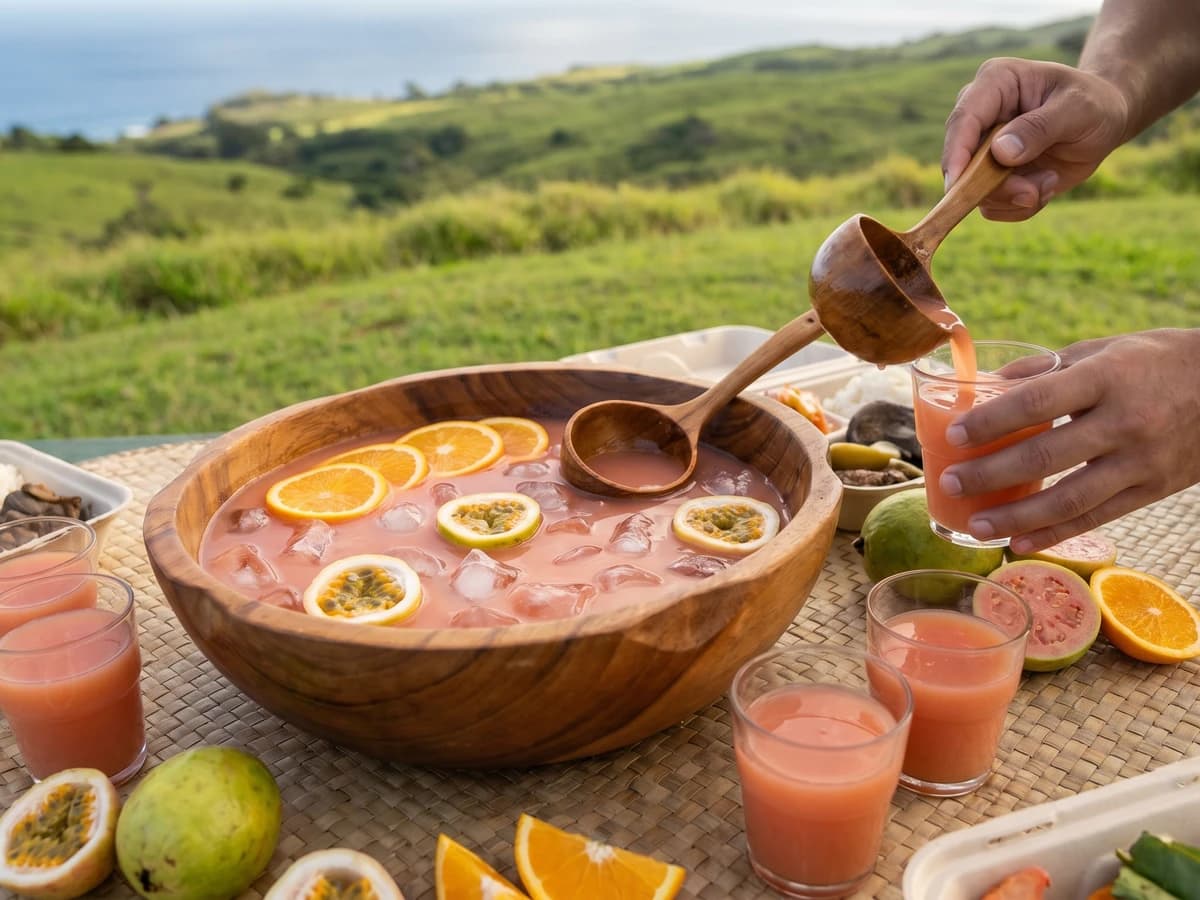
Maui's everyday cooler, lilikoi, orange, and guava stirred bright and cold, the kind of juice that belongs beside plate lunch, beach picnics, and hotel breakfast trays.