
Chef Makoa
ʻAwa (Hawaiian Kava Root Drink)
Hawaiian ʻawa is kava root kneaded cool, strained into an ʻapu coconut cup, and shared with a quiet hand: earthy, peppery, calming, and far older than the tourist glass.
A cooking platform built around craft, culture, and the stories behind what we eat.
Created by
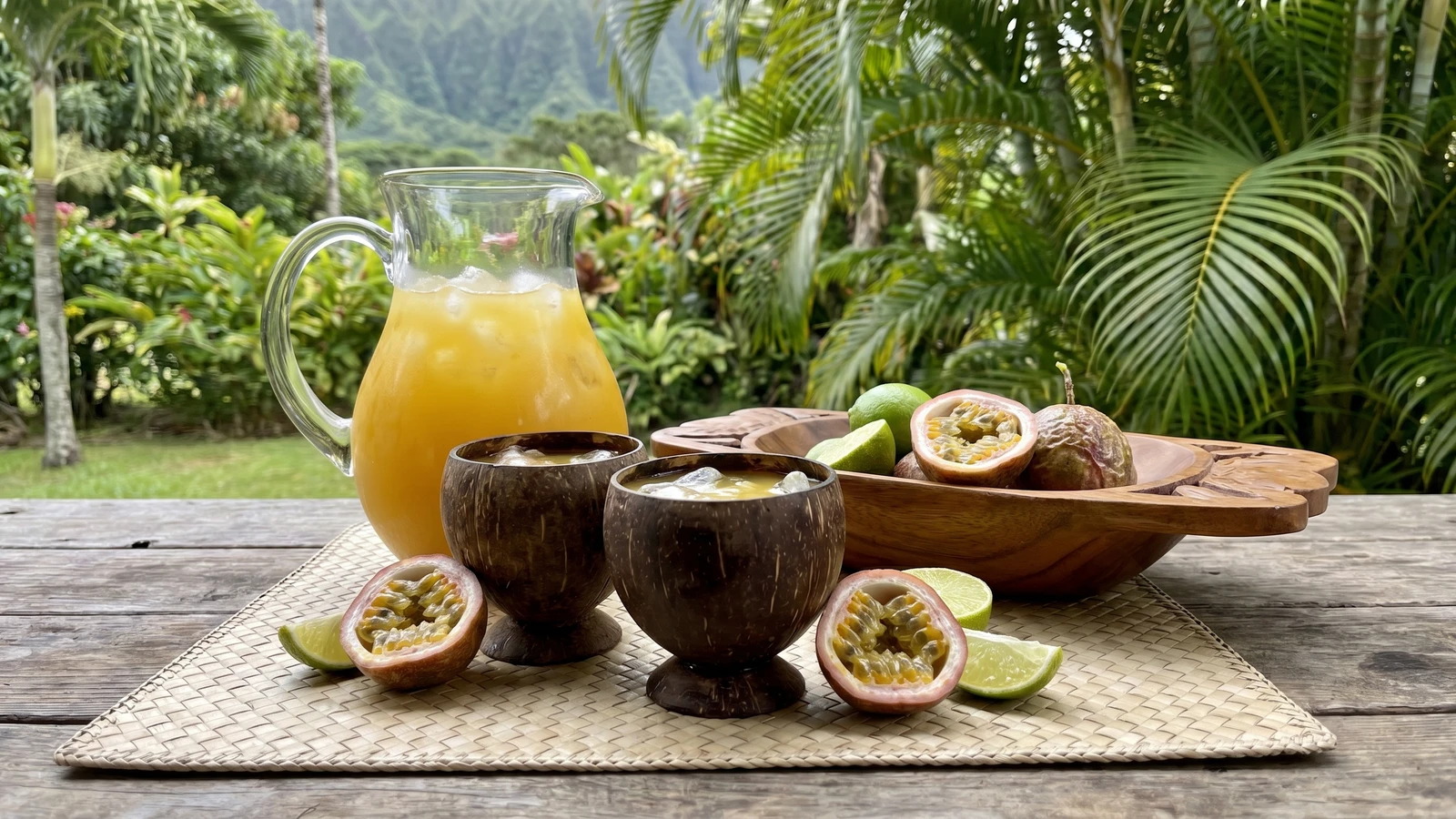
Hawaiʻi's lilikoʻi, pressed from wrinkled passion fruit and chilled sweet-tart, is everyday local refreshment: bright enough straight, gentle enough to stir into POG.
My aunties used to save the wrinkled lilikoʻi for juice, and that taught me something. The pretty fruit wasn't always the best one. The puckered one, the one that looked tired on the counter, that was the one ready to give everything it had.
This is Hawaiian, from the home table and the backyard vine, not a canoe-crop food like kalo or ʻulu. Still, ʻāina, kānaka, meaʻai, land, people, food, that triad holds even for the newer plants we welcomed and made useful. Lilikoʻi came from away, but Hawaiʻi took that sharp gold pulp and folded it into the way we eat now: chilled juice, butter on toast, syrup over pancakes, and the local POG blend with passion fruit, orange, and guava.
Across the Triangle, every island has its own cold table. Tahiti has fruit by the lagoon, the Cooks have their citrus and coconut drinks, Sāmoa and Tonga keep fresh fruit close to the family spread, and Hawaiʻi pours lilikoʻi over ice when the day is hot and the grill or plate lunch is already going. Same ocean, many bowls. No need make it precious.
The work is simple, but don't beat the seeds bitter. Scoop, loosen, strain, sweeten, chill. Taste as you go, because fruit is not a machine. Eat what you have, and let the vine tell you how much sugar it needs.
Lilikoʻi, the Hawaiian name for passion fruit, is not an ancient canoe crop; Passiflora edulis is native to South America and was introduced to Hawaiʻi in the late 1800s, where it naturalized quickly and became a home-garden fruit. Its modern local life is tied to everyday Hawaiʻi food, especially POG, the passion-orange-guava drink developed for Haleakalā Dairy on Maui in 1971. That makes lilikoʻi juice a good example of Hawaiʻi food, not deep pre-contact Hawaiian food: a newcomer fruit made local by the hands that kept using it.
Quantity
12 to 15
wrinkled and heavy
Quantity
4 cups
divided
Quantity
1/3 to 1/2 cup
to taste
Quantity
1 tablespoon
Quantity
pinch
Quantity
for serving
| Ingredient | Quantity |
|---|---|
| ripe lilikoʻi (passion fruit)wrinkled and heavy | 12 to 15 |
| cold waterdivided | 4 cups |
| sugar, honey, or simple syrupto taste | 1/3 to 1/2 cup |
| fresh lime juice (optional) | 1 tablespoon |
| sea salt | pinch |
| ice | for serving |
Pick lilikoʻi that are wrinkled, fragrant, and heavy for their size. Smooth fruit can be too young and sharp. The old-looking ones usually carry the fuller juice, so no throw them out for being ugly.
Cut each lilikoʻi in half and scoop the gold pulp and black seeds into a bowl. Scrape close to the shell so you get the juice clinging inside, but leave behind any dry white membrane.
Add 1 cup of the cold water to the pulp and stir hard with a spoon for 30 seconds, just enough to loosen the juice from the seeds. If you use a blender, pulse only once or twice. Don't grind the seeds, or the juice can turn bitter.
Pour the pulp through a fine strainer into a pitcher, pressing with the back of a spoon until the seeds look mostly dry. Rinse the seeds with another 1 cup cold water, stir, and strain again to catch the last sharp-sweet juice.
Stir in 2 more cups cold water, the pinch of sea salt, and 1/3 cup sugar or simple syrup. Taste. If the fruit is biting hard, add more sweetener a spoon at a time. If it tastes flat, add the lime. Chill until cold.
Pour over ice and serve close to drinking, glossy and gold in the cup. For a local POG-style blend, mix 1 part lilikoʻi juice with 1 part orange juice and 1 part guava juice, then taste before adding any more sugar.
1 serving (about 185g)
Culinary guides, cultural storytelling, and the editorial depth that makes cooking meaningful.
Discover Culinary ExplorerChef Makoa
Hawaiian ʻawa is kava root kneaded cool, strained into an ʻapu coconut cup, and shared with a quiet hand: earthy, peppery, calming, and far older than the tourist glass.

Chef Makoa
A quiet Hawaiian cup from native koʻokoʻolau leaves, steeped golden and clean, the kind of comfort the kūpuna kept close beside māmaki and shared without fuss.

Chef Makoa
Hawaiʻi's māmaki leaf steeped into a smooth, earthy, caffeine-free cup, old household lāʻau brought forward for a quiet modern kitchen.
Chef Makoa
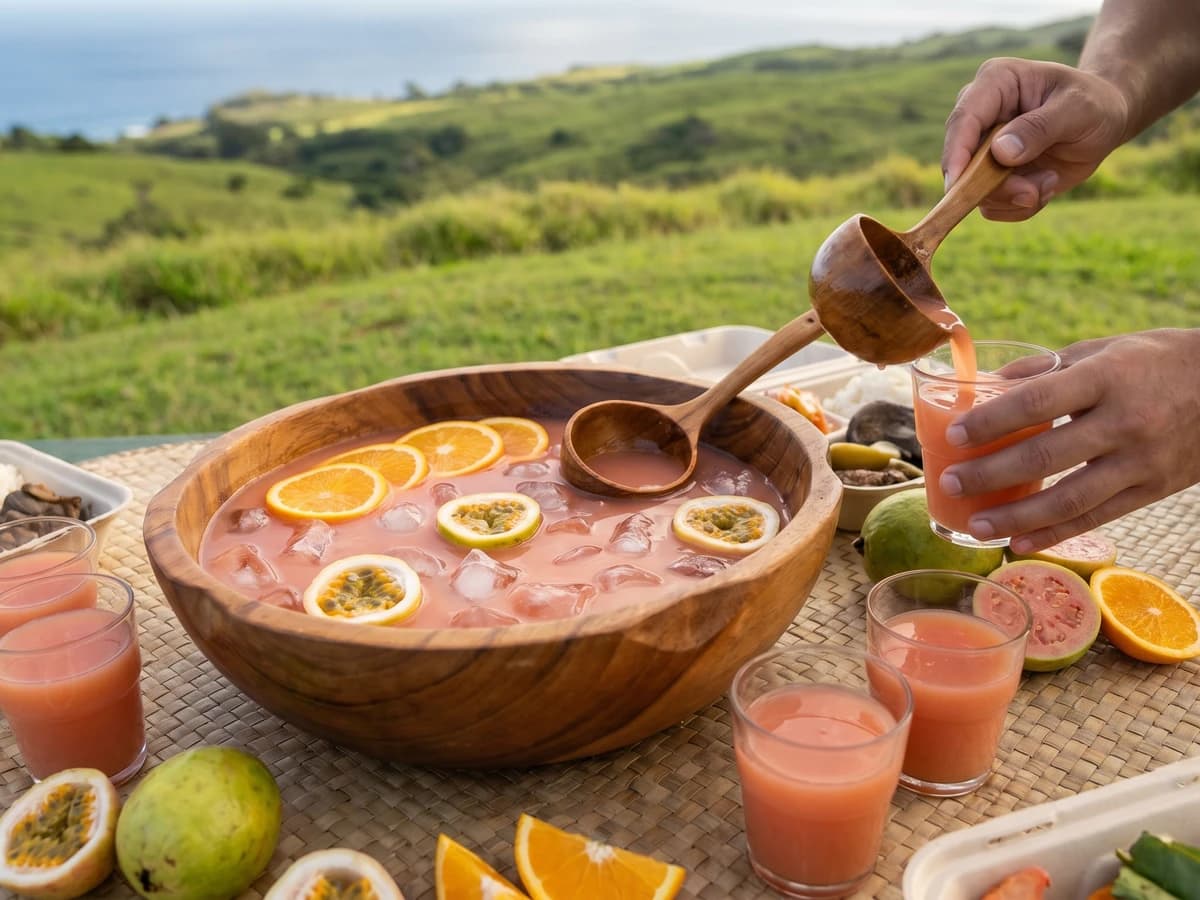
Maui's everyday cooler, lilikoi, orange, and guava stirred bright and cold, the kind of juice that belongs beside plate lunch, beach picnics, and hotel breakfast trays.