Culinary Explorer

A cooking platform built around craft, culture, and the stories behind what we eat.
Discover Culinary Explorer
ʻAva (Sāmoan Kava Ceremony Drink)

ʻAva (Sāmoan Kava Ceremony Drink)

Created by

Sāmoa's ʻava is kava root worked in cool water, strained clear-brown into the tānoa, and passed in chiefly order. This is welcome, rank, and quiet, not a party drink.

Beverages
Polynesian, Samoan
Special Occasion
Celebration
20 min
Active Time
0 min cook20 min total
Yield8 to 10 small ceremonial servings

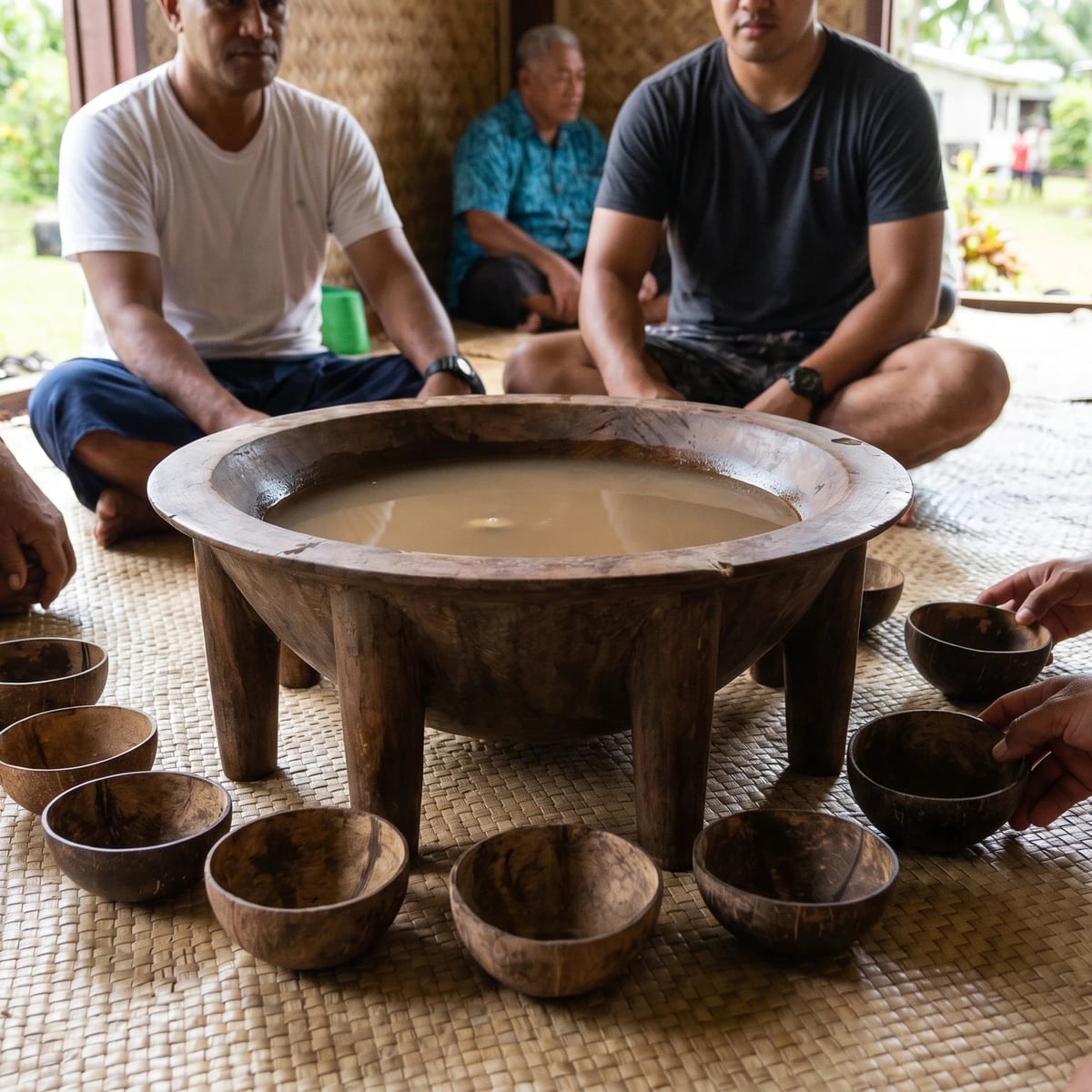
The first time I sat close to a Sāmoan ʻava bowl, nobody had to tell me the room had changed. The voices went lower. The hands got careful. ʻAva, the kava-root drink, belongs to Sāmoa, and it sits in the tānoa, the carved wooden bowl, with the same deep weight my people back home feel when ʻawa is lifted in a cup. One ocean, one canoe, one root, but this cup is Sāmoan. We name the hand.

At home, we can prepare the drink simply: dried root, cool water, steady kneading, clean straining. The root gives the water its brown cloud and peppery numbness, and you stop before it turns muddy and harsh. No sugar. No citrus. No little umbrella. If the gathering table needs a sweet cold drink, make one beside it and let ʻava stay what it is.

The sacred part is not the straining. It is the order, the words, the person who calls, the person who receives, and the relationships carried in that cup. I'm a Hawaiian man, so for a true Sāmoan ʻava ceremony I send you to a Sāmoan matai or an elder who knows the protocol from inside the fale. Here, I can show you how to handle the root with respect, plain and unfussy, so the cup doesn't get turned into a performance.

ʻAva, the Sāmoan kava ceremony drink made from Piper methysticum root, sits inside the faʻamatai, the Sāmoan chiefly system that orders matai titles, welcome, apology, and village council. The root has close ceremonial cousins in Tongan kava and Hawaiian ʻawa, but Sāmoa's calling of names, cup order, and tānoa protocol belong to Sāmoan people. Unlike a tea, ʻava is not boiled; the dried root is pounded or ground, washed in cool water, strained through fiber, and served plain so the cup can carry rank and relationship, not sweetness.

The technique, the tradition, and the story behind every dish.

Discover Culinary Explorer

Ingredients

dried medium-grind kava root (ʻava, Piper methysticum)

Quantity

1 cup (about 4 ounces/115 g)

Sāmoan-grown if available

cool filtered water

Quantity

6 cups

plus 1 to 2 cups more to adjust strength

Equipment Needed

  • Carved wooden tānoa or wide wooden bowl
  • Clean muslin straining cloth or nut-milk bag
  • Wooden ladle
  • Coconut-shell ipu cups or small plain cups

Instructions

  1. 1

    Choose the root

    Use food-grade dried ʻava, medium grind or finely pounded root, from a supplier who can tell you where it was grown. It should smell clean, woody, and lightly peppery, never musty or sour. No extracts here. The root is the cup.

  2. 2

    Set the tānoa

    Set a clean tānoa, the carved wooden ʻava bowl, or a wide wooden bowl on a woven mat. Put the ʻava root into a clean muslin cloth or nut-milk bag and lay it in the bowl. In a true Sāmoan ʻava ceremony, the calling, order, and words belong to Sāmoan matai and the people who carry that protocol. This is the kitchen method, kept humble.

  3. 3

    Knead in water

    Pour in 6 cups cool water, gather the cloth closed, and knead the root under the water for 8 to 10 minutes. Squeeze, release, and work it steady until the water turns cloudy tan and the smell comes up earthy and peppery. Do not boil it. Heat pulls the cup away from what it is.

    If the liquid looks like thin river clay and feels slightly silky between your fingers, you're in the right place. If it turns heavy and muddy, thin it with a little more cool water.
  4. 4

    Strain it clean

    Lift the cloth and wring it firmly over the bowl, pressing out every bit of the washed root. Strain a second time through clean cloth if any grit remains. The finished ʻava should be clear-brown to cloudy tan, bitter and rooty, with a gentle numbing edge on the tongue.

  5. 5

    Serve the cup

    Stir the bowl before serving, then ladle 2 to 3 ounces into a coconut-shell ipu, a drinking cup. Share it plain and at once. For a home table, keep the order simple and respectful: elders, hosts, guests. For ceremony, go sit with a Sāmoan matai. The sacred part is not just the drink, it's who receives it, who names them, and how the room is held.

  6. 6

    Drink with care

    Keep servings small. ʻAva can make the body quiet and drowsy, so don't mix it with alcohol, sedatives, or driving. If you are pregnant, breastfeeding, have liver trouble, or take regular medication, skip this cup unless a clinician has cleared it. Respect includes the body.

Chef Tips

  • Buy dried root, not bottled extract. A good supplier should be able to name the island, cultivar, and harvest, not just sell you a brown powder.
  • This is not a party punch. If you want something sweet for the table, serve chilled niu, coconut water, or a fruit cooler beside it. Don't hide ʻava under juice.
  • Leftover ʻava loses its clean taste quickly. Cover and refrigerate only if you must, stir before serving, and discard after 24 hours.
  • Kava is nonalcoholic, but it is not nothing. Keep the cup small, move slow after drinking, and don't mix it with alcohol or sedating medicine.

Advance Preparation

  • Buy the dried ʻava ahead and keep it sealed, cool, and dry until the day you prepare it.
  • Chill the water a few hours ahead if you want the cup cool, but do not pre-mix the ʻava until close to serving.
  • If the gathering includes formal Sāmoan protocol, arrange that guidance ahead with a matai or elder. The recipe cannot teach the sacred order.

Frequently Asked Questions

Nutrition Information

1 serving (about 180g)

Calories
15 calories
Total Fat
0 g
Saturated Fat
0 g
Trans Fat
0 g
Unsaturated Fat
0 g
Cholesterol
0 mg
Sodium
5 mg
Total Carbohydrates
4 g
Dietary Fiber
0 g
Sugars
0 g
Protein
0 g

Note: Chef personas and recipes are created with AI assistance. Cook with care: follow safe food-handling practices, check doneness with a thermometer when needed, and adapt for allergies and your kitchen.

Where cooking meets culture.

Culinary guides, cultural storytelling, and the editorial depth that makes cooking meaningful.

Discover Culinary Explorer

More from ʻAva, ʻOtai & Island Coolers

Browse the full collection