
Chef Dean
Arnold Palmer
The legendary golfer's signature refreshment: brisk black tea meets tart fresh lemonade in a drink so perfectly balanced it became an American institution, best served ice-cold on a summer afternoon.
A cooking platform built around craft, culture, and the stories behind what we eat.
Created by
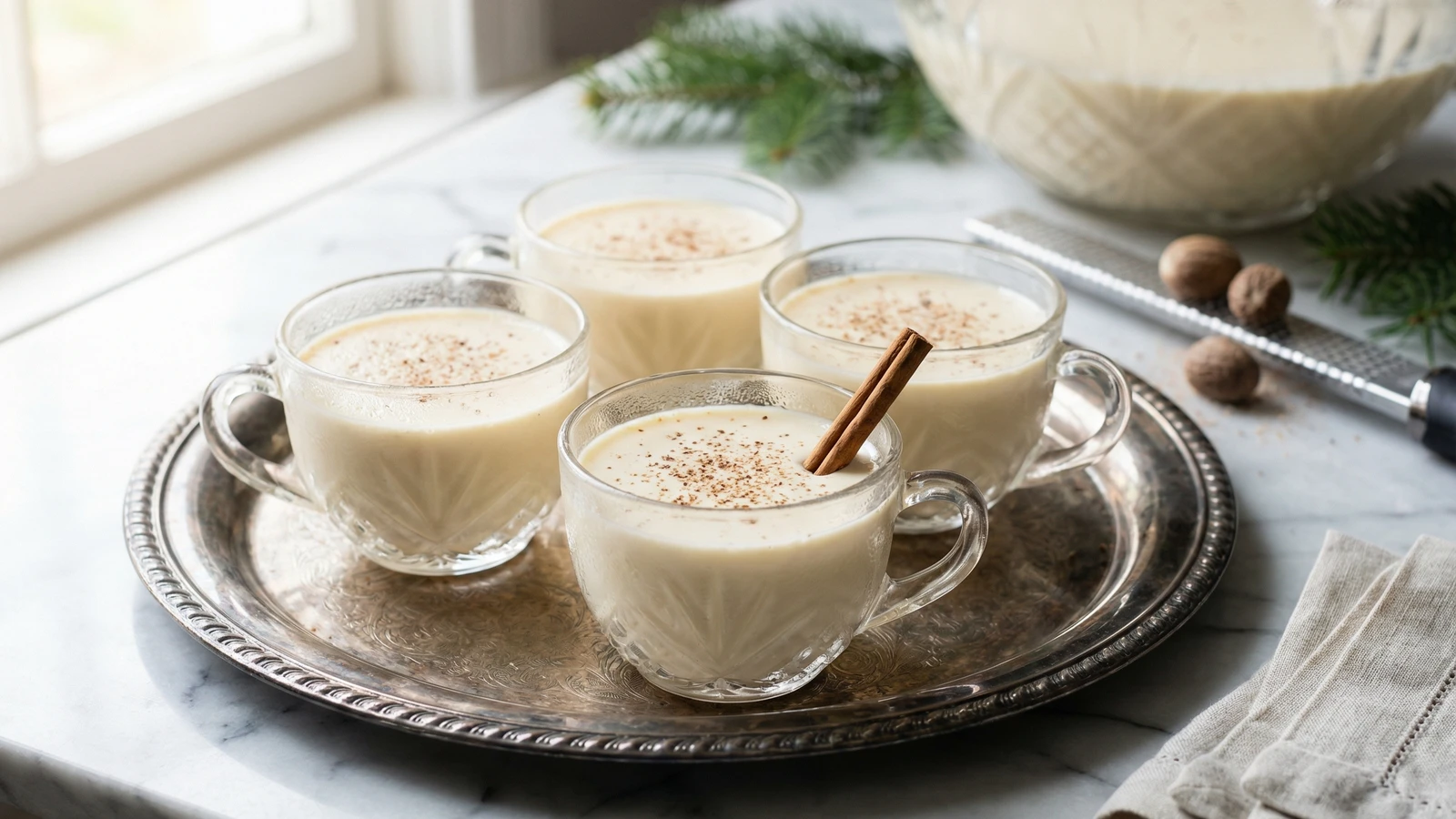
A silky, bourbon-laced custard drink that rewards patience. Made properly and aged in your refrigerator, this eggnog develops a depth and smoothness no store-bought carton can approach.
Eggnog arrived in America with the colonists and immediately found a home. In a young nation where rum flowed freely from Caribbean trade and dairy farms dotted every settlement, this English posset evolved into something distinctly ours. George Washington kept a recipe that called for rye whiskey, rum, and sherry in alarming proportions. The man knew what he was about.
The magic of proper eggnog lies in tempering. You're making a custard, not scrambled eggs. Patience here is everything. Heat your dairy slowly, bring those yolks up to temperature gradually, and you'll produce a base so smooth it coats the back of a spoon like velvet. Rush it and you'll spend Christmas picking egg curds out of your punch bowl.
I've served this recipe at gatherings for decades. The secret I share with everyone: make it at least three days ahead. A week is better. Two weeks is ideal. The flavors marry, the raw edge of the bourbon softens, and something almost magical happens to the texture. It becomes impossibly smooth. The alcohol works on the proteins over time, creating a richness no same-day recipe can match.
This yields enough for a proper party, served in small cups as tradition demands. Eggnog is rich. It should be savored, not gulped. A four-ounce portion with a heavy grating of fresh nutmeg is perfect. Your guests will return for seconds. Let them.
Quantity
6
Quantity
3/4 cup
Quantity
2 cups
Quantity
1 cup
Quantity
1 cup
Quantity
1/4 cup
Quantity
1 teaspoon
Quantity
1/2 teaspoon
freshly grated
Quantity
1/4 teaspoon
Quantity
1 cup
Quantity
for serving
| Ingredient | Quantity |
|---|---|
| large egg yolks | 6 |
| granulated sugar | 3/4 cup |
| whole milk | 2 cups |
| heavy cream | 1 cup |
| bourbon | 1 cup |
| cognac or brandy | 1/4 cup |
| pure vanilla extract | 1 teaspoon |
| nutmegfreshly grated | 1/2 teaspoon |
| fine sea salt | 1/4 teaspoon |
| heavy cream for whipping | 1 cup |
| whole nutmeg (optional) | for serving |
In a large mixing bowl, whisk the egg yolks with the sugar until the mixture turns pale yellow and falls from the whisk in thick ribbons. This takes a solid three minutes of vigorous whisking. The color change tells you the sugar has begun to dissolve and the yolks have incorporated enough air to create a smooth custard. Don't shortcut this step.
Combine the milk and one cup of heavy cream in a medium saucepan over medium heat. Warm slowly, stirring occasionally, until the mixture just begins to steam and small bubbles form around the edges. You want it hot but not simmering. A thermometer should read about 170°F. Remove from heat immediately.
This is the critical moment. Pour about half a cup of the hot dairy into the egg mixture while whisking constantly. Then another half cup. You're raising the temperature of the eggs gradually so they don't scramble. Once you've added about a cup of the hot liquid and the egg mixture feels warm to the touch, pour everything back into the saucepan with the remaining dairy, whisking as you go.
Return the saucepan to medium-low heat. Stir constantly with a wooden spoon or silicone spatula, scraping the bottom and sides of the pan. Cook until the custard thickens enough to coat the back of the spoon, about 5 to 7 minutes. When you draw a line through the custard on the spoon and it holds without running back together, you're done. The temperature should reach 160°F to ensure the eggs are safe. Do not let it boil.
Remove the custard from heat and pour through a fine-mesh strainer into a clean bowl or large pitcher. This catches any small bits of cooked egg and ensures perfect smoothness. Stir in the bourbon, cognac, vanilla extract, grated nutmeg, and salt. The alcohol will hit your nose as it meets the hot custard. That's all those volatile compounds releasing. They'll mellow.
Press plastic wrap directly onto the surface of the custard to prevent a skin from forming. Refrigerate until completely cold, at least 4 hours. For the best results, chill overnight. The eggnog base can rest in your refrigerator for up to three weeks, improving with each passing day.
When ready to serve, whip the remaining cup of cold heavy cream to soft peaks. Fold gently into the chilled eggnog base until no white streaks remain. This lightens the texture and adds a cloud-like quality to each sip. Some purists skip this step. I think they're wrong.
Ladle the eggnog into small cups or punch glasses. Grate fresh nutmeg generously over each serving. The warmth of your hands on the grater releases the nutmeg's essential oils. Pre-ground nutmeg from a jar is a pale substitute. Serve immediately while the whipped cream is still incorporated. Offer the nutmeg grater to guests who want more.
1 serving (about 165g)
Culinary guides, cultural storytelling, and the editorial depth that makes cooking meaningful.
Discover Culinary ExplorerChef Dean
The legendary golfer's signature refreshment: brisk black tea meets tart fresh lemonade in a drink so perfectly balanced it became an American institution, best served ice-cold on a summer afternoon.

Chef Ally
Sun-warmed blackberries crushed with sugar and stirred into hand-squeezed lemonade, the color of late summer twilight, best drunk on a porch with nowhere to be.

Chef Dean
All the comfort of a warm bakery muffin, transformed into a thick, cold breakfast you can drink on your way out the door. Rolled oats and cinnamon make the illusion complete.

Chef Dean
Honest hot chocolate simmered in cast iron over crackling flames, finished with marshmallows toasted to blistered perfection. This is what your campfire memories should taste like.