
Chef Lupita
Tortitas de Camaron en Mole Poblano
Puebla's convent Lenten cazuela of beaten egg and dried shrimp tortitas, bathed in mole poblano with nopales, built for the Friday abstinence table.

Updated May 30, 2026
The plated main dishes of the colonial convent kitchen. Feast-day wedding stews from San Luis Potosí and the Isthmus of Tehuantepec. Vigil and Lenten cazuelas the Catholic calendar required every Friday. Baroque almendrados, picadillos, and chiles rellenos that synthesized Old World almonds, raisins, olives, capers, cinnamon, and clove with New World chiles, chocolate, and corn. Convent-traceable plates that the subregion collections (Centro Mexicano, Oaxaqueño, Occidente) rightly left to the institutional lineage that birthed them.
A cooking platform built around craft, culture, and the stories behind what we eat.
Chef Lupita
Puebla's convent Lenten cazuela of beaten egg and dried shrimp tortitas, bathed in mole poblano with nopales, built for the Friday abstinence table.

Chef Lupita
Puebla's Nochebuena turkey, filled with pork picadillo, almonds, raisins, olives, capers, and Zacatlán apple, then roasted under chile ancho adobo until the skin turns mahogany and the table goes quiet.

Chef Lupita
Puebla's Friday vigil cazuela, potato tortitas fried golden in manteca and settled into a guajillo tomato caldillo sharpened with epazote, olives, capers, and raisins from the convent pantry.

Chef Lupita
Puebla's baroque convent stew stains the tablecloth with ancho, pasilla, pork, chicken, pineapple, plantain, apple, almonds, raisins, and sesame bound into a red sauce with teeth.

Chef Lupita
Puebla's baroque convent pork loin, pierced with ham, almonds, raisins, olives, and clove, then braised in tomato, chile ancho, and red wine for a holiday table.

Chef Lupita
Puebla's Holy Week fish, held in a smooth almond sauce of chile ancho, sesame, cumin, cinnamon, olives, and capers, the sober luxury of the convent kitchen when meat left the table.

Chef Lupita
Oaxaca's Isthmus of Tehuantepec wedding estofado, a baroque beef stew stained with achiote, chile ancho, guajillo, pineapple, plantain, apple, bread, almonds, raisins, olives, and clove.

Chef Lupita
Puebla's Lenten chiles rellenos, poblanos filled with tuna picadillo of potato, carrot, olives, capers, raisins, and almonds, then capeados and settled into a tomato caldillo built for the convent Friday table.
Chef Lupita
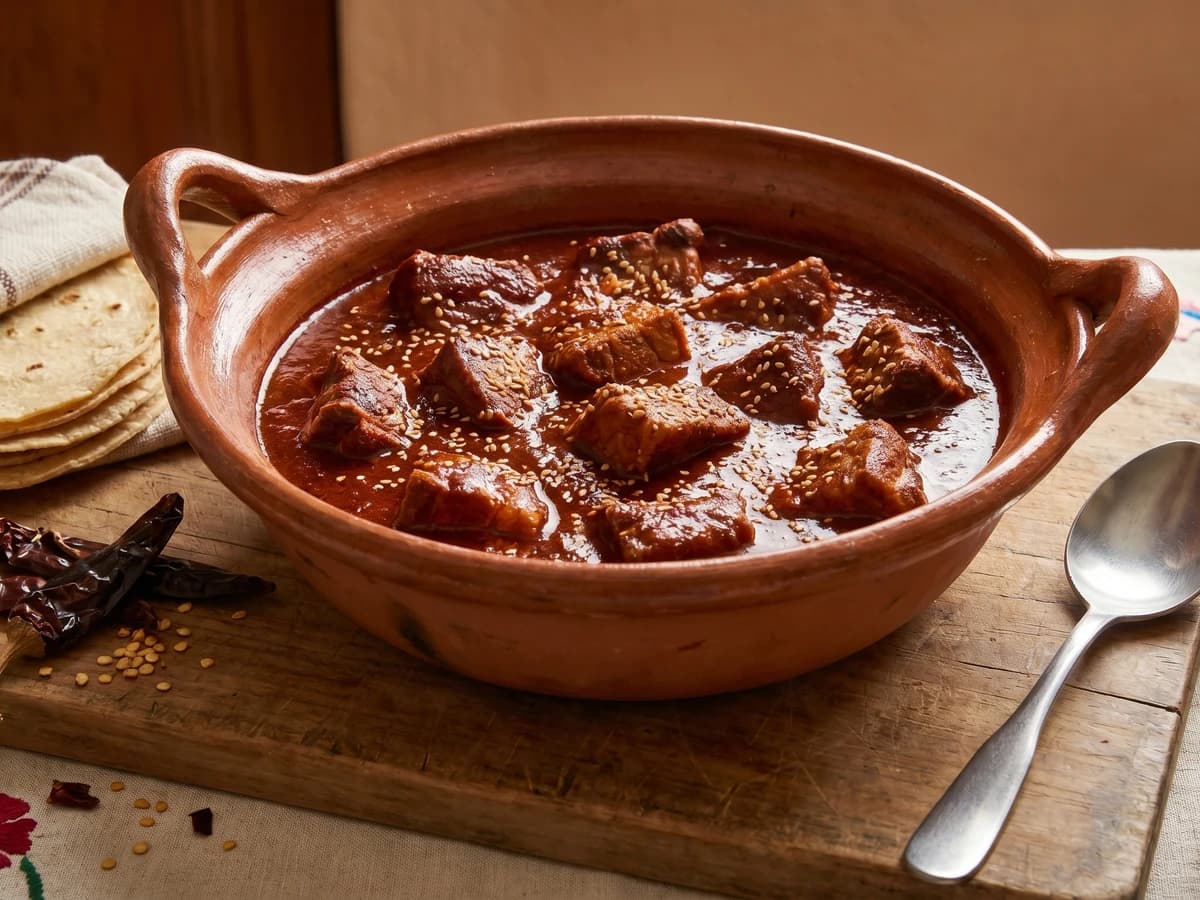
San Luis Potosi's wedding asado, pork browned in manteca de cerdo and finished in a chile ancho sauce perfumed with orange, canela, clove, and chocolate.

Chef Lupita
Oaxaca's Valles Centrales estofado, chicken slow-braised in a chile ancho and tomato sauce with almonds, raisins, olives, capers, plantain, cinnamon, clove, and the convent logic that made sweetness and saltiness work together.

Chef Lupita
Puebla's Santa Mónica chicken, simmered gently and served in a pale almond broth scented with saffron, bread, cinnamon, clove, and the disciplined hand of convent cooking.

Chef Lupita
Puebla's convent chanfaina, built from lamb heart, liver, and kidney in a chile ancho broth with almonds, raisins, olives, capers, and the discipline of the cloister kitchen.

Chef Lupita
Puebla's Lenten chile poblano, filled with vegetable picadillo, almonds, raisins, olives, and capers, capeado in egg, and settled into tomato caldillo the way convent kitchens engineered abstinence into abundance.
Culinary guides, cultural storytelling, and the editorial depth that makes cooking meaningful.
Discover Culinary ExplorerChef Lupita is a fictional culinary guide to Regional Mexican Cuisine, written with the assistance of AI.