Chef Lupita
Acúmara Tatemada al Comal
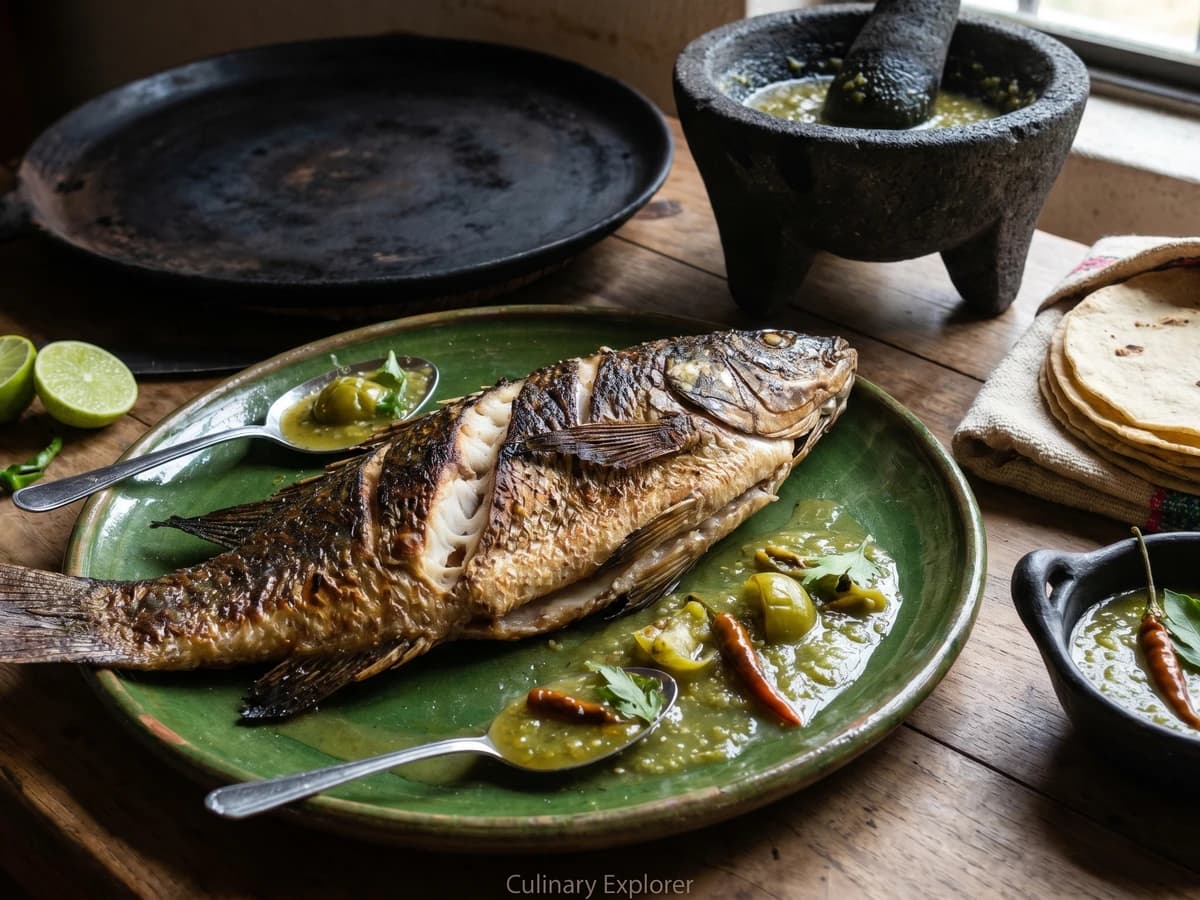
Michoacán's Lake Pátzcuaro acúmara, a whole kurucha from the lago tatemada on a comal de leña and served with chile perón atápakua, corn tortillas, and P'urhépecha discipline.
A cooking platform built around craft, culture, and the stories behind what we eat.

Created by
Puebla's Santa Mónica chicken, simmered gently and served in a pale almond broth scented with saffron, bread, cinnamon, clove, and the disciplined hand of convent cooking.
Puebla de los Ángeles, in the convent kitchen of Santa Mónica, is where this dish belongs. Not every Mexican dish begins with chile on a comal. This one begins with chicken, almonds, white bread, saffron, cinnamon, clove, and the quiet discipline of women cooking behind convent walls with an Old World pantry and a New World sense of thrift.
Caldo de Ángeles is pale, not weak. That is the first thing to understand. The color comes from blanched almonds and bread worked into the chicken broth until it turns soft and opaque, then stained lightly with saffron. The spice should sit behind the broth, not shout over it. If you taste only cinnamon, you used too much. If you taste nothing, you were afraid of the dish. Neither is cooking.
I have seen versions of this in Puebla recipe manuscripts where the chicken is treated like a guest, cooked gently, never bullied by a hard boil. The broth is strained, the almonds are ground fine, the bread gives body, and the finished cazuela goes to the table with Talavera, not flour tortillas and not a pile of lettuce. Esto no es comida de un solo México. This is Puebla, Catholic, baroque, precise.
The señoras who preserved these convent recipes understood economy better than any modern chef talking about waste. A bird, stale bread, a handful of almonds, a few threads of saffron, and a kitchen that knows patience. Saber cocinar es saber vivir.
Pollo en Caldo de Ángeles is associated with Puebla's Santa Mónica convent tradition and appears in conventual recipe manuscripts tied to the 18th-century poblano kitchen, where nuns adapted Spanish almond-thickened broths to local poultry and household service. The dish belongs to the same baroque convent pantry that produced Puebla's more famous moles and chiles en nogada, but here the architecture is Old World: almonds, bread, saffron, cinnamon, clove, and pepper rather than a chile-based sauce. Its name reflects Puebla de los Ángeles and the religious imagination of the cloister, where dishes were often named with devotional or institutional language.
Quantity
1, about 3 1/2 to 4 pounds
cut into 8 pieces
Quantity
10 cups
Quantity
1 medium
halved
Quantity
4
peeled
Quantity
1
cut into large pieces
Quantity
1
cut into large pieces
Quantity
2
Quantity
1 teaspoon, plus more to taste
Quantity
1 cup
Quantity
2 slices
crusts removed and torn into pieces
Quantity
2 tablespoons
Quantity
1/4 teaspoon
Quantity
1 small, about 2 inches
Quantity
2
Quantity
6
Quantity
1/4 cup
Quantity
2
Quantity
1/4 cup
reserved from the pot
Quantity
2 tablespoons
for serving
Quantity
for serving
| Ingredient | Quantity |
|---|---|
| whole chickencut into 8 pieces | 1, about 3 1/2 to 4 pounds |
| cold water | 10 cups |
| white onionhalved | 1 medium |
| garlic clovespeeled | 4 |
| carrotcut into large pieces | 1 |
| celery ribcut into large pieces | 1 |
| bay leaves | 2 |
| kosher salt | 1 teaspoon, plus more to taste |
| blanched almonds | 1 cup |
| day-old white bolillo or teleracrusts removed and torn into pieces | 2 slices |
| manteca de cerdo or unsalted butter | 2 tablespoons |
| saffron threads | 1/4 teaspoon |
| Mexican cinnamon stick | 1 small, about 2 inches |
| whole cloves | 2 |
| whole black peppercorns | 6 |
| dry sherry or white wine | 1/4 cup |
| egg yolks | 2 |
| warm chicken broth for temperingreserved from the pot | 1/4 cup |
| chopped flat-leaf parsley (optional)for serving | 2 tablespoons |
| warm corn tortillas or crusty bolillo (optional) | for serving |
Place the chicken pieces in a heavy pot with the cold water, onion, garlic, carrot, celery, bay leaves, and salt. Bring it up slowly over medium heat. Skim the gray foam in the first 15 minutes. A convent broth should be clear enough to respect before you thicken it. A hard boil makes the meat tight and clouds the liquid.
Lower the heat until the surface moves gently. Cook partially covered for 45 to 55 minutes, until the chicken is tender and the leg meat pulls from the bone with no argument. Remove the chicken to a plate. Strain the broth through a fine-mesh sieve and discard the spent vegetables and bay leaves. You should have about 7 cups of clean broth.
Wipe the pot clean. Add the manteca de cerdo or butter over medium heat, then add the torn bolillo. Fry until the edges turn pale gold and smell nutty, about 3 minutes. Do not brown it hard. This bread is here to give the broth body, not a burned flavor. In Puebla convent cooking, stale bread was not waste. It was structure.
Add the almonds, saffron, cinnamon stick, cloves, and peppercorns to the pot with the bread. Stir for 1 minute, just until the almonds smell warm and the saffron stains the fat lightly. Do not toast the saffron dark. It turns bitter and expensive bitterness is still bitterness.
Add 2 cups of the strained chicken broth to the pot and simmer for 8 minutes, until the bread softens completely. Remove and discard the cinnamon stick if you want a softer spice note, or leave it in for a stronger poblano convent flavor. Transfer the mixture to a blender and blend until completely smooth. Almonds take time. Blend longer than you think.
Pour the blended almond mixture through a fine-mesh sieve back into the pot, pressing hard with a spoon. This is not laziness work. The broth should be smooth and pale, with no gritty almond skins or bread lumps. Add the remaining strained broth and the sherry or white wine. Bring to the gentlest simmer.
Nestle the chicken pieces back into the almond broth. Simmer uncovered for 20 minutes, spooning broth over the pieces now and then. The liquid should thicken enough to coat a spoon lightly but still behave like caldo, not mole. Taste for salt. The almond softens everything, so the seasoning must be clear.
Whisk the egg yolks in a small bowl with 1/4 cup warm broth, adding the broth slowly so the yolks do not scramble. Pull the pot off the heat and stir the tempered yolks into the caldo. Return to low heat for 2 minutes, stirring constantly, until the broth looks satin-smooth. Do not boil after the yolks go in. Así se hace y punto.
Set one or two chicken pieces in each deep Talavera bowl and ladle the almond broth over them generously. Finish with a little chopped flat-leaf parsley if you use it. Serve with warm corn tortillas or bolillo. No chile garnish, no sour cream, no nonsense. This is Puebla's convent table.
1 serving (about 540g)
Culinary guides, cultural storytelling, and the editorial depth that makes cooking meaningful.
Discover Culinary ExplorerChef Lupita
Michoacán's Lake Pátzcuaro acúmara, a whole kurucha from the lago tatemada on a comal de leña and served with chile perón atápakua, corn tortillas, and P'urhépecha discipline.

Chef Lupita
Puebla's weekday adobo of pork shoulder braised in a thick guajillo and ancho sauce sharpened with vinegar, cumin, and clove. The deep red of a market spice stall, the dish a poblana cooks without thinking.

Chef Lupita
Loreto's pit-roasted clams, planted hinge-up in beach sand and tatemadas under a fast fire of dried romerillo brush, the resinous Baja desert shrub that gives this dish its smoke.

Chef Lupita
Oaxaca's eighth mole, the silky, almond-and-cinnamon almendrado, served over poached chicken. Mild, sweet, restrained, and a quiet rebuttal to anyone who thinks Mexican food has to be hot to be Mexican.