Chef Lupita
Acúmara Tatemada al Comal
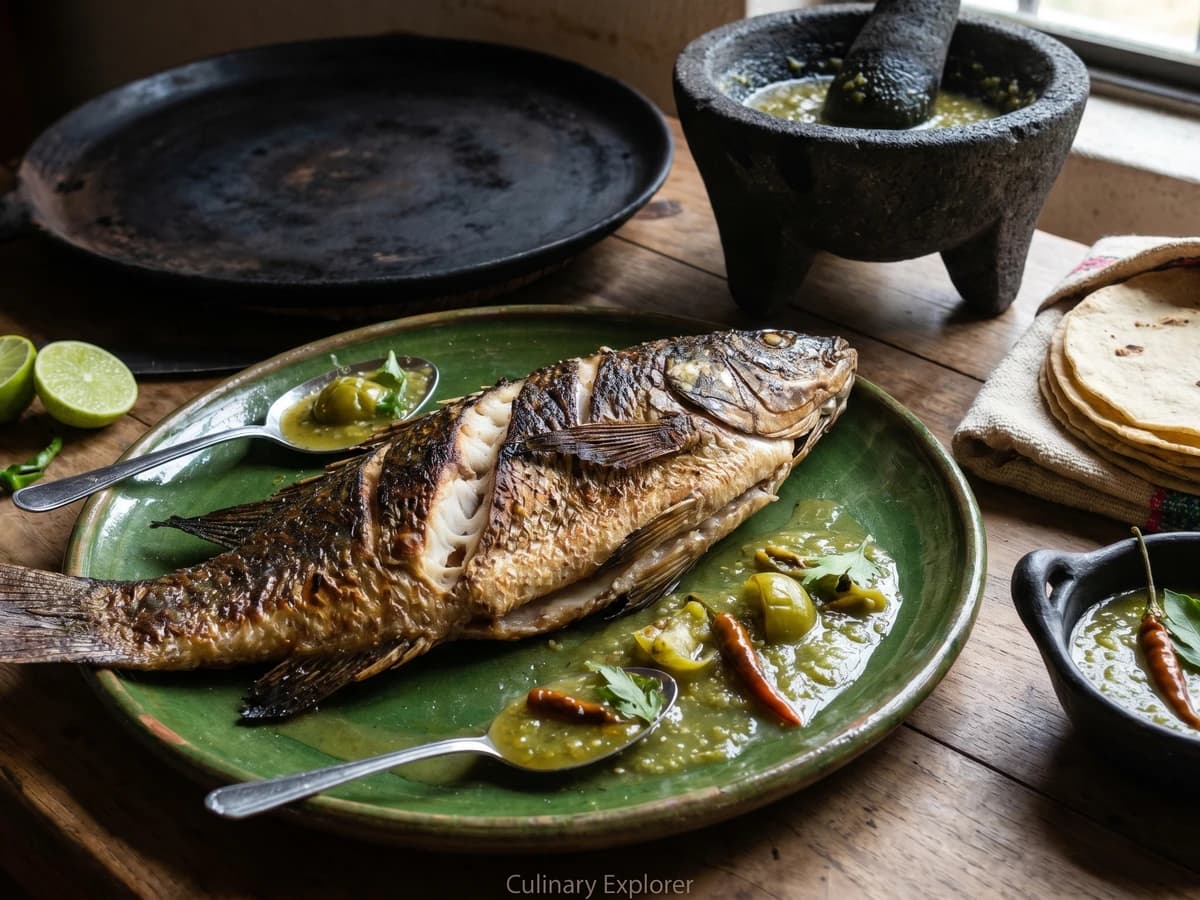
Michoacán's Lake Pátzcuaro acúmara, a whole kurucha from the lago tatemada on a comal de leña and served with chile perón atápakua, corn tortillas, and P'urhépecha discipline.
A cooking platform built around craft, culture, and the stories behind what we eat.

Created by
San Luis Potosi's wedding asado, pork browned in manteca de cerdo and finished in a chile ancho sauce perfumed with orange, canela, clove, and chocolate.
San Luis Potosi, especially the Altiplano and the old mining towns around the center of the state, owns this version of asado de boda. This is wedding food, baptism food, the pot that sits in the back of a family kitchen while the tables are being set and the tortillas are wrapped in cloth. It is pork, not beef. It is chile ancho, not a random red sauce. Cada estado, su propia cocina.
The chile ancho gives the body and the dark red color. The orange, canela, clove, and a small square of Mexican table chocolate tell you this plate passed through convent hands and colonial kitchens before it became pueblo food. That Old World pantry is not decoration. It is the architecture of the sauce. Sweetness, bitterness, fat, chile, spice. If one is missing, the sauce loses its spine.
I learned a potosino version from a senora near Armadillo de los Infante who fried the pork first in manteca de cerdo until the edges browned hard, then poured in the strained chile paste and let it darken slowly. She did not rush. She did not apologize for the lard. La manteca es el sabor. This dish is better the next day, when the chile and the pork have stopped arguing and started behaving like family.
Serve it in a clay cazuela with rice, beans, and warm corn tortillas. No lettuce. No sour cream. No shredded yellow cheese. This is asado de boda, and the wedding is in San Luis Potosi.
Asado de boda is most strongly associated with the north-central states of Zacatecas and San Luis Potosi, where it became a celebratory pork dish tied to weddings and large family gatherings during the colonial and post-independence periods. Its chile ancho base reflects central Mexican dried-chile cookery, while cinnamon, clove, chocolate, almonds, and citrus belong to the conventual pantry shaped by Spanish Catholic institutions and the abstinence calendar that trained cloister kitchens to engineer richness from preserved ingredients. Unlike mole poblano, asado de boda is not a chocolate sauce; the chocolate is one bitter-sweet note inside a fried chile and pork stew.
Quantity
3 pounds
cut into 1 1/2-inch chunks
Quantity
2 teaspoons, plus more to taste
Quantity
1/2 teaspoon
Quantity
1/2 cup
Quantity
10
stemmed and seeded
Quantity
2
stemmed and seeded
Quantity
3 cups
for soaking the chiles
Quantity
4
unpeeled
Quantity
1 medium
quartered
Quantity
2
halved
Quantity
1 bolillo or 2 thick slices
Quantity
1/4 cup
Quantity
1 tablespoon, plus more for serving
Quantity
1
Quantity
3
Quantity
4
Quantity
1/2 teaspoon
Quantity
1/4 teaspoon
Quantity
1
Quantity
1 strip
white pith removed
Quantity
1/2 cup
Quantity
1 ounce
chopped
Quantity
1 tablespoon
only if the orange is sharp
Quantity
2 cups, plus more as needed
Quantity
for serving
Quantity
for serving
Quantity
for serving
| Ingredient | Quantity |
|---|---|
| pork shouldercut into 1 1/2-inch chunks | 3 pounds |
| kosher salt | 2 teaspoons, plus more to taste |
| freshly ground black pepper | 1/2 teaspoon |
| manteca de cerdo | 1/2 cup |
| dried chile anchostemmed and seeded | 10 |
| dried chile guajillostemmed and seeded | 2 |
| hot waterfor soaking the chiles | 3 cups |
| garlic clovesunpeeled | 4 |
| white onionquartered | 1 medium |
| Roma tomatoeshalved | 2 |
| bolillo or day-old white bread | 1 bolillo or 2 thick slices |
| blanched almonds | 1/4 cup |
| sesame seeds | 1 tablespoon, plus more for serving |
| Mexican cinnamon stick | 1 |
| whole cloves | 3 |
| whole black peppercorns | 4 |
| dried Mexican oregano | 1/2 teaspoon |
| dried thyme | 1/4 teaspoon |
| bay leaf | 1 |
| orange peelwhite pith removed | 1 strip |
| fresh orange juice | 1/2 cup |
| Mexican table chocolatechopped | 1 ounce |
| piloncillo or dark brown sugar (optional)only if the orange is sharp | 1 tablespoon |
| pork broth or water | 2 cups, plus more as needed |
| Mexican red rice (optional) | for serving |
| frijoles de la olla (optional) | for serving |
| warm corn tortillas (optional) | for serving |
Pat the pork dry and season it with the salt and black pepper. Let it sit while you prepare the chiles. Dry meat browns. Wet meat boils. That difference matters in asado de boda because the fried pork gives the sauce its backbone.
Heat a dry comal over medium. Toast the chile ancho one or two at a time, about 20 to 30 seconds per side, just until the skins puff and the smell turns deep and raisiny. Toast the guajillo the same way, watching closely because it is thinner. Do not blacken them. Burned chile will make the whole cazuela bitter.
Place the toasted chiles in a bowl and cover with hot water, not boiling water. Let them soften for 20 minutes. Boiling water roughs up the skin and can pull bitterness into the sauce. Hot water softens the flesh cleanly. Reserve 1 cup of the soaking liquid, then drain the chiles.
On the same comal, roast the unpeeled garlic, onion, and tomatoes until they are spotted and softened. Peel the garlic. Tear the bolillo into pieces and toast it lightly. Toast the almonds, sesame seeds, cinnamon stick, cloves, and peppercorns just until fragrant. Keep everything moving. The spices should wake up, not burn.
Blend the soaked chiles with the roasted garlic, onion, tomatoes, toasted bread, almonds, sesame, cinnamon, cloves, peppercorns, oregano, thyme, orange peel, orange juice, chocolate, and 1 cup pork broth. Blend until completely smooth. Work in batches if your blender struggles. Strain through a fine-mesh sieve into a bowl, pressing hard on the solids. A wedding sauce should be smooth enough to coat the pork, not gritty.
Melt the manteca de cerdo in a wide heavy pot or clay cazuela over medium-high heat. Add the pork in batches and brown it on all sides, 8 to 10 minutes per batch. Do not crowd the pot. The meat should take on dark golden edges and leave browned bits in the fat. Those bits are flavor. La manteca es el sabor.
Lower the heat to medium. Return all the pork to the pot and pour the strained chile sauce over it. It will sputter. Stir well, scraping the browned bits from the bottom. Cook uncovered for 8 to 10 minutes, stirring often, until the sauce darkens and the fat starts to separate at the edges. This frying is what makes asado taste like asado, not boiled chile puree.
Add the bay leaf and enough pork broth or water to barely cover the meat. Bring to a gentle simmer, then cover partially and cook for 1 hour to 1 hour 15 minutes, stirring every 15 minutes so the sauce does not catch. The pork is ready when a piece yields easily to a spoon and the sauce clings thickly to the meat.
Taste for salt. If the orange was sharp and the chile tastes too bitter, add the piloncillo and simmer 5 minutes more. Do not make it candy-sweet. Asado de boda should be savory first, with sweetness from the orange, spice, and chocolate sitting behind the chile ancho.
Let the asado rest 15 minutes before serving. Spoon it into a clay cazuela and scatter a little toasted sesame over the top. Serve with Mexican red rice, frijoles de la olla, and warm corn tortillas. This is food for a table, not a plated performance. Saber cocinar es saber vivir.
1 serving (about 520g)
Culinary guides, cultural storytelling, and the editorial depth that makes cooking meaningful.
Discover Culinary ExplorerChef Lupita
Michoacán's Lake Pátzcuaro acúmara, a whole kurucha from the lago tatemada on a comal de leña and served with chile perón atápakua, corn tortillas, and P'urhépecha discipline.

Chef Lupita
Puebla's weekday adobo of pork shoulder braised in a thick guajillo and ancho sauce sharpened with vinegar, cumin, and clove. The deep red of a market spice stall, the dish a poblana cooks without thinking.

Chef Lupita
Loreto's pit-roasted clams, planted hinge-up in beach sand and tatemadas under a fast fire of dried romerillo brush, the resinous Baja desert shrub that gives this dish its smoke.

Chef Lupita
Oaxaca's eighth mole, the silky, almond-and-cinnamon almendrado, served over poached chicken. Mild, sweet, restrained, and a quiet rebuttal to anyone who thinks Mexican food has to be hot to be Mexican.