Chef Lupita
Acúmara Tatemada al Comal
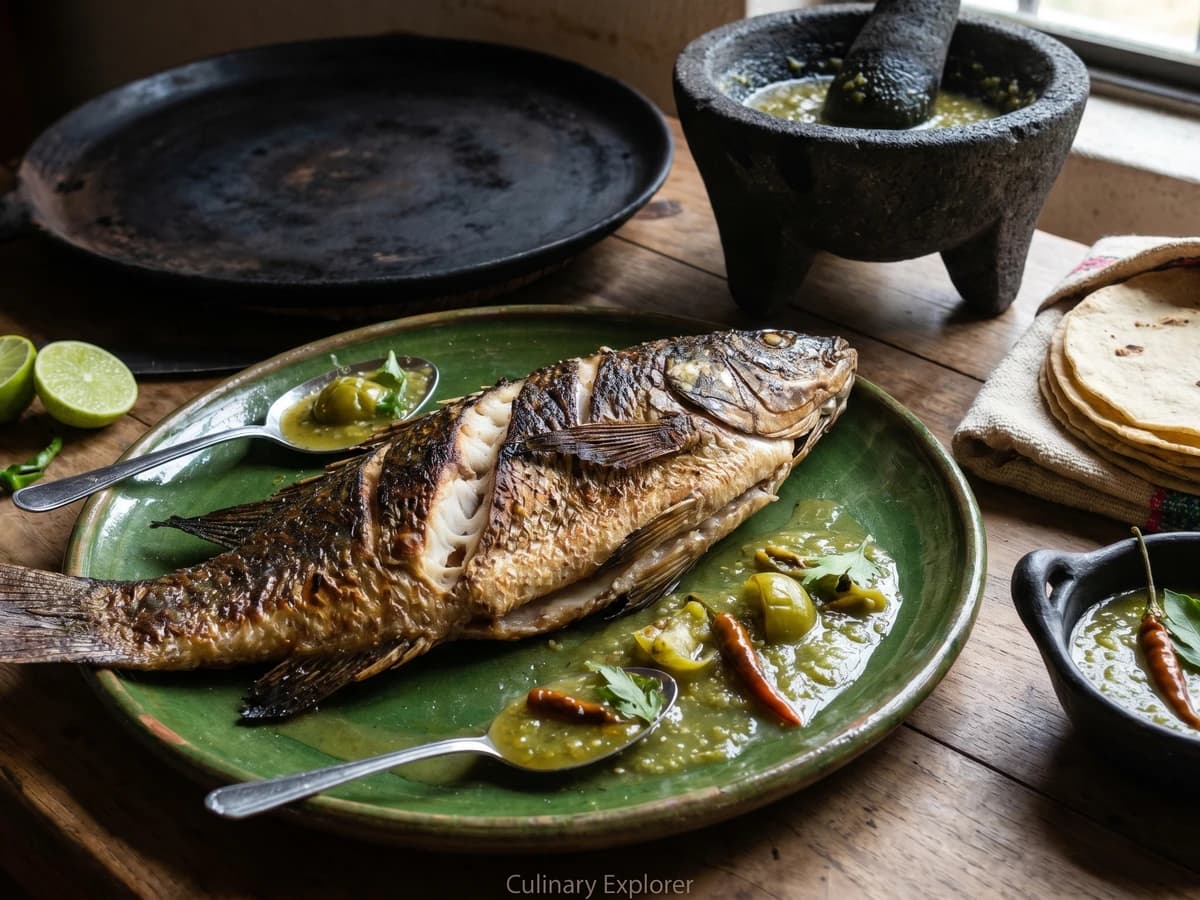
Michoacán's Lake Pátzcuaro acúmara, a whole kurucha from the lago tatemada on a comal de leña and served with chile perón atápakua, corn tortillas, and P'urhépecha discipline.
A cooking platform built around craft, culture, and the stories behind what we eat.

Created by
Oaxaca's Isthmus of Tehuantepec wedding estofado, a baroque beef stew stained with achiote, chile ancho, guajillo, pineapple, plantain, apple, bread, almonds, raisins, olives, and clove.
Oaxaca, the Isthmus of Tehuantepec. That is where this estofado lives: Juchitan, Tehuantepec, Ixtepec, the towns where wedding kitchens are not quiet little rooms but working armies led by women who know exactly when the meat has surrendered. This is comida de boda, not weekday stew. The cazuelas are big, the table is crowded, and the sauce carries sweet fruit, chile, vinegar, achiote, and the Old World pantry brought through colonial kitchens and made local by Istmeño hands.
The color comes from achiote, chile ancho, and chile guajillo. The body comes from bolillo fried in manteca de cerdo and blended into the sauce. The sweetness is not dessert sweetness. Pineapple, ripe plantain, and apple balance the vinegar, olives, capers, raisins, cinnamon, clove, and black pepper. This is the convent register as it settled into Oaxaca's celebrations: fruit with meat, spice with acid, bread as architecture, not garnish.
I learned one version from a señora in Tehuantepec who cooked it in a clay cazuela so wide two women had to lift it. She told me, 'No lo hagas apurado,' don't make it in a hurry. She was right. The sauce needs to fry until the fat separates, the beef needs time, and the fruit goes in late so it keeps its shape. No me vengas con atajos. Wedding food has memory because somebody did the work.
Estofado belongs to the Spanish colonial family of stewed meats, but in New Spain it was transformed by convent and household cooks who combined Iberian techniques with local chiles, achiote, and tropical fruit. Oaxaca's Dominican conventual kitchens in colonial Antequera helped establish the baroque pantry of almonds, raisins, olives, capers, cinnamon, clove, and vinegar, while the Isthmus of Tehuantepec adapted that language to wedding tables with pineapple, plantain, and achiote. Unlike Puebla's more documented convent dishes tied to Santa Rosa or Santa Monica, the Istmeño wedding estofado survives most clearly through communal women-led kitchens, not a single named cloister.
Quantity
3 pounds
cut into 2-inch pieces
Quantity
1 1/2 teaspoons, plus more to taste
Quantity
1/2 teaspoon
Quantity
3 tablespoons
Quantity
1 medium
chopped
Quantity
5
peeled
Quantity
3
stemmed and seeded
Quantity
4
stemmed and seeded
Quantity
2 tablespoons
Quantity
2 large
roasted
Quantity
1/4 cup
Quantity
2 cups, plus more as needed
Quantity
1 bolillo or 2 thick slices
torn into pieces
Quantity
1/4 cup
Quantity
1/4 cup
Quantity
1, about 3 inches
Quantity
3
Quantity
4
Quantity
1/2 teaspoon
Quantity
1
Quantity
1 cup
cut into 1-inch pieces
Quantity
1
peeled and sliced into thick half-moons
Quantity
1
peeled, cored, and cut into wedges
Quantity
1/3 cup
Quantity
2 tablespoons
rinsed
Quantity
1 teaspoon
only if the pineapple is sharp
Quantity
for serving
Quantity
for serving
| Ingredient | Quantity |
|---|---|
| beef chuck or beef shankcut into 2-inch pieces | 3 pounds |
| kosher salt | 1 1/2 teaspoons, plus more to taste |
| freshly ground black pepper | 1/2 teaspoon |
| manteca de cerdo | 3 tablespoons |
| white onionchopped | 1 medium |
| garlic clovespeeled | 5 |
| dried chile anchostemmed and seeded | 3 |
| dried chile guajillostemmed and seeded | 4 |
| achiote paste | 2 tablespoons |
| ripe Roma tomatoesroasted | 2 large |
| apple cider vinegar | 1/4 cup |
| beef broth or cooking liquid | 2 cups, plus more as needed |
| bolillo or white breadtorn into pieces | 1 bolillo or 2 thick slices |
| blanched almonds | 1/4 cup |
| raisins | 1/4 cup |
| cinnamon stick | 1, about 3 inches |
| whole cloves | 3 |
| whole allspice berries | 4 |
| dried Mexican oregano | 1/2 teaspoon |
| bay leaf | 1 |
| fresh pineapplecut into 1-inch pieces | 1 cup |
| ripe plantainpeeled and sliced into thick half-moons | 1 |
| tart applepeeled, cored, and cut into wedges | 1 |
| pitted green olives | 1/3 cup |
| capersrinsed | 2 tablespoons |
| piloncillo or dark brown sugar (optional)only if the pineapple is sharp | 1 teaspoon |
| warm corn tortillas (optional) | for serving |
| white rice (optional) | for serving |
Pat the beef dry and season it with the salt and black pepper. Let it sit while you prepare the chiles. Dry meat browns. Wet meat boils first and wastes your time.
Heat a dry comal over medium. Toast the chile ancho and chile guajillo separately, about 20 to 30 seconds per side, until they soften, puff slightly, and smell deep and fruity. Do not blacken them. Burned chile turns the whole cazuela bitter and no pineapple will save it.
Place the toasted chiles in a bowl and cover with hot water for 15 minutes. Drain them, then blend with the achiote paste, roasted tomatoes, vinegar, garlic, almonds, raisins, cinnamon, cloves, allspice, oregano, and 1 cup of broth until very smooth. This sauce should be brick red, thick, and fragrant with spice. Strain it through a fine-mesh sieve if your blender leaves chile skins behind.
Melt 1 tablespoon of manteca in a heavy cazuela or Dutch oven over medium heat. Fry the torn bolillo until golden on the edges. Remove it to the blender, add 1/2 cup broth, and blend until smooth. Bread is the thickener here. Not flour slurry. Not cornstarch. The convent kitchens knew what bread could do.
Add the remaining 2 tablespoons manteca to the cazuela. Brown the beef in batches, turning until the edges take on a dark crust. Do not crowd the pot. Move the browned pieces to a plate as you go. La manteca es el sabor, and it carries the chile into the meat later.
Add the chopped onion to the same cazuela and cook until soft and lightly golden, scraping up the browned bits from the bottom. Pour in the chile-achiote sauce. It will sputter, so stir with authority. Cook 8 to 10 minutes, until the sauce darkens, thickens, and the fat begins to separate at the edges. That frying is where the raw chile becomes estofado.
Return the beef and its juices to the cazuela. Stir in the blended bread, bay leaf, and enough broth to barely cover the meat. Bring to a gentle simmer, cover partially, and cook 1 hour 45 minutes to 2 hours, stirring now and then, until the beef yields when pressed with a spoon. Keep the bubbles lazy. A hard boil breaks the sauce and toughens the meat.
Add the pineapple, plantain, apple, olives, and capers. Simmer uncovered for 20 to 25 minutes, until the fruit is tender but still holds its shape and the sauce coats the back of a spoon. Taste for salt. Add the piloncillo only if the pineapple is too sharp. Sweetness should support the chile, not take over the pot.
Turn off the heat and let the estofado rest for 20 minutes before serving. The sauce settles, the fruit gives back its juices, and the beef absorbs the spice. Serve from the cazuela with white rice and warm corn tortillas. This is Oaxaca, not the north, so flour tortillas stay out of it. Cada estado, su propia cocina.
1 serving (about 470g)
Culinary guides, cultural storytelling, and the editorial depth that makes cooking meaningful.
Discover Culinary ExplorerChef Lupita
Michoacán's Lake Pátzcuaro acúmara, a whole kurucha from the lago tatemada on a comal de leña and served with chile perón atápakua, corn tortillas, and P'urhépecha discipline.

Chef Lupita
Puebla's weekday adobo of pork shoulder braised in a thick guajillo and ancho sauce sharpened with vinegar, cumin, and clove. The deep red of a market spice stall, the dish a poblana cooks without thinking.

Chef Lupita
Loreto's pit-roasted clams, planted hinge-up in beach sand and tatemadas under a fast fire of dried romerillo brush, the resinous Baja desert shrub that gives this dish its smoke.

Chef Lupita
Oaxaca's eighth mole, the silky, almond-and-cinnamon almendrado, served over poached chicken. Mild, sweet, restrained, and a quiet rebuttal to anyone who thinks Mexican food has to be hot to be Mexican.