Culinary Explorer
A cooking platform built around craft, culture, and the stories behind what we eat.
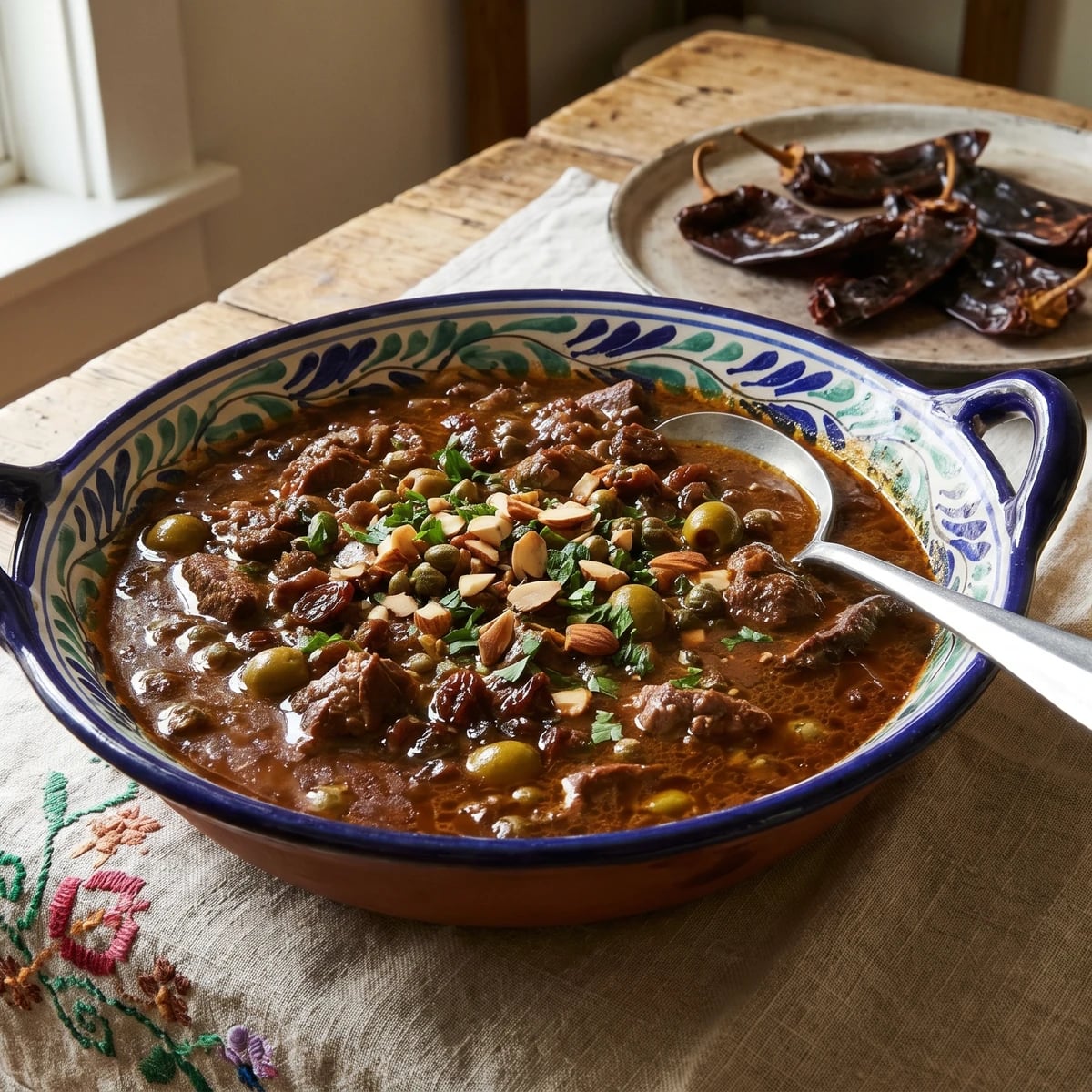
Chanfaina Conventual Poblana
Created by Chef Lupita
Puebla's convent chanfaina, built from lamb heart, liver, and kidney in a chile ancho broth with almonds, raisins, olives, capers, and the discipline of the cloister kitchen.
Puebla de los Angeles gave this dish its baroque convent voice. Not the street Puebla of cemitas and chalupas, the cloister Puebla of Santa Monica and Santa Clara, where women turned scarcity, abstinence rules, and an Old World pantry into serious cooking.
Chanfaina is organ meat. Liver, kidney, heart. If that makes you nervous, good. Pay attention. The convent cooks knew how to clean, blanch, brown, and braise each piece so it tasted like itself, not like punishment. The chile ancho gives the broth its deep red-brown body, and the almonds, raisins, olives, capers, cinnamon, and clove are not decoration. They are the architecture of the dish.
I first tasted a Poblana version in a house near the old convent district, served in talavera with thick corn tortillas and a spoon heavy enough to respect the stew. The señora who taught it to me said, 'No lo apures.' Don't hurry it. She was right. You cook the organs separately at first because they don't behave the same. Then you bring them together in the chile broth until the sharp edges soften. Así se hace y punto.
This is a 32-state cuisine. Puebla's convent food is not Oaxaca's mole tradition, not Yucatan's recados, not Sonora's flour tortilla table. Cada estado, su propia cocina.
Ingredients
lamb heart
Quantity
1 pound
trimmed and cut into 1-inch pieces
lamb liver
Quantity
1 pound
membrane removed and cut into 1-inch pieces
lamb kidney
Quantity
12 ounces
split, white core removed, and cut into 1-inch pieces
| Ingredient | Quantity |
|---|---|
| lamb hearttrimmed and cut into 1-inch pieces | 1 pound |
| lamb livermembrane removed and cut into 1-inch pieces | 1 pound |
| lamb kidneysplit, white core removed, and cut into 1-inch pieces | 12 ounces |
Where cooking meets culture.
Culinary guides, cultural storytelling, and the editorial depth that makes cooking meaningful.
Discover Culinary Explorer