Chef Lupita
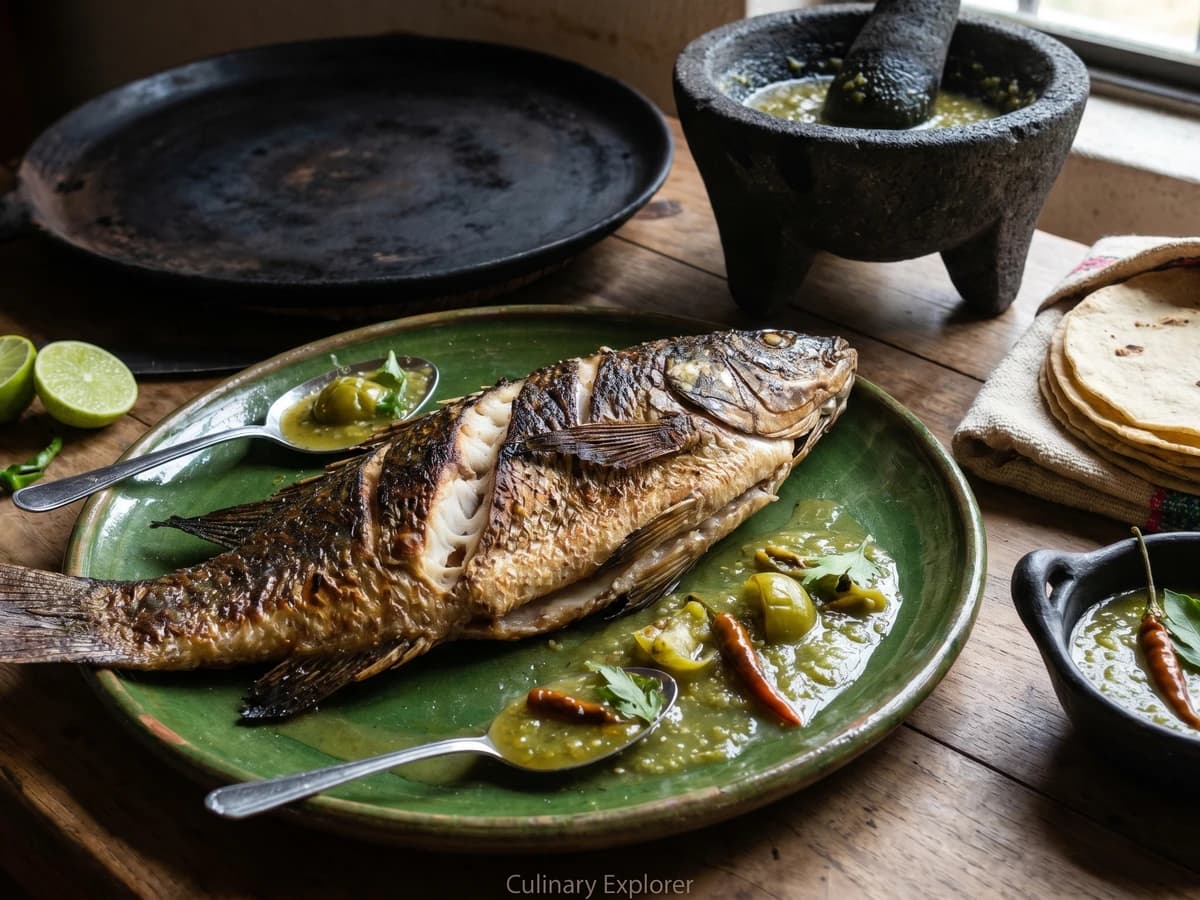
Acúmara Tatemada al Comal
Michoacán's Lake Pátzcuaro acúmara, a whole kurucha from the lago tatemada on a comal de leña and served with chile perón atápakua, corn tortillas, and P'urhépecha discipline.
A cooking platform built around craft, culture, and the stories behind what we eat.

Created by
Puebla's convent Lenten cazuela of beaten egg and dried shrimp tortitas, bathed in mole poblano with nopales, built for the Friday abstinence table.
Puebla, the Valle de Puebla, the city of Talavera tiles and convent kitchens, is where this dish belongs. Tortitas de camaron en mole poblano is food for Cuaresma, the Friday table when meat was forbidden and the cloister still had to feed bodies that worked, prayed, cleaned, sewed, and cooked all day.
The fritters are not croquettes. They are beaten egg, dried shrimp ground fine, and a little toasted bread to hold the foam together. The women who perfected this knew how to make absence into architecture. No meat, no chicken broth, no pork in the pot for this version. The dried shrimp gives salt and depth. The nopales give green bite. The mole gives Puebla its signature: chile ancho, chile mulato, chile pasilla, sesame, almond, raisin, cinnamon, clove, and chocolate, all handled with discipline.
Most people say mole and think chocolate sauce. No. Mole poblano is a chile sauce with Old World spices and seeds folded into it until it becomes something larger than any one ingredient. The chocolate is a note, not the song. If the sauce tastes like candy, you lost the path.
I learned a version of this from a señora near the Mercado de la Acocota who had cooked for parish Lenten meals since she was a girl. She served it in a clay cazuela set over Talavera at the table, the tortitas softening but not falling apart in the dark sauce. Cada estado, su propia cocina. Puebla knows this one.
Mole poblano is tied to Puebla's conventual kitchens, especially the origin stories attached to Santa Rosa and Santa Clara in the 17th century, though those stories mix documentation with civic pride. Lenten tortitas de camaron developed within the Catholic abstinence calendar, using eggs and dried seafood to replace meat while keeping the meal substantial. The Old World pantry of almonds, raisins, sesame, cinnamon, clove, and chocolate entered Puebla through colonial trade and convent supply networks, giving convent moles their baroque structure.
Quantity
6
stemmed and seeded
Quantity
4
stemmed and seeded
Quantity
3
stemmed and seeded
Quantity
1
stemmed and seeded
Quantity
1/4 cup, plus 1 tablespoon
divided
Quantity
1/3 cup
Quantity
1/4 cup
Quantity
1/4 cup
Quantity
1
torn into pieces
Quantity
1 small bolillo or 2 slices
torn into pieces
Quantity
1/2
peeled and sliced
Quantity
2 medium
Quantity
4
husked and rinsed
Quantity
1/2 medium
Quantity
4
unpeeled
Quantity
1-inch piece
Quantity
3
Quantity
6
Quantity
1/2 teaspoon
Quantity
1/2 teaspoon
Quantity
2 tablespoons, plus more for frying
Quantity
5 to 6 cups
Quantity
1 ounce
chopped
Quantity
1 teaspoon
only if needed
Quantity
to taste
Quantity
1 pound
cleaned and cut into 1/2-inch strips
Quantity
1/4 medium
Quantity
1 sprig
Quantity
12 ounces
Quantity
6
separated
Quantity
1/3 cup
Quantity
for serving
| Ingredient | Quantity |
|---|---|
| dried chile anchostemmed and seeded | 6 |
| dried chile mulatostemmed and seeded | 4 |
| dried chile pasillastemmed and seeded | 3 |
| dried chile chipotle mecostemmed and seeded | 1 |
| sesame seedsdivided | 1/4 cup, plus 1 tablespoon |
| blanched almonds | 1/3 cup |
| raw peanuts | 1/4 cup |
| raisins | 1/4 cup |
| corn tortillatorn into pieces | 1 |
| small bolillo or firm white breadtorn into pieces | 1 small bolillo or 2 slices |
| ripe plantainpeeled and sliced | 1/2 |
| Roma tomatoes | 2 medium |
| tomatilloshusked and rinsed | 4 |
| white onion | 1/2 medium |
| garlic clovesunpeeled | 4 |
| Mexican cinnamon | 1-inch piece |
| whole cloves | 3 |
| black peppercorns | 6 |
| anise seeds | 1/2 teaspoon |
| coriander seeds | 1/2 teaspoon |
| vegetable oil | 2 tablespoons, plus more for frying |
| vegetable broth or water | 5 to 6 cups |
| Mexican table chocolatechopped | 1 ounce |
| piloncillo or dark brown sugar (optional)only if needed | 1 teaspoon |
| kosher salt | to taste |
| nopalescleaned and cut into 1/2-inch strips | 1 pound |
| white onion for nopales | 1/4 medium |
| epazote | 1 sprig |
| dried shrimp with shells and heads | 12 ounces |
| large eggsseparated | 6 |
| fine dry breadcrumbs or ground toasted bolillo | 1/3 cup |
| warm corn tortillas (optional) | for serving |
Heat a dry comal over medium. Toast the ancho, mulato, pasilla, and chipotle meco one at a time, about 15 to 25 seconds per side, just until the skins puff and the smell turns deep and fruity. Do not blacken them. Burned chile makes bitter mole, and no amount of chocolate will save it.
Put the toasted chiles in a bowl and cover with hot water for 20 minutes. Hot, not boiling. Boiling water roughens the skins and pulls bitterness. Drain the chiles and discard the soaking water unless your chiles are very sweet and clean. Most are not.
On the same comal, toast the sesame seeds until golden, then toast the almonds and peanuts until they smell nutty. Keep everything moving. Toast the cinnamon, cloves, peppercorns, anise, and coriander for 30 seconds, just enough to wake them up. Puebla's convent cooks understood restraint. Dark spices will bully the mole.
Heat 2 tablespoons vegetable oil in a heavy pot or clay cazuela over medium. Fry the raisins until they puff, then remove them. Fry the tortilla, bolillo, and plantain until golden at the edges. These are not filler. They give the mole body and that conventual richness people pretend came from chocolate.
Roast the tomatoes, tomatillos, onion, and unpeeled garlic on the comal until blistered and softened. Peel the garlic. The tomatillo keeps the sauce from becoming heavy, the tomato rounds it out, and the onion and garlic give the base somewhere to stand.
Blend the soaked chiles with the toasted seeds, nuts, spices, raisins, fried tortilla, bolillo, plantain, roasted vegetables, and 2 cups broth or water. Work in batches. Blend longer than you think. You want a smooth paste, not a gritty sauce. If your blender struggles, add a little more broth. Preguntale a las senoras del mercado: texture tells on the cook.
Heat the cazuela over medium and add the blended paste. It will sputter. Stir constantly for 12 to 15 minutes until the paste darkens, thickens, and the oil begins to show at the edges. This is where raw ingredients become mole. Add 3 cups broth or water, lower the heat, and simmer 45 minutes, stirring often so it does not catch on the bottom.
Add the chopped Mexican chocolate and stir until it dissolves. Taste before adding piloncillo. The mole should be deep, gently bitter, a little sweet, and chile-forward. Salt carefully because the shrimp tortitas will bring their own salt. Keep the mole loose enough to coat the fritters without swallowing them.
Put the nopales in a pot with the 1/4 onion, epazote, 1/2 teaspoon salt, and water to cover. Simmer 10 to 12 minutes, until the strips turn olive green and tender but still have bite. Drain and rinse briefly. Remove the onion and epazote. Nopales should taste green, not slimy. Así se hace y punto.
Pick through the dried shrimp and remove any hard eyes or sharp bits that will not grind cleanly. Toast the shrimp on the comal for 1 to 2 minutes, just until fragrant. Grind them in a spice grinder or blender to a fine powder. Do not add salt to the batter. Dried shrimp already carries the sea and the market with it.
Beat the egg whites in a clean bowl until they hold firm peaks. Beat the yolks separately, then fold them into the whites with the shrimp powder and breadcrumbs. Fold gently but completely. The foam is the structure of the tortita. Crush it and you get a heavy little disk. No me vengas con atajos.
Pour 1/2 inch vegetable oil into a skillet and heat over medium. Drop heaping tablespoons of batter into the oil and fry 2 to 3 minutes per side, until puffed and golden brown. Drain on a rack or paper towels. The tortitas should be light, salty, and firm enough to survive the mole.
Add the cooked nopales to the mole and simmer 5 minutes. Slide in the tortitas and spoon sauce over them gently. Simmer 3 to 5 minutes more, just until the fritters drink some sauce and soften at the edges. Do not stir hard. You are feeding people, not punishing the cazuela.
Serve from the clay cazuela, with the reserved toasted sesame scattered over the top and warm corn tortillas on the side. Set it on Talavera if you have it. This is Lenten food, but it is not thin food. It is convent food: disciplined, engineered, and generous. Saber cocinar es saber vivir.
1 serving (about 475g)
Culinary guides, cultural storytelling, and the editorial depth that makes cooking meaningful.
Discover Culinary ExplorerChef Lupita
Michoacán's Lake Pátzcuaro acúmara, a whole kurucha from the lago tatemada on a comal de leña and served with chile perón atápakua, corn tortillas, and P'urhépecha discipline.

Chef Lupita
Puebla's weekday adobo of pork shoulder braised in a thick guajillo and ancho sauce sharpened with vinegar, cumin, and clove. The deep red of a market spice stall, the dish a poblana cooks without thinking.

Chef Lupita
Loreto's pit-roasted clams, planted hinge-up in beach sand and tatemadas under a fast fire of dried romerillo brush, the resinous Baja desert shrub that gives this dish its smoke.

Chef Lupita
Oaxaca's eighth mole, the silky, almond-and-cinnamon almendrado, served over poached chicken. Mild, sweet, restrained, and a quiet rebuttal to anyone who thinks Mexican food has to be hot to be Mexican.