
Chef Lupita
Asado de Boda Potosino
San Luis Potosi's wedding asado, pork browned in manteca de cerdo and finished in a chile ancho sauce perfumed with orange, canela, clove, and chocolate.
A cooking platform built around craft, culture, and the stories behind what we eat.
Created by
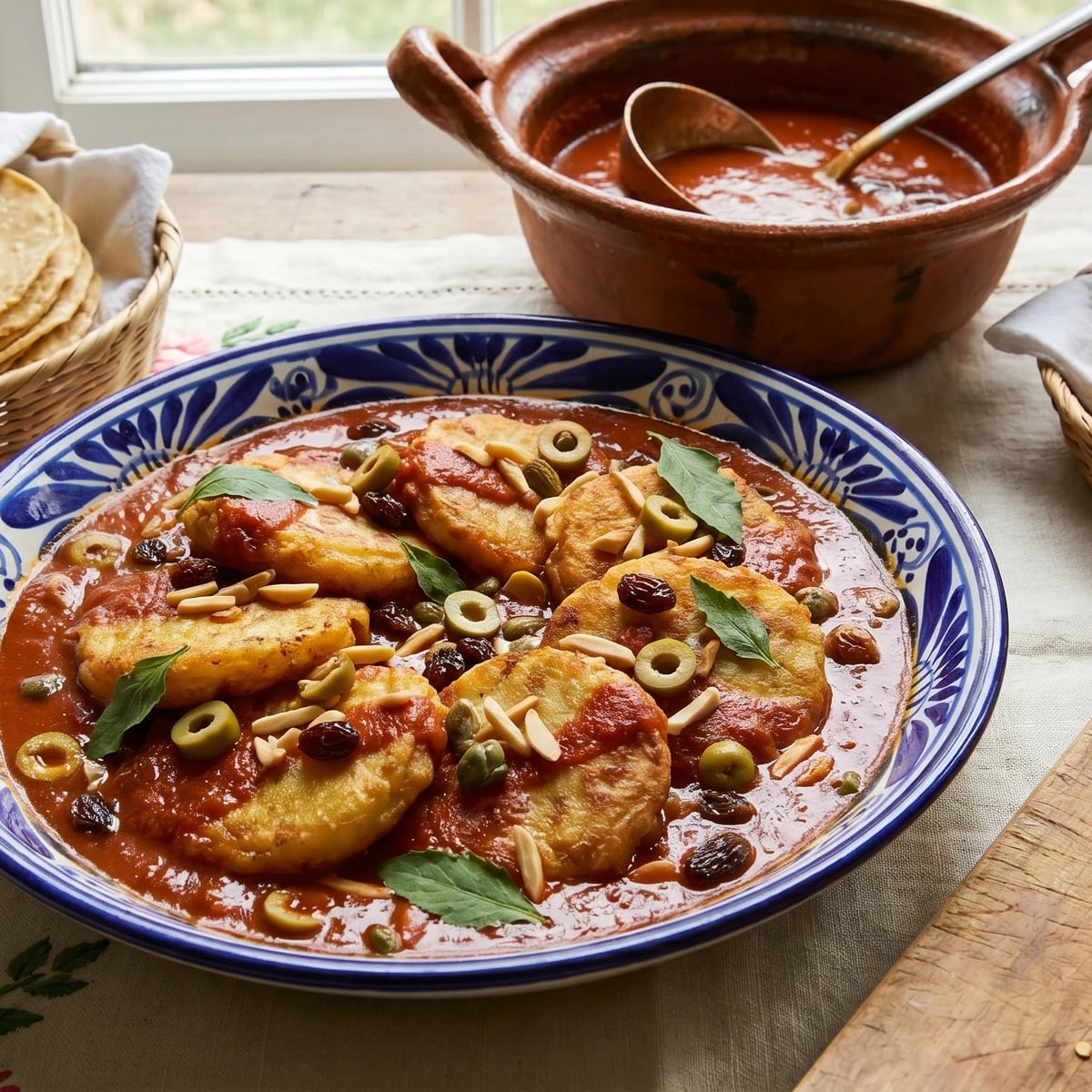
Puebla's Friday vigil cazuela, potato tortitas fried golden in manteca and settled into a guajillo tomato caldillo sharpened with epazote, olives, capers, and raisins from the convent pantry.
Puebla de los Angeles owns this kind of cazuela. Not because potatoes belong only to Puebla, they don't, but because the convent kitchens of Santa Monica, Santa Clara, and Santa Rosa learned to turn abstinence into architecture. Friday vigil meant no meat. It did not mean weak food.
These tortitas live in the old city, in the kitchens around the convents, in homes that still set a talavera bowl on the table during Lent and expect the caldillo to stain the spoon red. The chile guajillo gives the sauce its clean brick color. Tomato gives body. Epazote cuts through the fried potato. Then come the Old World pantry ingredients, olives, capers, almonds, raisins, a whisper of clove if the cook is from a baroque mood. Those are not decorations. That is the convent signature.
I learned a version like this from a senora near the Mercado La Acocota, who corrected my hand when I made the tortitas too smooth. "Que se sienta la papa," she told me. Let the potato be felt. The fritter should be tender inside, golden outside, and strong enough to sit in the sauce without falling apart like someone with no discipline.
La manteca es el sabor. If that bothers you during a Lenten recipe, understand the old rule first: this is comida de vigilia, meatless food for the Catholic calendar, not modern vegetarian branding. The cloister cooked with what the Puebla pantry gave it. No me vengas con atajos.
Puebla's convent kitchens became some of New Spain's most important culinary laboratories in the 17th and 18th centuries, especially the houses of Santa Rosa, Santa Clara, and Santa Monica, where indigenous ingredients met Spanish, Arab, and Mediterranean pantry goods. Vigil dishes developed as engineered responses to the Catholic abstinence calendar, replacing meat with eggs, cheese, legumes, potatoes, dried fruits, nuts, olives, and capers while keeping the meal substantial. Potatoes, native to the Andes and spread through Spanish colonial networks, entered Mexican convent and household cooking by the colonial period and became especially useful in Lenten fritters, tortitas, and capeados.
Quantity
2 pounds
scrubbed
Quantity
1 tablespoon, plus more to taste
Quantity
3 ounces
finely crumbled
Quantity
2
separated
Quantity
3 tablespoons, plus more for dusting
Quantity
1/2 teaspoon
Quantity
1/4 teaspoon
Quantity
1/8 teaspoon
Quantity
1/2 cup for frying, plus 1 tablespoon for the caldillo
Quantity
5
stemmed and seeded
Quantity
1
stemmed and seeded
Quantity
1 1/2 pounds
Quantity
1/2 medium
Quantity
3
unpeeled
Quantity
2 cups
Quantity
1 sprig
Quantity
2 tablespoons
rinsed
Quantity
1/3 cup
sliced
Quantity
1/4 cup
Quantity
2 tablespoons
slivered
Quantity
for serving
warmed
| Ingredient | Quantity |
|---|---|
| yellow potatoesscrubbed | 2 pounds |
| kosher salt | 1 tablespoon, plus more to taste |
| queso anejo or queso fresco secofinely crumbled | 3 ounces |
| large eggsseparated | 2 |
| all-purpose flour | 3 tablespoons, plus more for dusting |
| ground white pepper | 1/2 teaspoon |
| ground canela | 1/4 teaspoon |
| ground clove | 1/8 teaspoon |
| pork lard (manteca de cerdo) | 1/2 cup for frying, plus 1 tablespoon for the caldillo |
| dried chile guajillostemmed and seeded | 5 |
| dried chile anchostemmed and seeded | 1 |
| ripe Roma tomatoes | 1 1/2 pounds |
| white onion | 1/2 medium |
| garlic clovesunpeeled | 3 |
| vegetable broth or water | 2 cups |
| fresh epazote | 1 sprig |
| capersrinsed | 2 tablespoons |
| pitted green olivessliced | 1/3 cup |
| raisins | 1/4 cup |
| blanched almondsslivered | 2 tablespoons |
| hand-pressed corn tortillas (optional)warmed | for serving |
Put the potatoes in a pot and cover with cold water by two inches. Add the tablespoon of salt. Bring to a steady simmer and cook until a knife enters the center without resistance, 25 to 30 minutes depending on size. Start in cold water so the potatoes cook evenly from skin to center. Drain well and let them sit until the skins look dry.
Peel the potatoes while they are still warm enough to handle. Mash them in a wide bowl, but do not beat them into glue. You want some texture. Stir in the queso anejo, egg yolks, flour, white pepper, canela, clove, and 1/2 teaspoon salt. The cheese seasons the potato and helps the tortitas hold their shape in the caldillo.
Beat the egg whites until they hold soft peaks. Fold them into the potato mixture with a firm hand and no panic. This is not cake batter. The whites lighten the tortitas enough to keep them tender, but the potato must still be the body of the dish.
Dust your hands with flour and shape the potato mixture into 12 small oval patties, each about 3 inches long and 1/2 inch thick. Set them on a lightly floured tray. Chill for 15 minutes if the kitchen is warm. They should feel soft but not loose.
Heat a dry comal over medium. Toast the chile guajillo one at a time, about 20 to 30 seconds per side, just until the skin turns fragrant and flexible. Toast the chile ancho the same way, watching carefully because it has more sugar and can scorch. Do not blacken them. Burned chile makes bitter caldillo, and no amount of tomato will save it.
Put the toasted chiles in a bowl and cover with hot water, not boiling water. Let them soften for 15 minutes. Hot water relaxes the flesh. Boiling water toughens the skin and drags bitterness into the sauce. This is the kind of detail the senoras at the market correct before you embarrass yourself.
On the same comal, roast the tomatoes, onion, and unpeeled garlic until the tomatoes are blistered and soft, the onion has dark spots, and the garlic skins are browned, 10 to 12 minutes. Peel the garlic. Blend the roasted vegetables with the soaked chiles and 1 cup of broth until completely smooth.
Melt 1 tablespoon lard in a 12-inch clay cazuela or heavy skillet over medium heat. Strain the blended chile tomato sauce directly into the hot fat. It will sputter. Stir and cook 8 to 10 minutes, until the color deepens to brick red and the fat begins to shine at the edges. Add the remaining 1 cup broth, the epazote, capers, olives, raisins, and almonds. Simmer gently for 10 minutes and taste for salt.
In a wide skillet, heat the 1/2 cup lard over medium until a pinch of potato sizzles when it touches the fat. Fry the tortitas in batches, 2 to 3 minutes per side, until golden and firm enough to lift without breaking. Do not crowd the pan. The lard should kiss the edges, not drown the patties. Transfer them to a rack or brown paper.
Lower the fried tortitas into the simmering caldillo in one layer. Spoon sauce over the tops and cook gently for 5 minutes. Do not boil. You are letting the potato drink the chile tomato sauce, not punishing it. Remove the epazote sprig before serving.
Take the cazuela to the table and serve two tortitas per person with plenty of caldillo, olives, capers, raisins, and almonds spooned over each portion. Warm corn tortillas belong beside it. Talavera on the table if you have it. Recetas probadas y garantizadas.
1 serving (about 390g)
Culinary guides, cultural storytelling, and the editorial depth that makes cooking meaningful.
Discover Culinary Explorer
Chef Lupita
San Luis Potosi's wedding asado, pork browned in manteca de cerdo and finished in a chile ancho sauce perfumed with orange, canela, clove, and chocolate.

Chef Lupita
Puebla's convent chanfaina, built from lamb heart, liver, and kidney in a chile ancho broth with almonds, raisins, olives, capers, and the discipline of the cloister kitchen.

Chef Lupita
Puebla's Lenten chiles rellenos, poblanos filled with tuna picadillo of potato, carrot, olives, capers, raisins, and almonds, then capeados and settled into a tomato caldillo built for the convent Friday table.

Chef Lupita
Puebla's Lenten chile poblano, filled with vegetable picadillo, almonds, raisins, olives, and capers, capeado in egg, and settled into tomato caldillo the way convent kitchens engineered abstinence into abundance.