Chef Lupita
Acúmara Tatemada al Comal
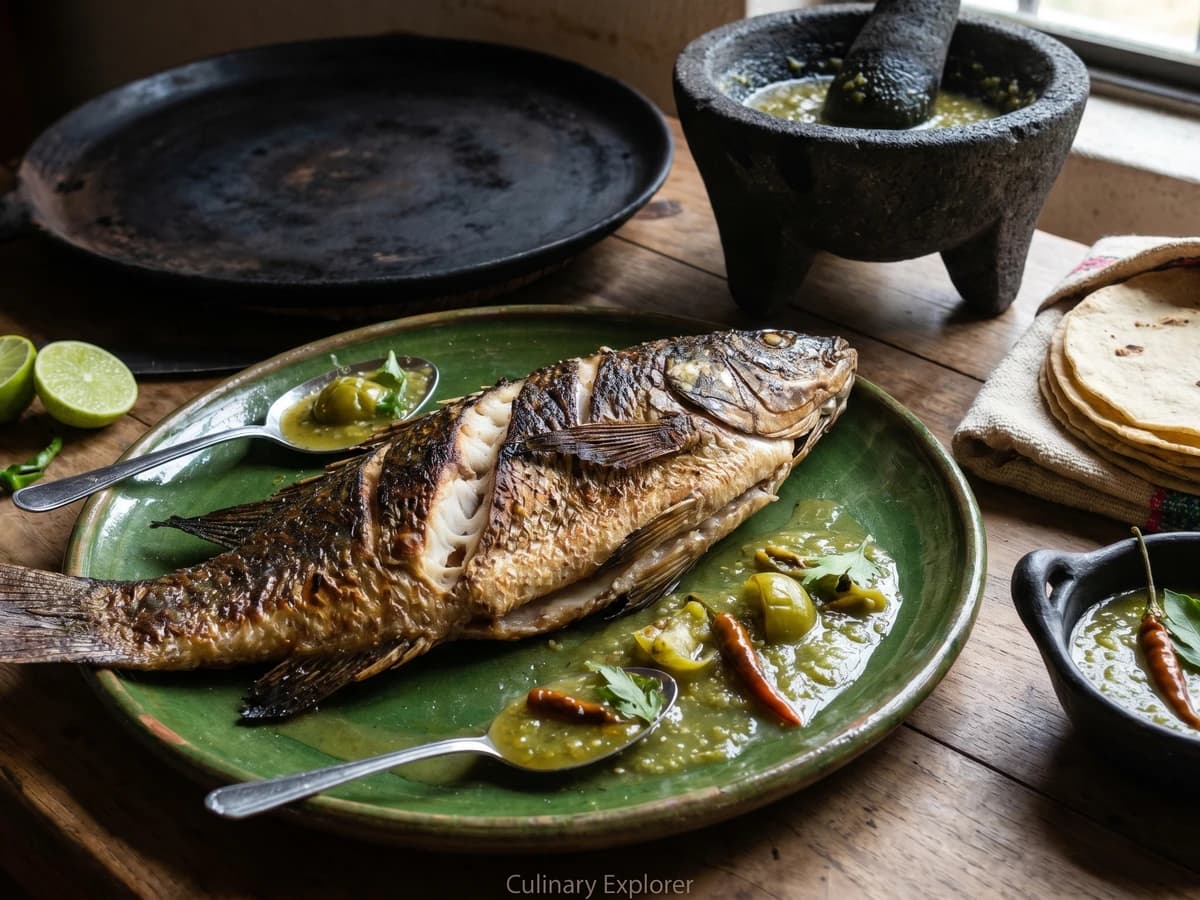
Michoacán's Lake Pátzcuaro acúmara, a whole kurucha from the lago tatemada on a comal de leña and served with chile perón atápakua, corn tortillas, and P'urhépecha discipline.
A cooking platform built around craft, culture, and the stories behind what we eat.
Created by
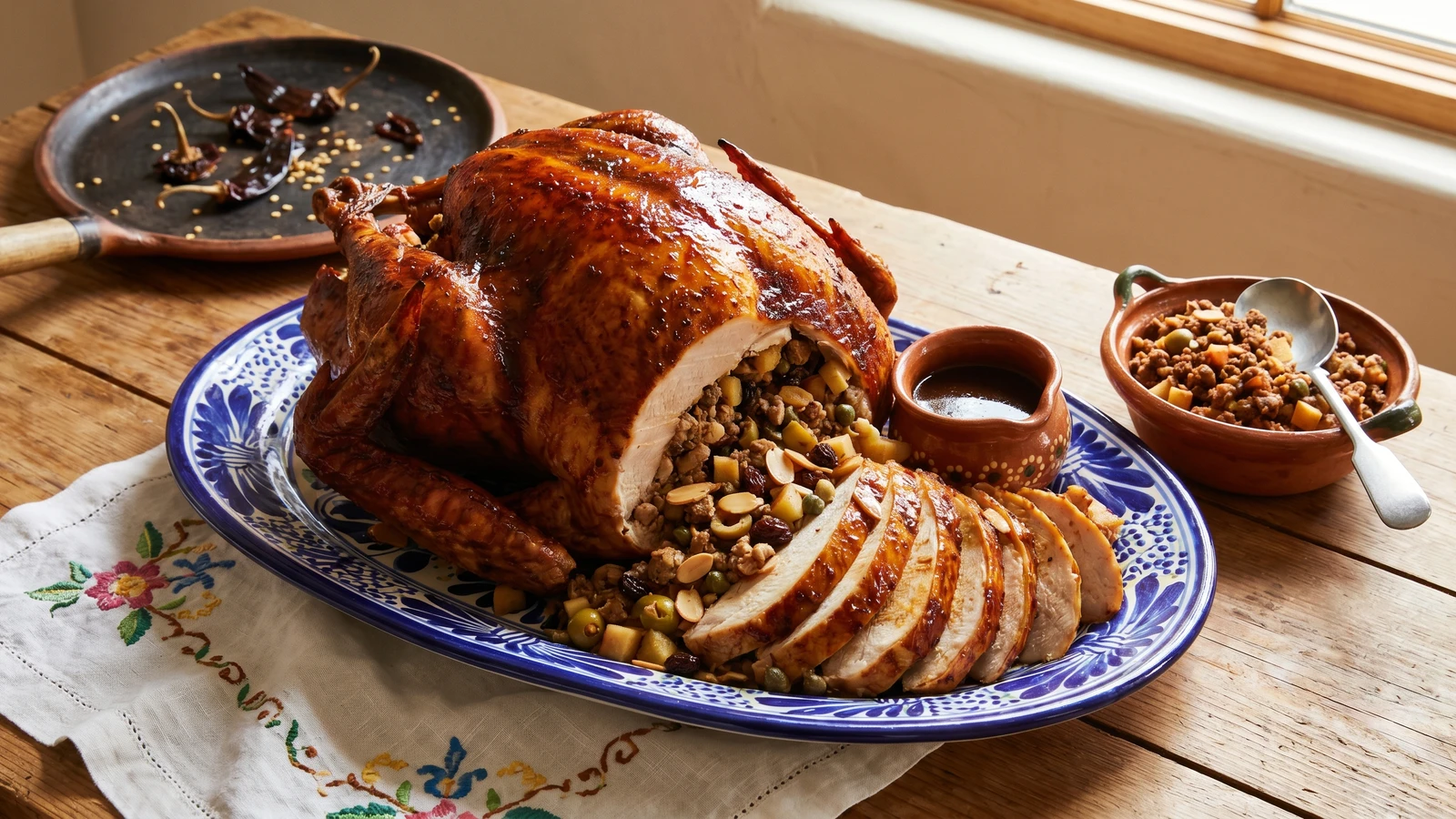
Puebla's Nochebuena turkey, filled with pork picadillo, almonds, raisins, olives, capers, and Zacatlán apple, then roasted under chile ancho adobo until the skin turns mahogany and the table goes quiet.
Puebla, the city in the central highlands, is where this pavo relleno belongs. Not the north, not the coast, not a supermarket holiday bird with a sweet glaze. This is Nochebuena cooking from the conventual Puebla of Santa Rosa, Santa Clara, and Santa Mónica, where women turned a native guajolote into a baroque table piece with the Spanish pantry.
The chile ancho is the Poblano signature here. Ancho is the dried poblano chile, dark, sweet, with raisin depth, and it gives the roast its color without making the dish hot. The stuffing is pork picadillo cooked in manteca, sharpened with capers and olives, softened with Zacatlán apple, raisins, almonds, canela, clove, and a thread of saffron. The Old World ingredients are not decoration. They are the bones of the dish.
I learned to respect this kind of turkey in Puebla's markets, where the chile vendors will correct you if you ask for any dried chile. They know which anchos are pliable, which almonds are fresh, which apples have enough acidity to survive the roast. The technique is patient: salt the bird the day before, fry the adobo, cook the picadillo dry, stuff loosely, baste with lard. No me vengas con atajos.
My mother from Jalisco did not make this turkey. In her notebook, under a Puebla clipping, she wrote: la manteca para que no se reseque. She was right. La manteca es el sabor, and on a Talavera platter with pan sauce dark around the edges, this is a Poblano Christmas bird. Saber cocinar es saber vivir.
The guajolote was domesticated in Mesoamerica long before 1521 and remained one of the native meats adopted into colonial kitchens after the Spanish conquest. Puebla's female convents, including Santa Rosa, Santa Clara, and Santa Mónica, became famous in the 17th and 18th centuries for combining local ingredients such as chile ancho and jitomate with Spanish-Mediterranean pantry goods: almonds, raisins, olives, capers, cinnamon, clove, wine, and saffron. Pavo relleno conventual belongs to that baroque Nochebuena lineage rather than to a single signed inventor; the cloister kitchen was an institution, not a modern restaurant with a chef's name on the door.
Quantity
1, 10 to 12 pounds
neck and giblets removed, neck reserved
Quantity
2 tablespoons
Quantity
1 teaspoon
Quantity
2 teaspoons
Quantity
8 tablespoons
divided
Quantity
6
stemmed and seeded
Quantity
2
stemmed and seeded
Quantity
3
roasted
Quantity
1 medium
half roasted for the adobo and half finely chopped for the picadillo
Quantity
8
5 roasted in their skins and 3 minced
Quantity
1 small
Quantity
3
Quantity
6
Quantity
1/4 cup
Quantity
3 cups
divided
Quantity
1 large pinch
crumbled into 1/4 cup warm broth
Quantity
1 1/2 pounds
Quantity
2
preferably Zacatlán apples, peeled, cored, and diced
Quantity
1/2 cup
Quantity
1/2 cup
toasted and chopped
Quantity
1/3 cup
chopped
Quantity
2 tablespoons
rinsed and chopped
Quantity
1/4 cup
Quantity
1/2 teaspoon
Quantity
1/8 teaspoon
Quantity
1/4 cup
finely diced
Quantity
1
Quantity
2 tablespoons
Quantity
for serving
| Ingredient | Quantity |
|---|---|
| whole turkeyneck and giblets removed, neck reserved | 1, 10 to 12 pounds |
| kosher salt | 2 tablespoons |
| freshly ground black pepper | 1 teaspoon |
| dried marjoram (mejorana) | 2 teaspoons |
| pork lard (manteca de cerdo)divided | 8 tablespoons |
| dried chile anchostemmed and seeded | 6 |
| dried chile guajillostemmed and seeded | 2 |
| ripe Roma jitomatesroasted | 3 |
| white onionhalf roasted for the adobo and half finely chopped for the picadillo | 1 medium |
| garlic cloves5 roasted in their skins and 3 minced | 8 |
| Mexican canela stick | 1 small |
| whole cloves | 3 |
| black peppercorns | 6 |
| vinagre de manzana | 1/4 cup |
| warm turkey or chicken brothdivided | 3 cups |
| saffron threadscrumbled into 1/4 cup warm broth | 1 large pinch |
| ground pork shoulder | 1 1/2 pounds |
| firm tart applespreferably Zacatlán apples, peeled, cored, and diced | 2 |
| raisins | 1/2 cup |
| blanched almondstoasted and chopped | 1/2 cup |
| pitted green oliveschopped | 1/3 cup |
| capersrinsed and chopped | 2 tablespoons |
| dry sherry | 1/4 cup |
| ground Mexican canela | 1/2 teaspoon |
| ground clove | 1/8 teaspoon |
| candied chilacayote or candied xoconostle (optional)finely diced | 1/4 cup |
| bay leaf | 1 |
| toasted sliced almonds (optional) | 2 tablespoons |
| warm corn tortillas or arroz blanco (optional) | for serving |
Pat the turkey dry inside and out. Mix the kosher salt, black pepper, and dried marjoram, then rub it over the skin and inside the cavity. Set the turkey on a rack over a sheet pan and refrigerate uncovered for 12 hours. This is not a trick. It seasons the meat all the way through and dries the skin so the manteca can do its work the next day.
Heat a dry comal over medium. Toast the chile ancho and chile guajillo one at a time, about 20 to 30 seconds per side, just until they darken slightly and smell deep and sweet. Do not blacken them. Cover with hot water and let them soften for 20 minutes. Ancho is the Poblano chile here, sweet and dark, not a source of reckless heat.
Toast the canela stick, whole cloves, and peppercorns on the same comal for 30 seconds, then grind them in a molcajete or spice grinder. Peel the roasted garlic. Drain the softened chiles and blend them with the roasted jitomates, roasted half onion, roasted garlic, ground spices, vinagre de manzana, 1 cup broth, and the saffron broth. Blend until completely smooth. Strain it if your blender leaves skins behind. A convent sauce should be deep, not gritty.
Melt 2 tablespoons manteca in a heavy skillet over medium heat. Add the blended adobo carefully because it will jump. Cook 8 to 10 minutes, stirring often, until the color darkens and the fat begins to separate at the edge. This frying is where the chile changes from raw paste to sauce. Skip it and the turkey will taste unfinished. Así se hace y punto.
Melt 2 tablespoons manteca in a wide cazuela or skillet. Add the chopped onion and cook until translucent, then add the minced garlic and ground pork shoulder. Cook until the pork loses its raw color and the fat begins to sizzle clearly in the pan. Add the diced apples, raisins, almonds, olives, capers, sherry, ground canela, ground clove, candied chilacayote if using, and 1/2 cup of broth. Cook 12 to 15 minutes, stirring, until the mixture is moist but not soupy. Cool completely before stuffing the turkey.
Take the turkey from the refrigerator 1 hour before roasting. Heat the oven to 425F. Mix 4 tablespoons softened manteca with half of the fried adobo. Loosen the skin over the breast and thighs with your fingers, then rub some of the adobo manteca under the skin and the rest over the outside. Work carefully. Torn skin dries out. La manteca es el sabor.
Spoon the cooled picadillo loosely into the neck and body cavities. Do not pack it like cement. The heat has to move through the filling, and the center of the stuffing must reach 165F before it is served. Tie the legs with kitchen twine and tuck the wings under the body. Put any extra picadillo in a small larded cazuela, cover it, and bake it during the last hour of roasting.
Set the reserved turkey neck, remaining half onion, bay leaf, 1 1/2 cups broth, and any remaining plain sherry splash in the roasting pan. Place the turkey breast side up on a rack. Lay a piece of clean cheesecloth or manta de cielo soaked with a little melted manteca over the breast. Roast 25 minutes at 425F, then lower the oven to 325F. Baste every 35 to 40 minutes with pan juices, not every ten minutes. Opening the oven constantly is how impatient cooks dry out good birds.
After about 3 hours total roasting time, start checking temperature. Remove the cloth, brush the turkey with more reserved adobo, and continue roasting until the skin turns glossy mahogany. The breast should reach 160F before resting, the thigh should reach at least 170F, and the stuffing must reach 165F. If the turkey is done before the stuffing is, spoon the stuffing into a cazuela and bake it until it reaches 165F. No me vengas con atajos when safety is involved.
Transfer the turkey to a board and rest it for 30 minutes. Strain the pan juices into a saucepan, skim only the excess fat, and leave enough for shine and flavor. Add the remaining fried adobo and simmer 8 to 10 minutes until the sauce coats a spoon. Taste for salt and a small splash of vinagre de manzana if it needs lift. The sauce should taste of chile ancho, pork fat, roasted bird, and the old spice box.
Carve the turkey and arrange it on a large Talavera platter with spoonfuls of picadillo beside it. Nap the meat with the chile ancho pan sauce and scatter toasted sliced almonds over the top. Serve with warm corn tortillas or arroz blanco. This is Puebla's Nochebuena table, baroque but practical, sweet and savory in the same bite. Cada estado, su propia cocina.
1 serving (about 355g)
Culinary guides, cultural storytelling, and the editorial depth that makes cooking meaningful.
Discover Culinary ExplorerChef Lupita
Michoacán's Lake Pátzcuaro acúmara, a whole kurucha from the lago tatemada on a comal de leña and served with chile perón atápakua, corn tortillas, and P'urhépecha discipline.

Chef Lupita
Puebla's weekday adobo of pork shoulder braised in a thick guajillo and ancho sauce sharpened with vinegar, cumin, and clove. The deep red of a market spice stall, the dish a poblana cooks without thinking.

Chef Lupita
Loreto's pit-roasted clams, planted hinge-up in beach sand and tatemadas under a fast fire of dried romerillo brush, the resinous Baja desert shrub that gives this dish its smoke.

Chef Lupita
Oaxaca's eighth mole, the silky, almond-and-cinnamon almendrado, served over poached chicken. Mild, sweet, restrained, and a quiet rebuttal to anyone who thinks Mexican food has to be hot to be Mexican.