
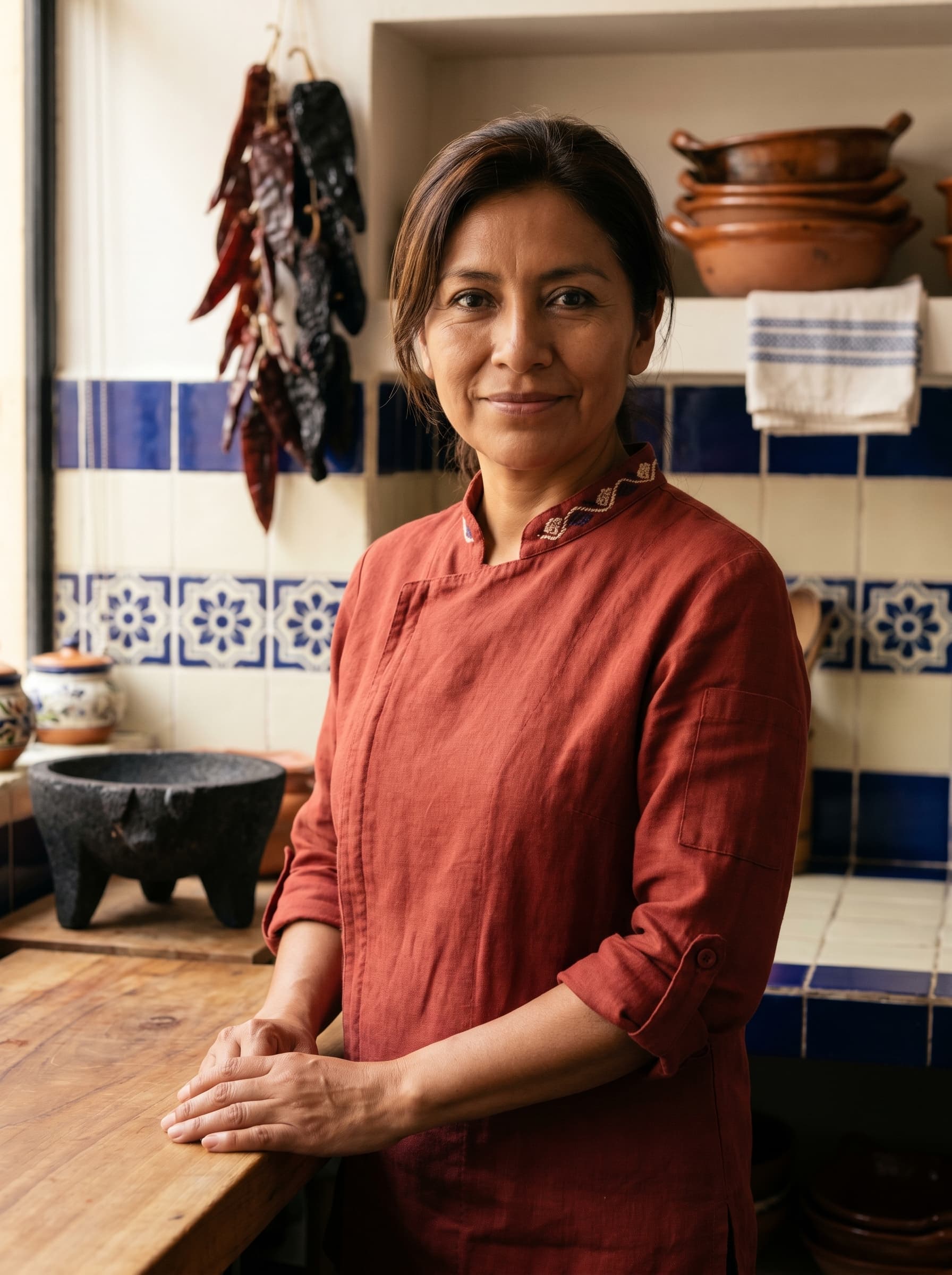
Chef Lupita
Sopa Azteca (Sopa de Tortilla con Pasilla)
Ciudad de México's smoky pasilla-and-tomato broth, finished at the table with crispy tortilla strips, cubes of queso panela, avocado, crema, and a crackling ring of fried pasilla on top.
Updated May 25, 2026
The caldo grammar of the central Mexican highlands. Tomato-pasilla sopa azteca, the chipotle caldo tlalpeño of CDMX, mole de olla with xoconostle, pozole verde poblano thickened with pepitas, wild- mushroom sopa de hongos from Tlaxcala, consomé de barbacoa from a Hidalgo pit, and the forgotten tlatlapas, sopa de médula and sopa de guías de calabaza that anchor this repertoire deeper than any tourist menu admits.
A cooking platform built around craft, culture, and the stories behind what we eat.
Chef Lupita
Ciudad de México's smoky pasilla-and-tomato broth, finished at the table with crispy tortilla strips, cubes of queso panela, avocado, crema, and a crackling ring of fried pasilla on top.
Chef Lupita
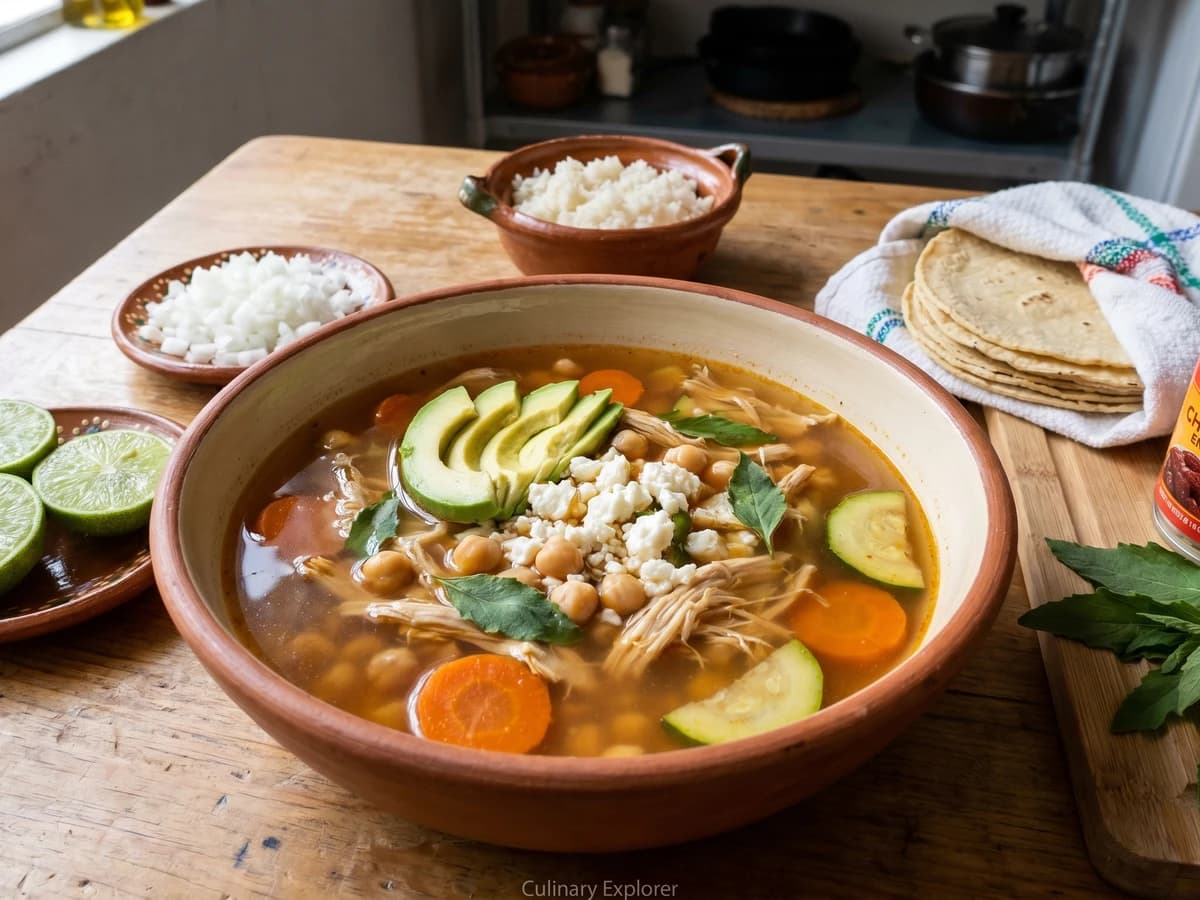
Born in Tlalpan in the south of Ciudad de México, a chicken caldo built on a chipotle-bloomed broth with garbanzo, zanahoria, and epazote, finished with avocado, queso fresco, and a hard squeeze of lime.
Chef Lupita
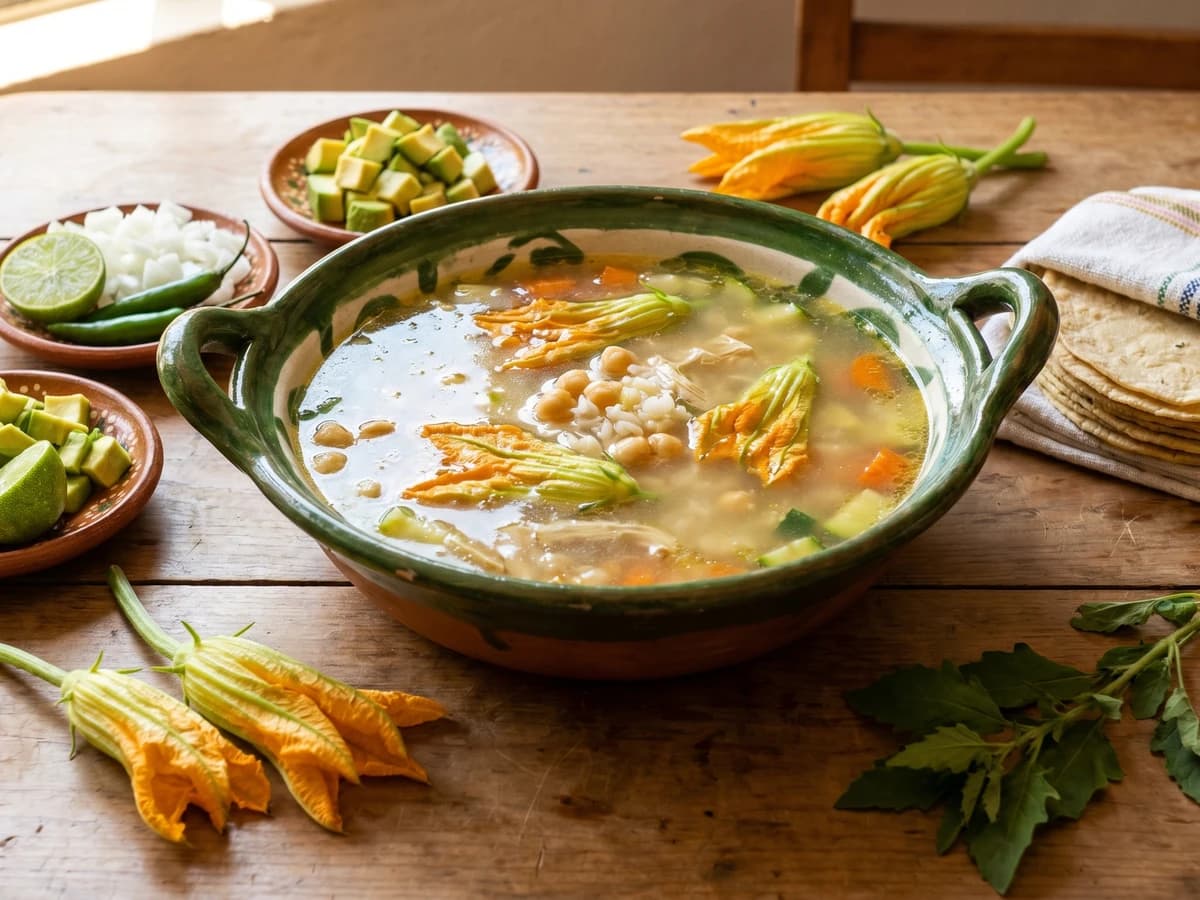
Ciudad de México's quiet wedding caldo: a clear chicken broth strewn with flor de calabaza, garbanzo, and rice, finished with aguacate and lime at the table.

Chef Lupita
Tlaxcala's yellow fava bean soup, slow-cooked until the habas collapse into a golden caldo, lifted with tomate, cilantro, and dried hierbabuena. The Lenten pot of the central highlands.

Chef Lupita
Tlaxcala and Morelos foragers pull wild hongos from the pine forests when the rains come. Seared in lard with guajillo strips and finished with epazote, loosened with a real chicken caldo.

Chef Lupita
Tlaxcala's cornfield in a clay bowl: tender elote, calabacita, wild hongos, and flor de calabaza in a clean caldo perfumed with epazote. A soup built from everything the milpa gave that morning.

Chef Lupita
Puebla's late-summer caldo built around the squash blossom itself, simmered with calabacita, elote, rajas de poblano, and epazote. The lightest soup in the central highlands and the one that demands the most respect.
Chef Lupita
Hidalgo's slow-simmered chambarete broth with garbanzo, root vegetables, and the sour prickly pear that gives this caldo its name. An Altiplano levanta-muertos that cuts through cold and hangover with equal authority.

Chef Lupita
Ciudad de Mexico's everyday sopa aguada, toasted fideo simmered in a charred roma-tomato caldo and finished with crema, queso fresco, and avocado. The first plate of every comida corrida in the capital.
Chef Lupita
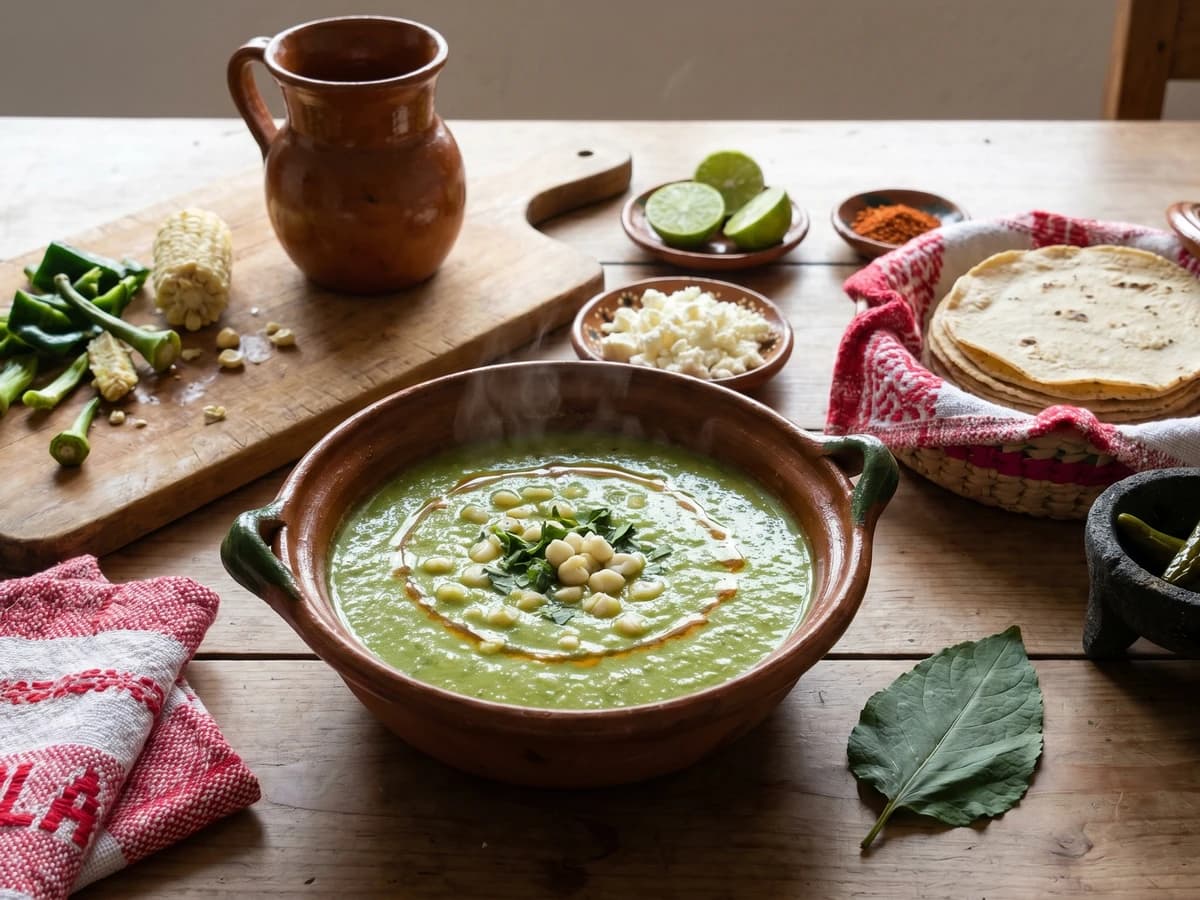
Puebla's pre-Hispanic spoon, a masa-thickened green broth built on roasted chile poblano, epazote, hoja santa, and the milky sweetness of fresh elote. Eaten in clay jarros at festejos and in the street.

Chef Lupita
Hidalgo's Sunday morning consomé from the drippings of lamb steamed en penca de maguey, fortified with garbanzo and arroz, finished at the table with cebolla, cilantro, lime, and salsa borracha.

Chef Lupita
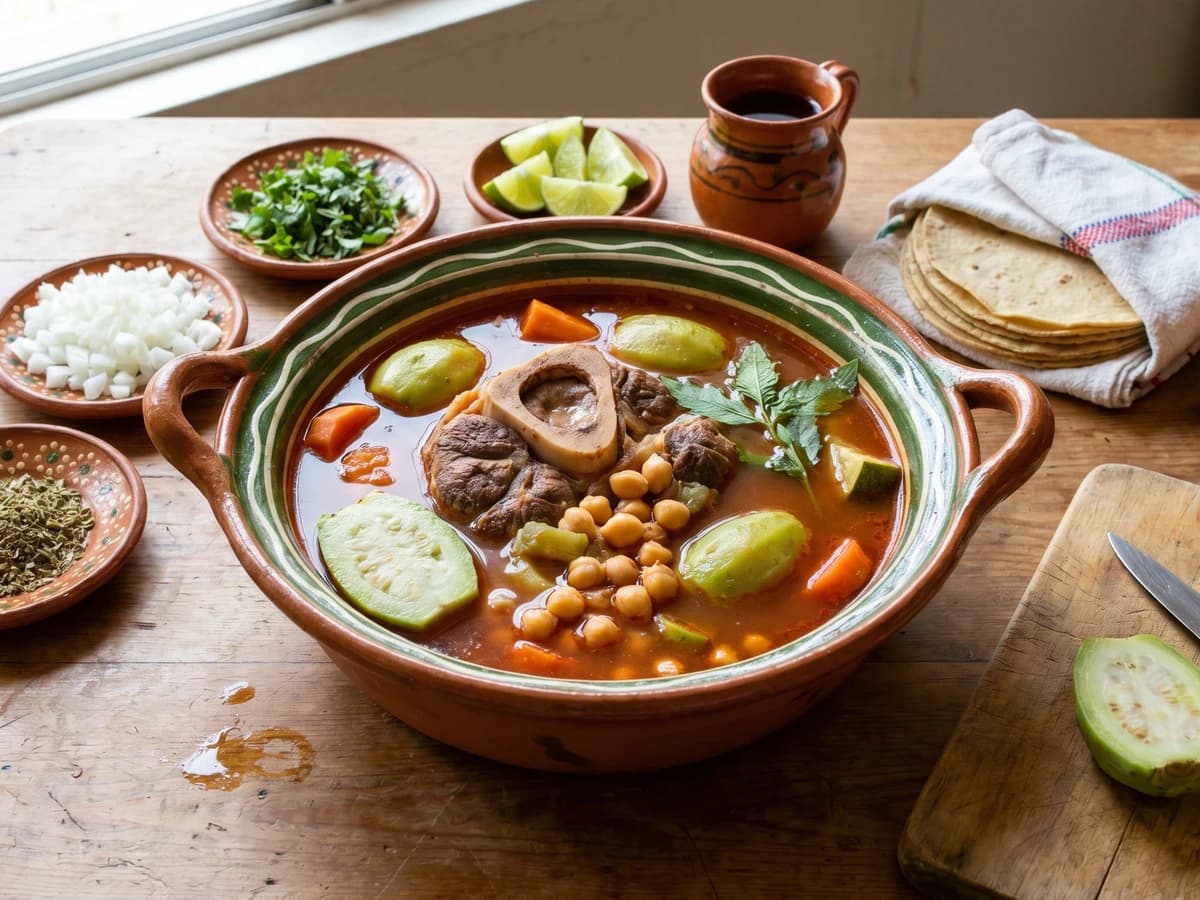
A Mexico City cantina classic from Magdalena Atlitic, beef marrow bones simmered in a smoky chipotle-tomato broth with nopales and epazote. The chilanga levanta-muertos.

Chef Lupita
Central Mexico's meatball caldo, with beef and pork albóndigas hiding a wedge of hard-boiled egg, simmered in a tomato-chile broth thick with chayote, calabacita, and the pungent green snap of fresh epazote.

Chef Lupita
Puebla's colonial lentil stew, simmered with charred tomate, tocino, and warm spice, then crowned with fried plátano macho and charred pineapple. Sweet-savory, baroque, the kitchen of the central highlands on a single spoon.

Chef Lupita
Tlaxcala's pre-Hispanic bean soup, made by toasting black beans on the comal until they crack open, grinding them to powder, and cooking them down with guajillo, pasilla, and epazote into a velvety smoky caldo.

Chef Lupita
Morelos in a bowl. Squash vines, young corn, and calabacitas simmered with chochoyotes, the dimpled masa dumplings that milpa cooks have been slipping into a caldo since long before the soup had a name.

Chef Lupita
Hidalgo's ceremonial wedding broth from the Altiplano: turkey necks slow-simmered with fresh poleo, finished with rice and a fried base of toasted guajillo and ancho. The caldo that anchors a Hidalguense celebration.

Chef Lupita
Puebla's velvet-green crema of roasted chile poblano, sweet corn, and crema mexicana, finished with cubes of queso panela that soften in the bowl without melting away.

Chef Lupita
Ciudad de México's corn-truffle crema, huitlacoche sweated with cebolla, ajo, and epazote in lard, blended into a slate-grey soup, and finished with a swirl of cold crema mexicana.

Chef Lupita
Puebla's August soup of squash blossoms wilted in butter with white onion and fresh elote, blended with caldo de pollo and crema mexicana. Whole petals saved back as garnish. Not sweet, not fussy, and only as good as the flowers you bring home from the mercado.

Chef Lupita
Puebla's cream of the milpa, where the season's sweetest elote tierno meets the smoky char of chile poblano. A soup that carries the whole logic of central Mexican cooking in one bowl.

Chef Lupita
Ciudad de Mexico and Puebla's deep-bodied beef stew, built on toasted guajillo and pasilla, slow-simmered shank, summer vegetables, and the sour bite of xoconostle. Thinner than mole, deeper than caldo, exactly itself.

Chef Lupita
Puebla's pozole verde, built on charred tomatillos, toasted pepitas, hoja santa, and cacahuazintle hominy, cooked into a green broth that is brighter than rojo and just as deep.

Chef Lupita
Puebla's tablecloth-stainer, a brick-red mole of ancho and pasilla simmered with pork, pineapple, plantain, and apple. Smoky chile against tropical fruit, finished with a quiet sweetness that the chile holds in check.

Chef Lupita
Morelos's weekday guisado of pork, chayote, ejote, and calabacita simmered in a thin mole of guajillo and pasilla, thickened with toasted tortilla and masa. The everyday food of the central highlands.

Chef Lupita
Ciudad de Mexico's Sunday pancita, a clear caldo of slow-simmered tripe and pata perfumed with epazote and finished with arroz, dressed at the table with chile piquin, cebolla, and limon.
Culinary guides, cultural storytelling, and the editorial depth that makes cooking meaningful.
Discover Culinary ExplorerChef Lupita is a fictional culinary guide to Regional Mexican Cuisine, written with the assistance of AI.