
Chef Lupita
Aguascalientes Beef Tongue Pozole (Pozole de Lengua)
Aguascalientes' Bajio pozole de lengua, built with cacahuazintle hominy, tender beef tongue, chile ancho and guajillo, with xoconostle brightness and table garnishes.
A cooking platform built around craft, culture, and the stories behind what we eat.
Created by
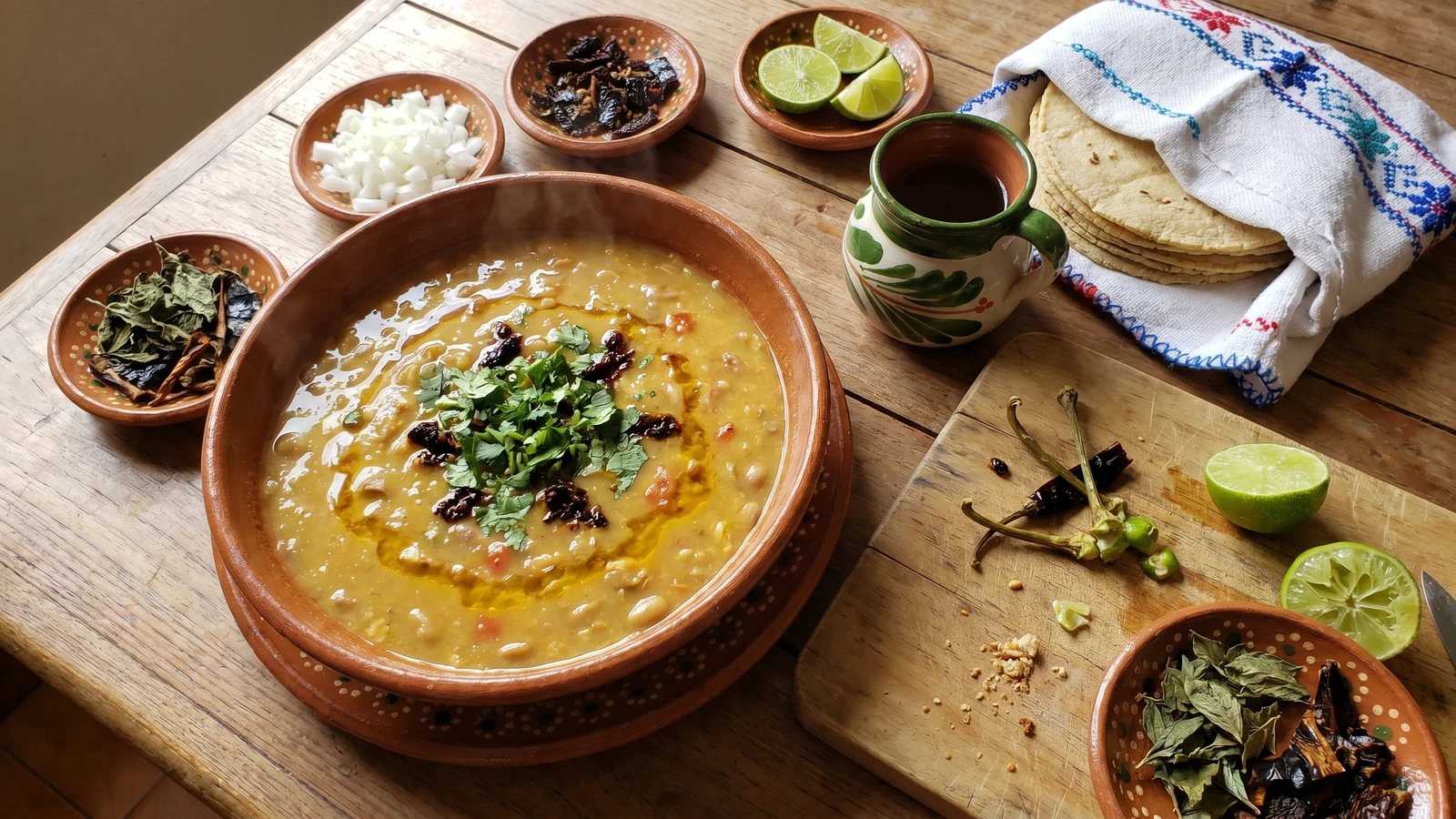
Tlaxcala's yellow fava bean soup, slow-cooked until the habas collapse into a golden caldo, lifted with tomate, cilantro, and dried hierbabuena. The Lenten pot of the central highlands.
This soup is from Tlaxcala. From the small towns of the altiplano where the volcanic soil grows fava beans the color of old gold, and where the women dry them for the months when nothing else is in the field. It crosses into Puebla, into Tlaxco, into the rural cocinas of the central highlands, but Tlaxcala is where it lives most stubbornly. Cada estado, su propia cocina.
The habas have to be the yellow peeled ones. Habas peladas amarillas. Not green, not skin-on. The yellow ones are what collapse into the broth and give the soup its color. If you use the skin-on kind, you will spend an hour peeling each bean before you can start, and the soup will still look wrong. Ask the vendor at the mercado specifically. They will know what you want.
The chile is pasilla. Not ancho, not guajillo. Pasilla is the long, dark, wrinkled chile with the smoky-raisin perfume, and it is the chile of the central highlands. The cooks of Tlaxcala have used it in their bean pots since long before tomate arrived from the south to lighten the broth. The hierbabuena is what carries the soup into Lent, into Holy Week, into the weekday dinners of a region that has never needed meat to eat well.
My mother kept a page in her notebook for this soup, copied from a señora she met at a pilgrimage to the Basilica de Ocotlan in Tlaxcala in 1979. The note in the margin reads: 'mas hierbabuena de lo que crees, menos sal de lo que crees.' More hierbabuena than you think, less salt than you think. The señora was right. Saber cocinar es saber vivir.
The fava bean (haba) is not native to Mexico. It arrived with Spanish settlers in the 16th century and was rapidly adopted in the temperate highlands of Tlaxcala, Puebla, Hidalgo, and the State of Mexico, where the cool altitude suited its cultivation better than the lowland milpa system. By the 17th century, dried habas had become a staple of indigenous and mestizo kitchens in the altiplano, prized because they stored through the dry season and the Lenten fasts when the Catholic calendar forbade meat. Sopa de habas became codified as a Lenten dish across the central highlands, with each state developing its own marker: Tlaxcala's version is distinguished by the use of pasilla and dried hierbabuena, while Pueblan versions often incorporate nopal or xoconostle, and the Hidalgo version leans on chile de arbol and more onion.
Quantity
1 pound
the yellow ones, already peeled
Quantity
3 tablespoons
Quantity
1 medium
finely chopped
Quantity
4
finely chopped
Quantity
1 pound
cored and chopped
Quantity
1
stemmed and seeded
Quantity
1 sprig
Quantity
1/4 cup
finely chopped
Quantity
1 tablespoon
Quantity
8 cups, plus more as needed
Quantity
1 tablespoon, plus more to taste
Quantity
for serving
Quantity
for serving
Quantity
for serving
Quantity
for serving
| Ingredient | Quantity |
|---|---|
| dried peeled fava beans (habas peladas)the yellow ones, already peeled | 1 pound |
| manteca de cerdo (pork lard) | 3 tablespoons |
| white onionfinely chopped | 1 medium |
| garlic clovesfinely chopped | 4 |
| ripe tomate (Roma or guaje)cored and chopped | 1 pound |
| chile pasillastemmed and seeded | 1 |
| fresh cilantro sprig (for the pot) | 1 sprig |
| fresh cilantro for finishingfinely chopped | 1/4 cup |
| dried hierbabuena (Mexican spearmint) | 1 tablespoon |
| water | 8 cups, plus more as needed |
| kosher salt | 1 tablespoon, plus more to taste |
| lime wedges (optional) | for serving |
| hand-pressed corn tortillas (optional) | for serving |
| chile pasilla, toasted and crumbled (optional) | for serving |
| diced raw white onion (optional) | for serving |
Pour the peeled fava beans into a colander and rinse them under cold water. Pick through and pull out any darkened ones or stray skins. Transfer to a bowl, cover with cold water by three inches, and soak for at least 4 hours or overnight. These are the yellow peeled habas, not the green skin-on kind. You want them to collapse into the broth, not hold their shape. If you can only find unpeeled, you will need to peel each one after soaking. Tedious work, but the soup needs it.
Drain the soaked beans and transfer them to a heavy 6-quart olla or stockpot. Cover with the 8 cups of fresh water. Bring to a simmer over medium heat. Skim any foam that rises in the first ten minutes. Reduce the heat to low and cook, partially covered, for about 1 hour and 15 minutes, until the habas have broken down completely and the broth has turned a soft golden yellow. Stir every now and then so nothing sticks to the bottom. The soup writes itself from the bean. If the bean is undercooked, the whole pot is wrong.
While the habas cook, heat a dry comal over medium. Press the chile pasilla flat with a spatula and toast it for about 15 seconds per side. It will puff and release its smoky perfume. Pull it off the comal the moment you smell it. Burned pasilla is bitter and there is no recovering from it. Set the chile aside. You will use part of it in the sofrito and reserve part for the table.
Melt the manteca de cerdo in a heavy skillet over medium heat. La manteca es el sabor. Add the chopped onion and cook until it turns translucent and soft at the edges, about 6 minutes. Add the garlic and cook another minute, just until you can smell it. Add the chopped tomate and cook, stirring often, until the tomate releases its juice and reduces into a thick, brick-colored paste, about 12 minutes. Tear half the toasted pasilla into the pan and let it soften in the tomate for the last two minutes. This is the base. Do not skip the reduction. Watery tomate makes watery soup.
Once the habas have broken down and the broth has gone yellow, stir the entire sofrito into the olla. Use a ladle of the hot broth to deglaze the skillet and pour that in too. Nothing wasted. Add the sprig of cilantro, the dried hierbabuena rubbed between your palms to wake it up, and the salt. Simmer everything together for another 25 to 30 minutes, partially covered. The soup will thicken slightly and the flavors will settle into one another. Taste for salt at the end, never at the beginning. Habas drink salt as they cook.
Fish out the cilantro sprig and discard. Stir in the freshly chopped cilantro right at the end. Ladle the soup into clay cuencos. Set the lime wedges, the crumbled toasted pasilla, the diced raw onion, and warm tortillas on the table. Each person finishes their own bowl. A squeeze of lime cuts the richness of the bean. A pinch of toasted pasilla adds smoke. The tortilla is the spoon. Así se hace y punto.
1 serving (about 400g)
Culinary guides, cultural storytelling, and the editorial depth that makes cooking meaningful.
Discover Culinary ExplorerChef Lupita
Aguascalientes' Bajio pozole de lengua, built with cacahuazintle hominy, tender beef tongue, chile ancho and guajillo, with xoconostle brightness and table garnishes.

Chef Lupita
Veracruz's Gulf coast rice from Alvarado, built with seafood stock, tomato, chile chipotle, epazote, shrimp, fish, jaiba, and pulpo, served loose and brothy in a clay cazuela.

Chef Lupita
Costa Chica's wet salt-beef stew, built from chile costeño, guajillo, tomato, manteca, yuca, plantain, and masa dumplings, the ranching pot of Cuajinicuilapa and Pinotepa.

Chef Lupita
Michoacán's P'urhépecha atápakua is a masa-thickened sauce and stew at once, built with pork, chile guajillo, and hierbabuena added only at the end.