Chef Joost
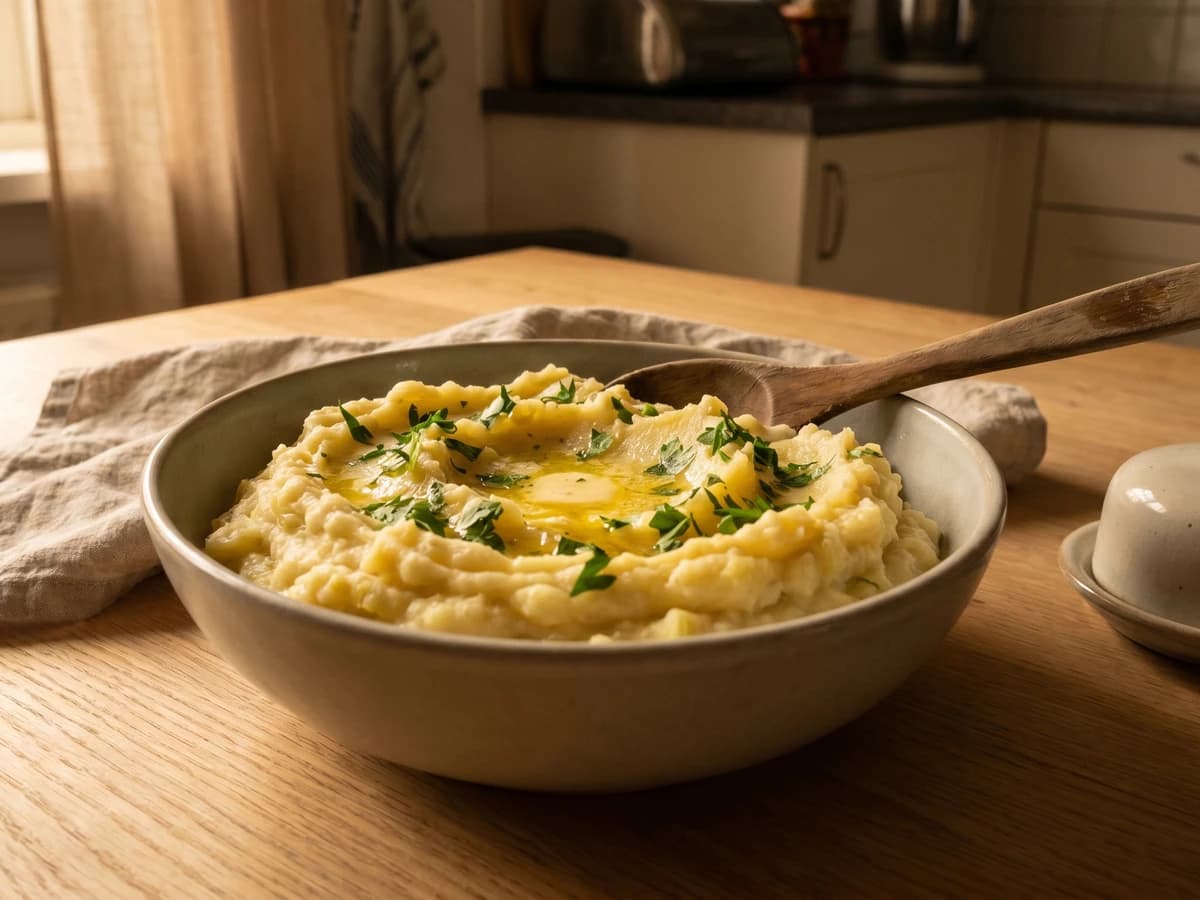
Preistamppot (Dutch Leek Mash)
The mildest stamppot in the Dutch winter kitchen: potatoes, leeks, butter, and patience, mashed into one honest pot that tastes better than its modest name admits.

Updated June 12, 2026
The country's defining winter main: potato mashed through a vegetable and crowned with rookworst or jus. Boerenkool, hutspot (tied to the 1574 Relief of Leiden), zuurkool, raw andijvie stirred through hot mash, and hete bliksem ("hot lightning") with apple. The name means "mashed pot," and every version is its own dish. Plus the oven-baked schotels and the forgotten provincial one-pots that warmed Dutch winters before central heating did.
A cooking platform built around craft, culture, and the stories behind what we eat.
Chef Joost
The mildest stamppot in the Dutch winter kitchen: potatoes, leeks, butter, and patience, mashed into one honest pot that tastes better than its modest name admits.

Chef Joost
Sour cabbage, spiced gehakt, and potato mash go into the oven, and the old winter stamppot returns with a golden roof and a little Sunday ambition.

Chef Joost
The name means shaken pot, and this oven version keeps the old orange mash while tucking spiced minced beef underneath and old Gouda on top.

Chef Joost
The name says it plainly: sipel is Frisian for onion, stamp is the mash, and together they make the northern weeknight dish a beppe knew by heart.

Chef Joost
The name means a shaken pot, and inside it is a siege, a harvest, and four centuries of Dutch winters: carrots, onions, and potatoes mashed into plain-looking history.
Chef Joost
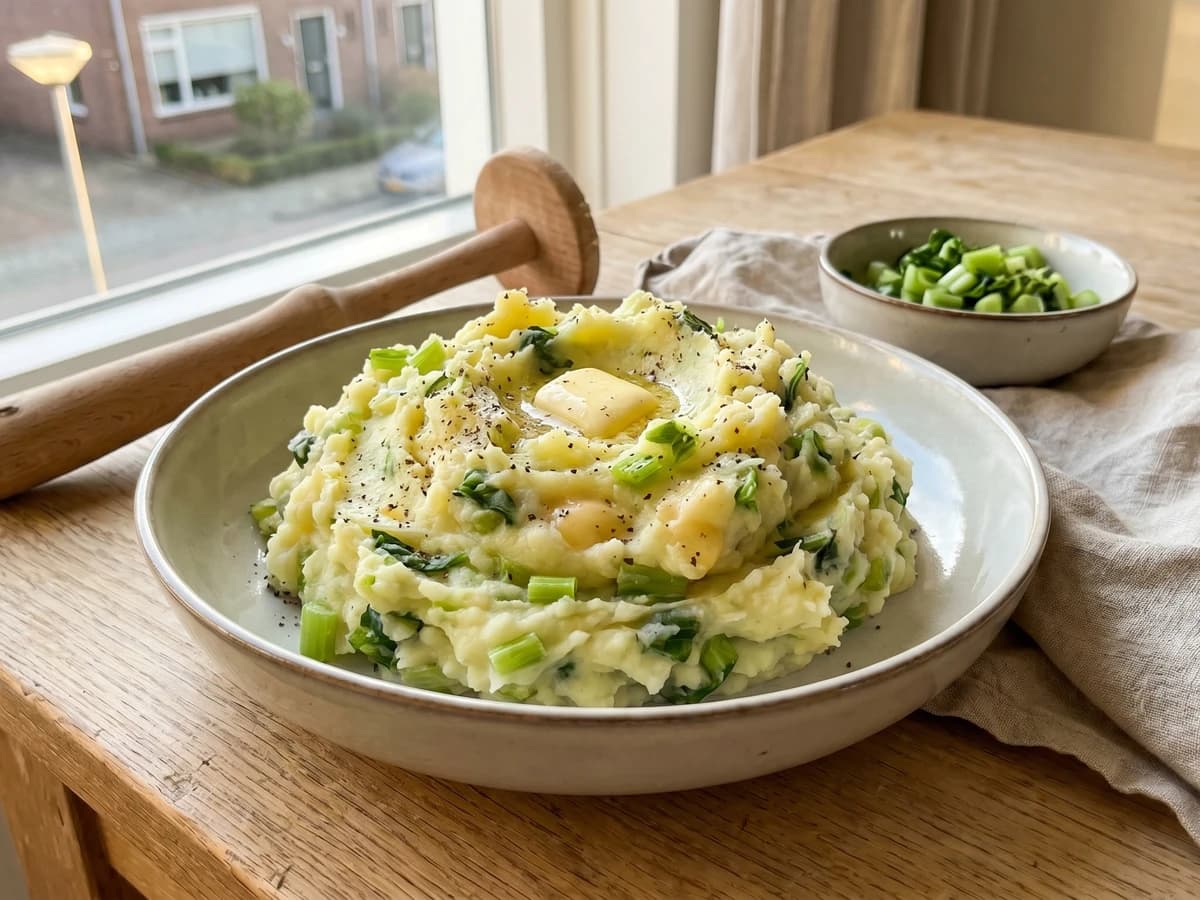
The lightest member of the stamppot family: young turnip stems stirred raw through hot potato, a spring allotment supper that tastes like the garden woke first.
Chef Joost
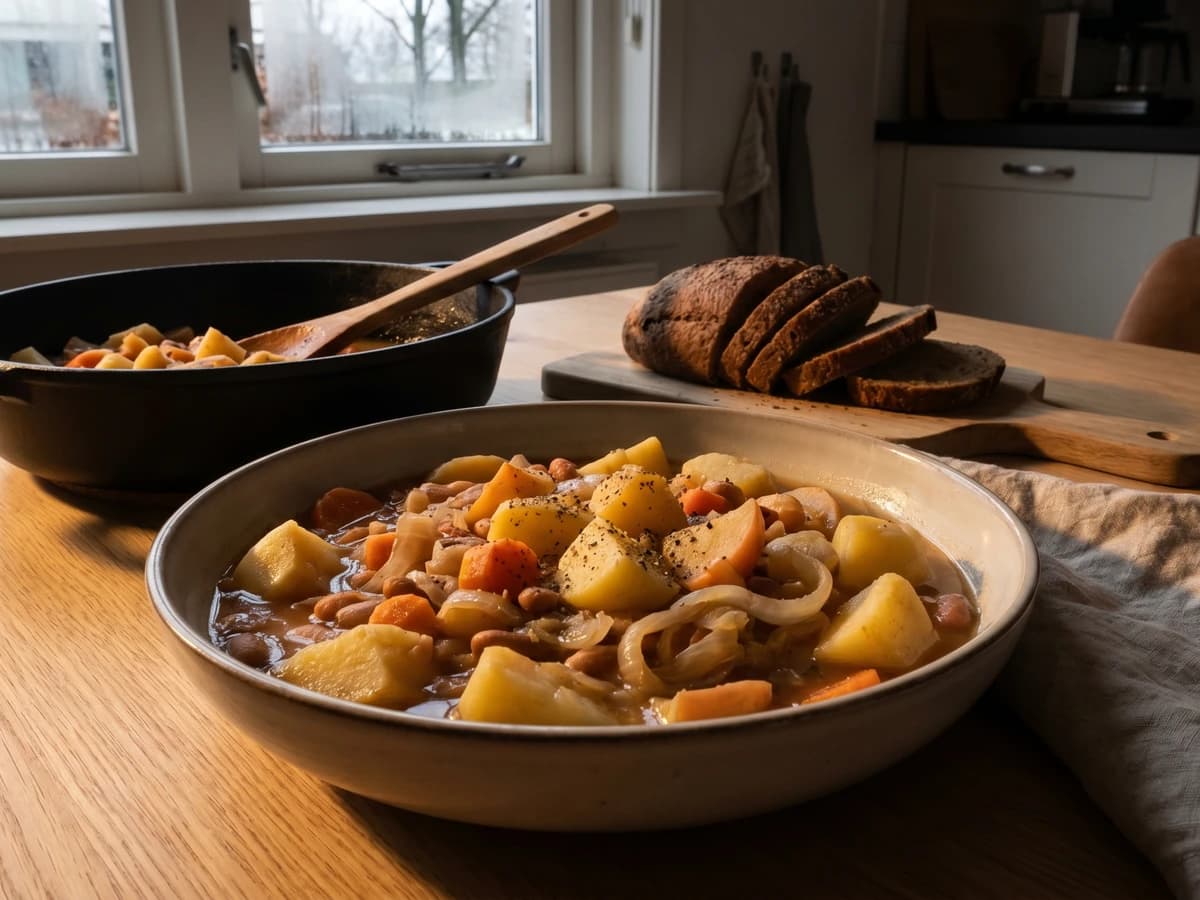
Vijfschaft counts the winter larder on one hand: potatoes, carrots, onions, apples, and brown beans, the Utrecht supper that turns five plain things into one generous pan.

Chef Joost
The name warns you before the spoon does: Hete Bliksem is potato mashed with apple and pear, a humble Dutch supper that hides its heat like a family secret.

Chef Joost
Soft winter leeks, sliced potato, and the clove-studded cheese of Friesland: a weeknight bake that carries the old spice routes into a very ordinary Dutch oven dish.

Chef Joost
Spruitjesstamppot is the winter mash that redeems the vegetable Dutch children feared: roasted little sprouts, floury potatoes, red onion, and crisp bacon, pounded together with just enough butter to make peace.

Chef Joost
Red cabbage, apple, clove, and potato meet in one honest winter mash, the colour of a stormy Dutch evening and the taste of frugality made generous.

Chef Joost
The Dutch trick is not cooking the andijvie at all: let the hot potatoes do the work, so the greens soften, stay bright, and keep their clean bitter bite.

Chef Joost
The name means peck in the little pot: a Zeeland winter supper of potatoes, stored vegetables, and one egg per person, proving poverty fare can still set a table.

Chef Joost
The name means farmer's cabbage mash, and there it is: winter kale, floury potatoes, smoked sausage, and the Dutch talent for making severity generous.

Chef Joost
A winter cellar dish with a sharp tongue: zuurkool folded through soft potatoes, rich onion butter, and mustard, proving the Dutch larder knew preservation could still taste bright.
Culinary guides, cultural storytelling, and the editorial depth that makes cooking meaningful.
Discover Culinary ExplorerChef Joost is a fictional culinary guide to Dutch Regional Cuisine, written with the assistance of AI.