
Chef Joost
Aardappelschotel met Gehakt
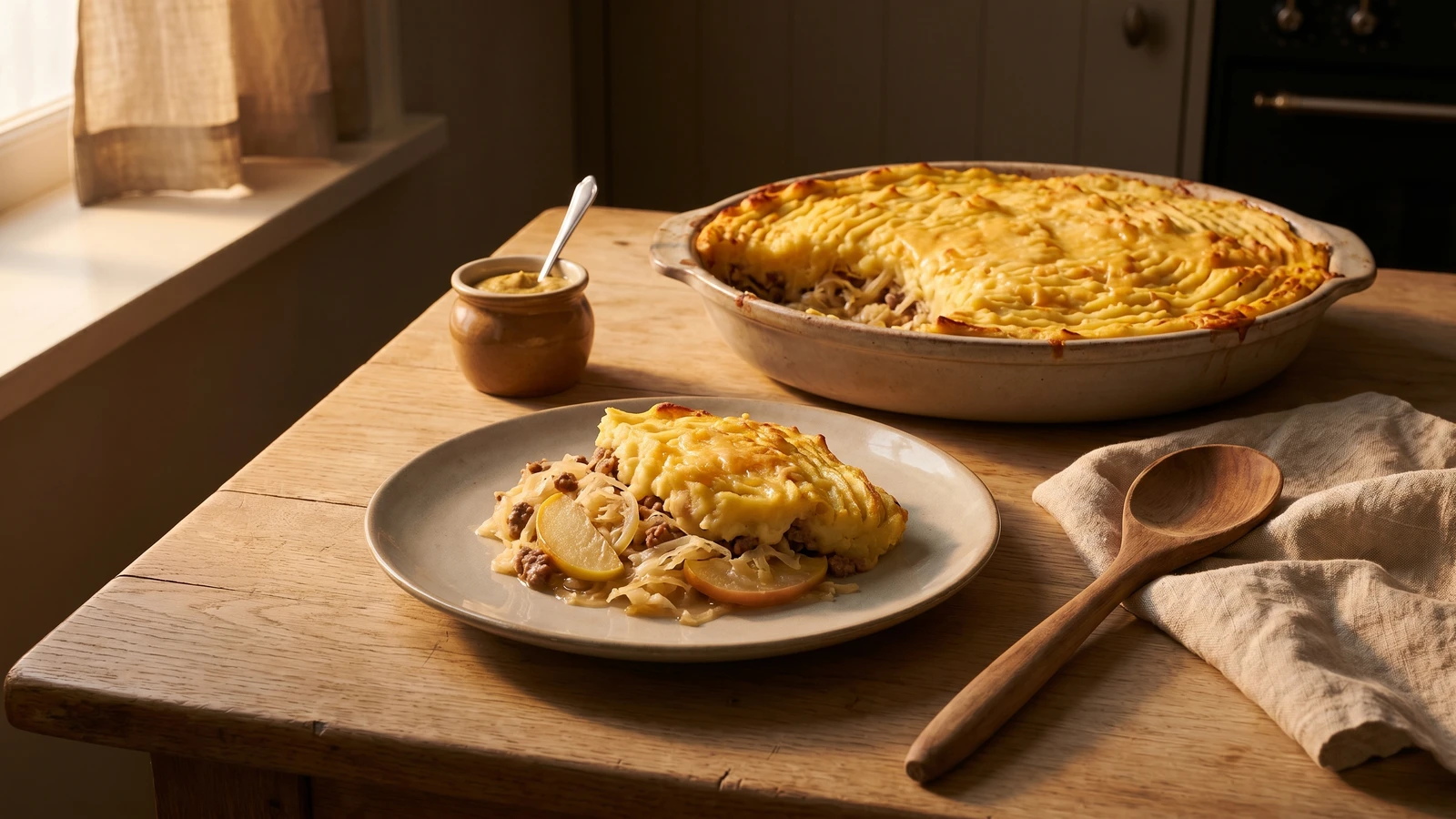
A plain name for a quietly clever dish: fresh mince, sweet fried onion, nutmeg, and mashed potato baked until the top goes golden and the table goes silent.
A cooking platform built around craft, culture, and the stories behind what we eat.
Created by
Sour cabbage, spiced gehakt, and potato mash go into the oven, and the old winter stamppot returns with a golden roof and a little Sunday ambition.
In my grandmother's second notebook, the recipes that mattered most were often the least poetic on the page. Zuurkoolovenschotel: sour cabbage oven dish. There it was, blunt as a shopping list, and all the better for it. The name already tells you the Dutch trick: take something sharp from the preserving jar, something soft from the potato pot, something browned from the pan, and let the oven make peace between them.
But let me tell you a secret. This is not an ancient farmhouse relic, however much it smells like one. The older dish is zuurkoolstamppot, sauerkraut mashed with potatoes, the winter food of storage cellars and hard weather. The oven version belongs to the Dutch home kitchen that got a reliable oven and immediately began putting roofs on things: cheese on top, apples tucked underneath, minced meat spiced with nutmeg because the VOC never really left the cupboard.
The method is plain, so don't complicate it. Rinse the zuurkool only if it bites harder than you like; its sourness is the spine of the dish. Brown the gehakt, minced meat, until it gives you dark little edges, because pale meat under potato is a sad administrative error. Mash the potatoes with enough butter and milk to spread softly, then bake until the top bubbles gold. Hou het altijd simpel. A winter casserole should ask for a spoon, not a committee.
Zuurkoolstamppot is the older Dutch winter preparation, built on fermented cabbage and potatoes, both dependable storage foods for the cold months. Zuurkoolovenschotel appears more clearly in twentieth-century Dutch household cooking, when reliable domestic ovens turned many stamppotten and pan dishes into layered bakes with cheese or breadcrumbs on top. The frequent use of nutmeg, clove, or mace in the minced meat reflects the ordinary Dutch spice cupboard shaped by seventeenth-century trade, where costly cargoes became everyday seasoning.
Quantity
1 kg
peeled and cut into chunks
Quantity
500g
drained
Quantity
1 tablespoon
Quantity
1 large
finely chopped
Quantity
500g
Quantity
1 teaspoon
plus more to taste
Quantity
1/2 teaspoon
Quantity
1/2 teaspoon
Quantity
1/4 teaspoon
Quantity
1 tablespoon
Quantity
2
peeled, cored, and sliced
Quantity
100ml
Quantity
50g
Quantity
100g
grated
Quantity
as needed
| Ingredient | Quantity |
|---|---|
| floury potatoespeeled and cut into chunks | 1 kg |
| zuurkool (sauerkraut)drained | 500g |
| butter for frying | 1 tablespoon |
| onionfinely chopped | 1 large |
| minced beef or half beef, half pork gehakt | 500g |
| fine saltplus more to taste | 1 teaspoon |
| freshly ground black pepper | 1/2 teaspoon |
| ground nutmeg | 1/2 teaspoon |
| ground clove | 1/4 teaspoon |
| Dutch mustard | 1 tablespoon |
| tart applespeeled, cored, and sliced | 2 |
| warm milk | 100ml |
| butter for mash | 50g |
| mature Goudagrated | 100g |
| butter for the baking dish | as needed |
Put the potatoes in a large pan of salted water, bring to a boil, and cook for about 20 minutes until a knife slips through without argument. Drain them well and let them sit in the hot pan for a minute so excess water escapes. Watery mash makes a loose casserole, and the oven cannot repair that.
Taste the drained zuurkool. If it is sharply sour, rinse it briefly under cold water and squeeze it dry; if it is pleasantly bright, leave it alone. Spread it in the bottom of a buttered baking dish. Sourness is not a problem here, it is the reason the dish exists.
Melt 1 tablespoon butter in a frying pan and cook the onion until soft and lightly golden. Add the gehakt, minced meat, and fry it until browned with small dark edges, breaking it up with a wooden spoon. Stir in the salt, pepper, nutmeg, clove, and mustard. The spice should sit in the background like a good footnote: present, useful, not waving at you.
Spoon the spiced meat over the zuurkool, then lay the apple slices over the meat. The apple is not decoration. Its sweetness softens the sour cabbage and catches the nutmeg in the meat, which is exactly the old Dutch bargain between thrift and pleasure.
Mash the drained potatoes with the warm milk and 50g butter until smooth enough to spread but not whipped into paste. Taste for salt. Spoon the mash over the apple layer and draw soft ridges across the top with a fork, because ridges brown better than flat politeness.
Scatter the grated Gouda over the mash and bake at 200C for 25 to 30 minutes, until the cheese is melted, the ridges are golden, and the edges show a little bubbling. Let it rest for 10 minutes before serving. A casserole straight from the oven collapses like a bad argument; a rested one cuts cleanly.
1 serving (about 480g)
Culinary guides, cultural storytelling, and the editorial depth that makes cooking meaningful.
Discover Culinary ExplorerChef Joost
A plain name for a quietly clever dish: fresh mince, sweet fried onion, nutmeg, and mashed potato baked until the top goes golden and the table goes silent.

Chef Joost
Ajam Besengek is the golden chicken stew of the Indo-Dutch table: coconut milk, turmeric, and candlenut cooked down until the sauce clings to the meat like memory.

Chef Joost
The old Dutch spelling says ajam, the city says Batavia, and the pot says exactly what the rijsttafel always was: memory, trade, and dinner in one dish.

Chef Joost
The name means simply fried chicken, but the Dutch spelling carries a whole Indies kitchen: turmeric, coriander, garlic, and a golden crust that remembers the boemboe.