
Chef Joost
Aardappelschotel met Gehakt
A plain name for a quietly clever dish: fresh mince, sweet fried onion, nutmeg, and mashed potato baked until the top goes golden and the table goes silent.
A cooking platform built around craft, culture, and the stories behind what we eat.
Created by
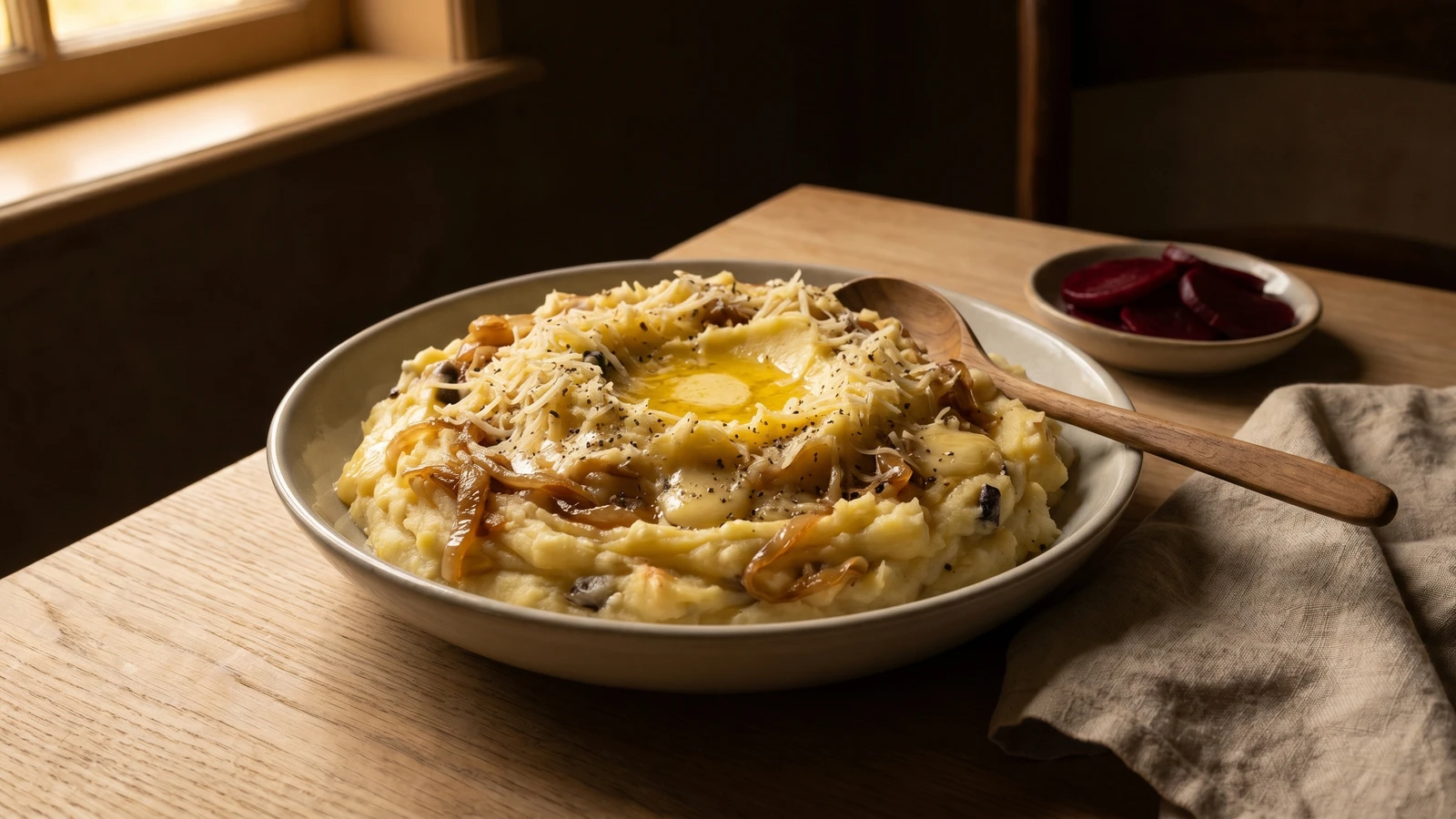
The name says it plainly: sipel is Frisian for onion, stamp is the mash, and together they make the northern weeknight dish a beppe knew by heart.
In the old family kitchens of Friesland, the grandest thing on the table was often the onion. Not because anyone was trying to be grand, for obvious reasons, but because a slow onion knows how to make thrift taste generous. Potatoes filled the pot, onions sweetened in butter beside them, and a little nagelkaas, clove cheese, brought the northern spice cupboard to heel.
The name already tells you almost everything. Sipel is Frisian for onion, and stamp is the Dutch family of mashed dishes, from stampen, to mash or pound. But let me tell you a secret: this is not a poor cousin of stamppot. Friesland is its own kitchen, with its own language, its own dairy pride, and its own stern little miracles. One of them is nagelkaas, cheese pricked through with cloves and often cumin, so a simple onion mash suddenly smells faintly of winter markets and old trade routes.
The method asks for patience in the one place that matters. Don't brown the onions hard; soften them until they slump and turn honeyed at the edges. That sweetness is the dish. Mash the potatoes roughly, fold the onions through, let the cheese melt in pockets rather than disappear completely, and make a kuiltje, a little well, for the butter or mustardy pan juices. Hou het altijd simpel. The table will understand.
Friese sipelstamp belongs to the northern Dutch stamppot tradition, where potatoes were mashed with stored vegetables through the cold months, especially onions, cabbage, carrots, and leeks. Its Frisian name preserves the regional identity plainly: sipel means onion in West Frisian, a living language rather than a kitchen ornament. The finish with nagelkaas connects the dish to Friesland's dairy history, particularly the clove-scented cheeses associated with the northern provinces since the early modern spice trade made cloves familiar in Dutch kitchens.
Quantity
1.2kg
peeled and cut into even chunks
Quantity
600g
thinly sliced
Quantity
50g, plus extra for serving
Quantity
150ml
warmed
Quantity
150g
grated or finely diced
Quantity
2 teaspoons
Quantity
1
Quantity
to taste
Quantity
small pinch
| Ingredient | Quantity |
|---|---|
| floury potatoespeeled and cut into even chunks | 1.2kg |
| yellow onionsthinly sliced | 600g |
| butter | 50g, plus extra for serving |
| whole milkwarmed | 150ml |
| Frisian nagelkaasgrated or finely diced | 150g |
| Dutch mustard | 2 teaspoons |
| bay leaf | 1 |
| salt and freshly ground black pepper | to taste |
| ground nutmeg (optional) | small pinch |
Put the potatoes in a large pot, cover with cold water, salt it properly, and add the bay leaf. Bring to a boil and cook for 18 to 22 minutes, until a knife goes through without argument. Remove the bay leaf before draining; it has done its quiet work.
While the potatoes cook, melt the butter in a wide pan over medium-low heat. Add the onions with a good pinch of salt and cook slowly for 25 to 30 minutes, stirring now and then, until they are soft, glossy, and sweet at the edges. If they catch too quickly, lower the heat. You want gold and patience, not a bitter brown scolding.
Drain the potatoes well and let them sit in the hot pot for a minute so the surface dries. Mash them with the warm milk, mustard, black pepper, and the pinch of nutmeg if using. Keep the texture a little rough; sipelstamp should look like food made by hands, not forced through a machine.
Scrape the softened onions and all their butter into the potatoes. Fold rather than beat, so the onions stay visible in sweet ribbons through the mash. Taste for salt now, because the cheese will bring its own.
Fold in most of the nagelkaas while the mash is still hot, leaving a little for the top. Let it melt in small pockets, with the cloves and cumin scenting the potatoes. Spoon into a warm bowl, scatter over the last cheese, and make a kuiltje, a little well, for a knob of butter if the evening deserves it.
1 serving (about 445g)
Culinary guides, cultural storytelling, and the editorial depth that makes cooking meaningful.
Discover Culinary ExplorerChef Joost
A plain name for a quietly clever dish: fresh mince, sweet fried onion, nutmeg, and mashed potato baked until the top goes golden and the table goes silent.

Chef Joost
Ajam Besengek is the golden chicken stew of the Indo-Dutch table: coconut milk, turmeric, and candlenut cooked down until the sauce clings to the meat like memory.

Chef Joost
The old Dutch spelling says ajam, the city says Batavia, and the pot says exactly what the rijsttafel always was: memory, trade, and dinner in one dish.

Chef Joost
The name means simply fried chicken, but the Dutch spelling carries a whole Indies kitchen: turmeric, coriander, garlic, and a golden crust that remembers the boemboe.