Culinary Explorer
A cooking platform built around craft, culture, and the stories behind what we eat.
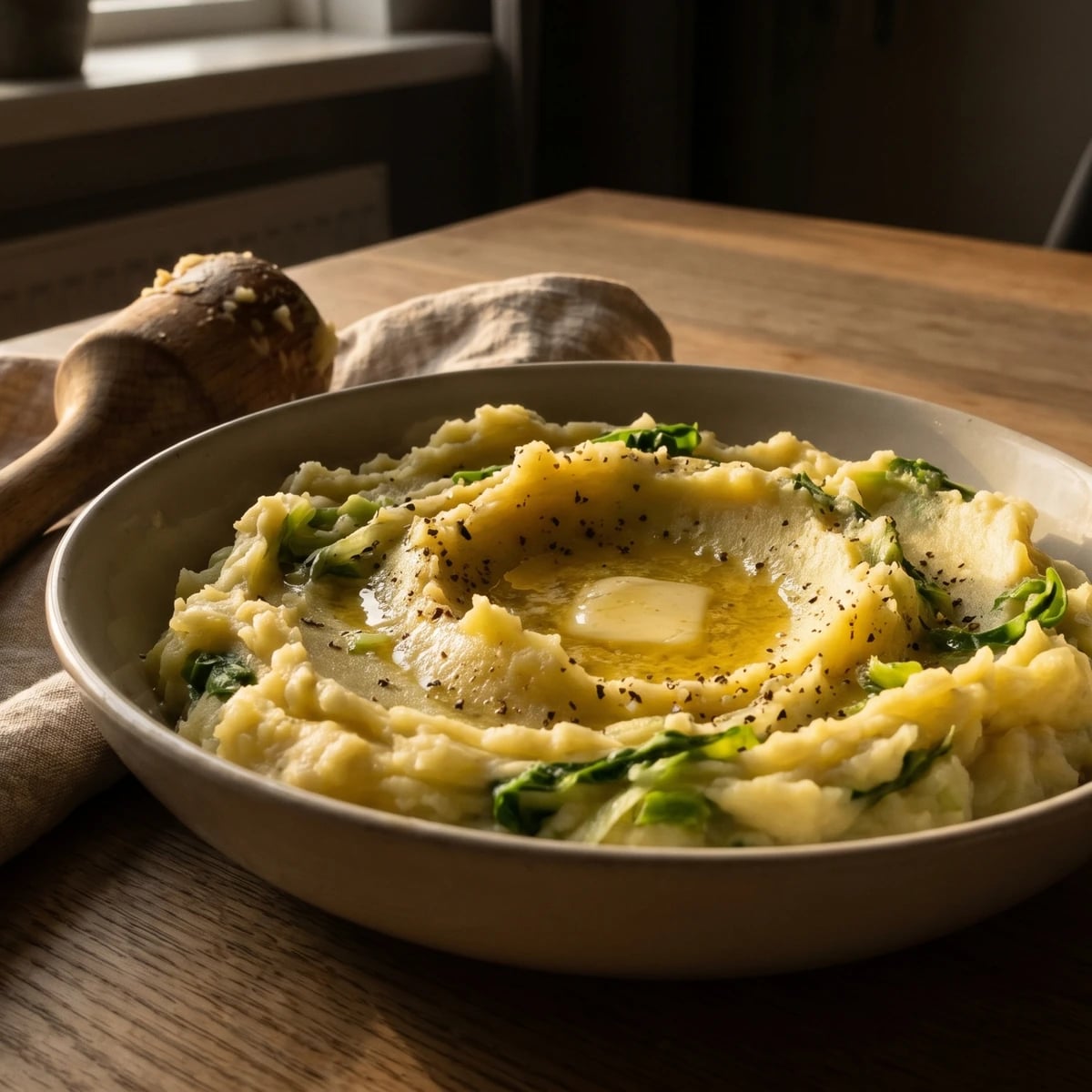
Andijviestamppot
Created by Chef Joost
The Dutch trick is not cooking the andijvie at all: let the hot potatoes do the work, so the greens soften, stay bright, and keep their clean bitter bite.
Some dishes arrive with a family name, some with a festival, and some with a saucepan dented at the rim because it has been used three nights a week for thirty years. Andijviestamppot belongs to that last, honourable tribe. In my grandmother's second notebook it sits among the quick meals, the ones written with fewer words because everyone already knew what supper was supposed to do: feed the table, waste nothing, and leave the cook with a little evening left.
The name already tells you the method. Andijvie is endive, usually the curly, slightly bitter kind; stamppot is a pot that has been stamped or mashed. No poetry hiding there, only good Dutch bluntness. But let me tell you a secret: the cleverness is in what you don't do. You don't boil the greens. You slice them thin and fold them raw through hot potatoes, so the heat wilts them just enough while the ribs keep their bite.
That is why this dish can taste fresh in a country famous for winter mashes. Potato gives body, andijvie gives sharp green life, mustard gives a small snap, and a little nutmeg reminds you that Dutch frugality has always kept a spice tin nearby. Hou het altijd simpel, always keep it simple. Make a kuiltje, a little hollow, in the mash for melted butter or good olive oil, put the pot on the table, and let Tuesday be fed properly.
Ingredients
floury potatoes
Quantity
1.2kg
peeled and cut into even chunks
curly endive (andijvie)
Quantity
500g
washed, dried, and sliced very thin
onion
Quantity
1 large
finely chopped
| Ingredient | Quantity |
|---|---|
| floury potatoespeeled and cut into even chunks | 1.2kg |
| curly endive (andijvie)washed, dried, and sliced very thin | 500g |
| onionfinely chopped | 1 large |
Where cooking meets culture.
Culinary guides, cultural storytelling, and the editorial depth that makes cooking meaningful.
Discover Culinary Explorer