
Chef Joost
Aardappelschotel met Gehakt
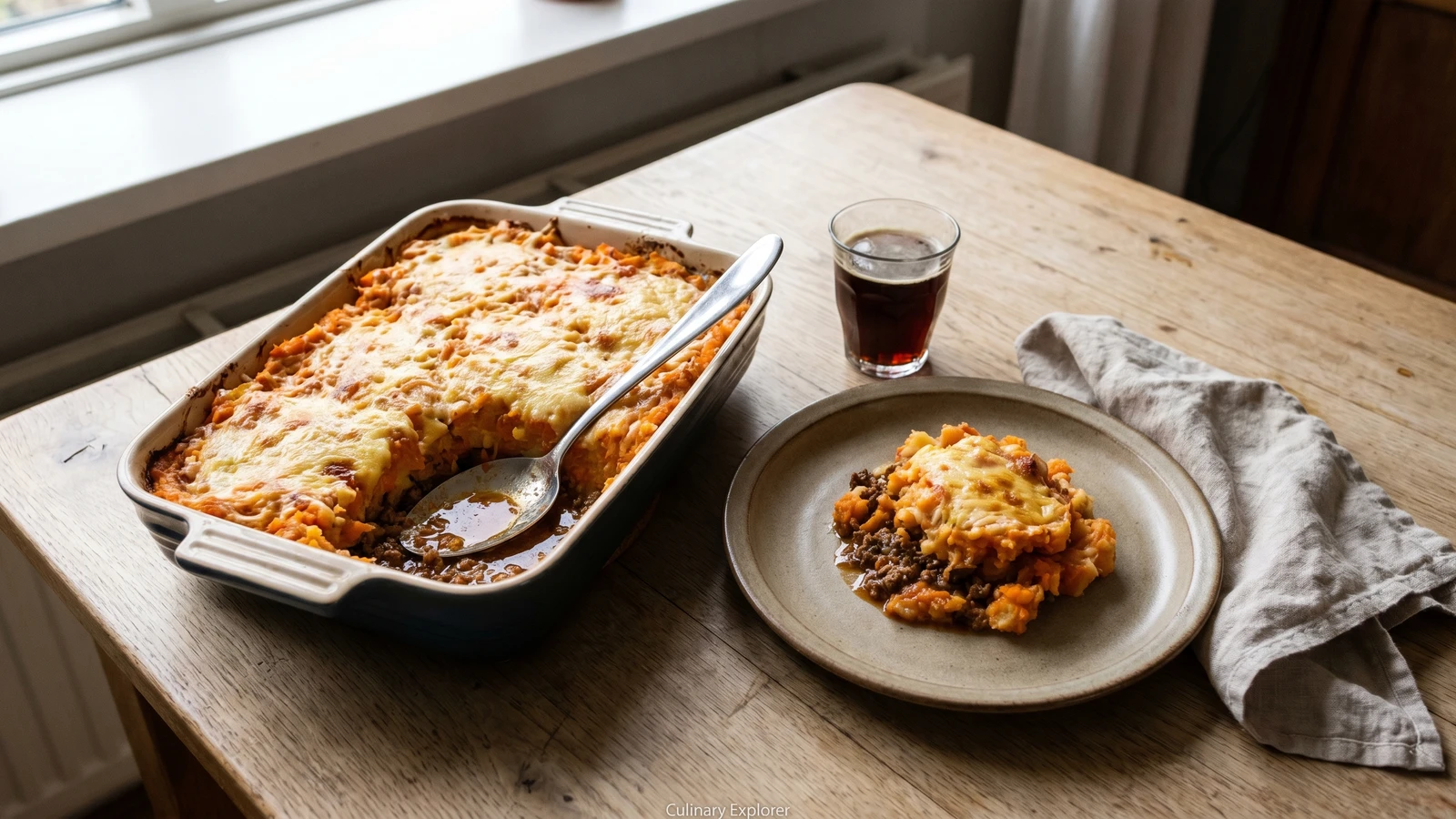
A plain name for a quietly clever dish: fresh mince, sweet fried onion, nutmeg, and mashed potato baked until the top goes golden and the table goes silent.
A cooking platform built around craft, culture, and the stories behind what we eat.
Created by
The name means shaken pot, and this oven version keeps the old orange mash while tucking spiced minced beef underneath and old Gouda on top.
In my grandmother's second notebook, hutspot never looked like poverty. It looked like a full table on a wet evening: carrots, onions, potatoes, a kuiltje, a little well, for butter or gravy, and everyone eating before the rain had finished speaking against the windows.
The name already tells you the method. Hutspot is usually explained from hutsen, to shake or mix, and pot, because this is food brought together without ceremony. But let me tell you a secret: the oven dish is not a betrayal. Dutch home cooks have always been practical people. Yesterday's mash becomes tomorrow's schotel, casserole, with gehakt, minced beef, underneath and old Gouda above. Hou het altijd simpel, always keep it simple.
What matters is the balance. The carrots must stay sweet, the onion must soften properly, and the beef needs nutmeg and clove, those everyday Dutch spices that make the frugal pot suddenly smell like a seventeenth-century warehouse. Bake it until the cheese freckles and the edges catch. Then bring the dish to the table and let the spoon do what the name promised: mix the history back together.
Hutspot is tied in Dutch memory to the Relief of Leiden on 3 October 1574, when tradition says a pot of abandoned Spanish camp stew was found after the siege ended; the city's annual Leiden Ontzet meal still serves hutspot with herring and white bread. The potato entered Dutch kitchens later, so the earliest versions were likely made with parsnip, carrot, and onion rather than the modern potato mash. The baked hutspotschotel with minced meat is a twentieth-century home-kitchen development, turning the same winter staple into a make-ahead oven dish.
Quantity
1 kg
peeled and cut into chunks
Quantity
600g
peeled and sliced
Quantity
400g
sliced
Quantity
50g
divided
Quantity
100ml
warmed
Quantity
to taste
Quantity
1 tablespoon
Quantity
500g
Quantity
2
finely minced
Quantity
2 tablespoons
Quantity
1 tablespoon
Quantity
250ml
Quantity
1 tablespoon
Quantity
1 teaspoon
Quantity
1/2 teaspoon
Quantity
pinch
Quantity
120g
grated
| Ingredient | Quantity |
|---|---|
| floury potatoespeeled and cut into chunks | 1 kg |
| carrotspeeled and sliced | 600g |
| onionssliced | 400g |
| butterdivided | 50g |
| whole milkwarmed | 100ml |
| salt and black pepper | to taste |
| neutral oil | 1 tablespoon |
| minced beef | 500g |
| garlic clovesfinely minced | 2 |
| tomato paste | 2 tablespoons |
| flour | 1 tablespoon |
| beef stock | 250ml |
| Worcestershire sauce or ketjap manis | 1 tablespoon |
| Dijon mustard | 1 teaspoon |
| ground nutmeg | 1/2 teaspoon |
| ground cloves | pinch |
| old Goudagrated | 120g |
Put the potatoes, carrots, and half the onions into a large pan with cold salted water. Bring to a boil and cook for 20 to 25 minutes, until a knife slips through the carrots as easily as the potatoes. Drain well, then leave them in the warm pan for two minutes so the extra water leaves. Watery hutspot is a sad pudding, and nobody asked for that.
While the vegetables cook, heat the oil and 20g of the butter in a frying pan. Add the remaining onions and cook for 8 minutes until soft and lightly golden. Add the minced beef with a good pinch of salt and fry until browned, breaking it up with a spoon. Browning is where the plain mince becomes supper.
Stir in the garlic, tomato paste, flour, nutmeg, and clove. Cook for 2 minutes, then pour in the stock with the Worcestershire sauce or ketjap manis and the mustard. Simmer for 8 to 10 minutes, until glossy and thick enough that a spoon dragged through the pan leaves a brief path. Taste now; the mash above is gentle, so the filling must speak clearly.
Mash the drained potatoes, carrots, and onions with the warm milk and the remaining 30g butter. Keep it slightly rough, not whipped smooth. Hutspot should show its vegetables honestly, with orange streaks of carrot and soft onion running through the potato. Season well with salt, black pepper, and a little extra nutmeg if the pot asks for it.
Heat the oven to 200C. Spoon the beef filling into a 2-liter baking dish and spread it level. Spoon the hutspot over the top and roughen the surface with a fork so the ridges brown. Scatter the grated old Gouda over it. Young cheese melts politely; old Gouda brings salt, depth, and the little caramel notes this dish deserves.
Bake for 20 to 25 minutes, until the cheese is melted, golden, and freckled brown at the edges. Let the dish stand for 10 minutes before serving. That rest is not fussiness; it lets the filling settle so each spoonful carries beef, orange mash, and cheese instead of collapsing into a hurry.
1 serving (about 435g)
Culinary guides, cultural storytelling, and the editorial depth that makes cooking meaningful.
Discover Culinary ExplorerChef Joost
A plain name for a quietly clever dish: fresh mince, sweet fried onion, nutmeg, and mashed potato baked until the top goes golden and the table goes silent.

Chef Joost
Ajam Besengek is the golden chicken stew of the Indo-Dutch table: coconut milk, turmeric, and candlenut cooked down until the sauce clings to the meat like memory.

Chef Joost
The old Dutch spelling says ajam, the city says Batavia, and the pot says exactly what the rijsttafel always was: memory, trade, and dinner in one dish.

Chef Joost
The name means simply fried chicken, but the Dutch spelling carries a whole Indies kitchen: turmeric, coriander, garlic, and a golden crust that remembers the boemboe.